
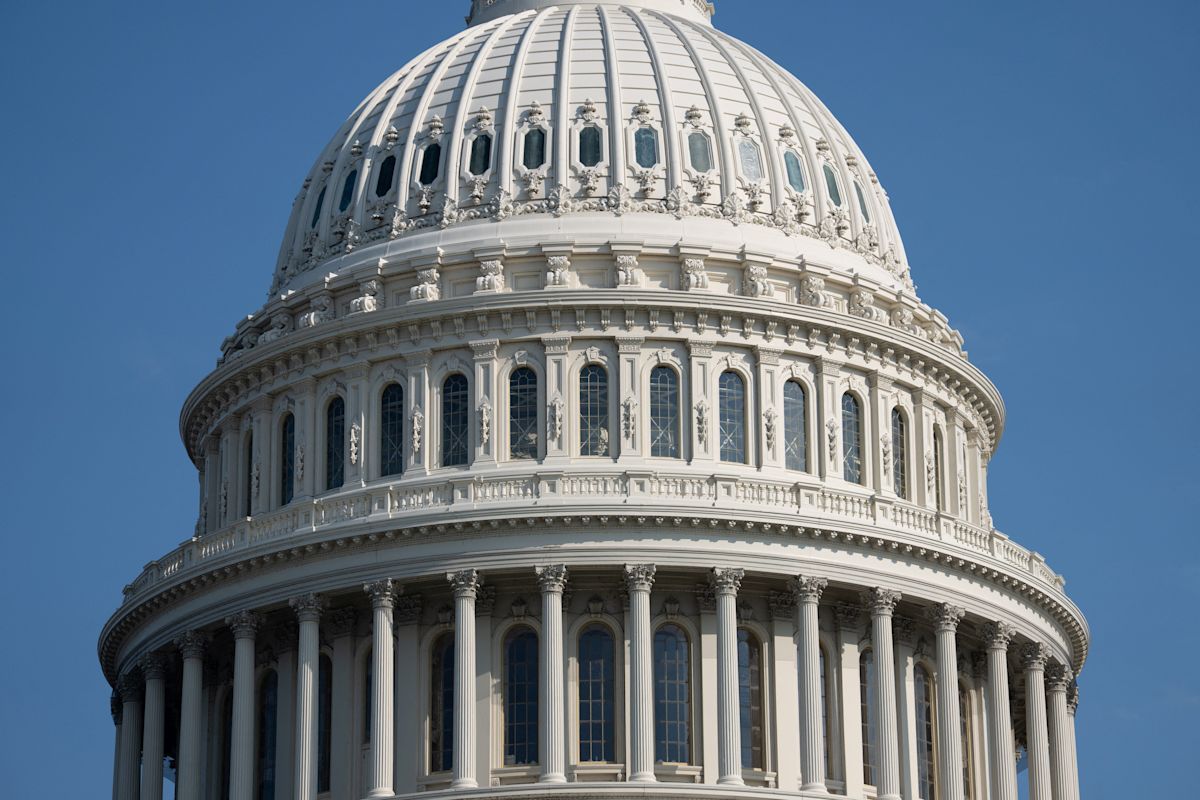
WASHINGTON – When a Nobel Prize-winning computer scientist emerged from a closed-door meeting with members of Congress this week about AI safety, he had a stark warning: They may have just a year left to meaningfully rein in the rapidly advancing technology.
Yet that sense of urgency is far from being widely shared among lawmakers on Capitol Hill.
Beyond disagreements over the finer details of artificial intelligence regulation, the lack of time sensitivity is frustrating Democrats and Republicans alike, who think Congress needs to take significant action sooner rather than later.
It’s also underlining a deeper tension, faced often by lawmakers amid fears of potential crises, between the dangers of quick and sloppy – or slow and too-late – legislative interventions.
“We don’t need to be in a hurry,” Rep. Nathaniel Moran, a Texas Republican who has co-authored bipartisan AI legislation to shut down rogue AI models, told USA TODAY. “We need to make sure to be prudent and wise in our decision-making.”
Yet some of his fellow Republicans seem to want a quicker response from Congress. Sen. John Kennedy, R-Louisiana, tried to skirt the typical voting process and unanimously pass a similar, though less strict, version of Moran’s “kill switch” bill this week. His rationale: “We are not going to get off of our ice-cold, lazy butts, and address this anytime soon.”
What is an AI ‘kill switch’? A USA TODAY reporter explains.
While many lawmakers are not as worried about AI wiping out humanity in the next decade, as some researchers have warned, they are concerned about advanced systems potentially gaining the ability to wreak havoc on hospitals, financial markets or water systems. Rep. Greg Casar, a Texas Democrat and chair of the Congressional Progressive Caucus, warned of a risk of “mass destruction.”
“Congress needs to wake up,” he told USA TODAY. “We need action as soon as possible.”
House recess prompts criticism

House Speaker Mike Johnson, R-Louisiana, speaks to the media outside of his office on Capitol Hill on September 16, 2026.
Before panic about AI reached a fever pitch in recent weeks, Congress was staring down extremely tight schedule. Lawmakers in both chambers were scheduled to be gone for all of October ahead of the midterm elections in early November.
Then House Speaker Mike Johnson canceled the last two working weeks of September, sending Republicans out on the campaign trail. Much like President Donald Trump, Johnson has characterized some fears about AI as overblown, saying the technology is critical for American competitiveness and Congress isn’t knowledgeable enough about it for a regulatory overhaul.
Read more: Facing Hegseth impeachment vote, House Republicans bail out early until November
Democrats, and even some Republicans, worry that decision cost lawmakers valuable time. Rep. Anna Paulina Luna, R-Florida, has advocated for Congress convening a special session on AI. Sen. Jim Justice, R-West Virginia, who wants to see a kill switch bill passed soon, admitted it “doesn’t help right now” for the House to be gone.
“If you don’t try, you don’t get it done,” Rep. Debbie Dingell, D-Michigan, told USA TODAY. “We should be staying here.”

Rep. Debbie Dingell speaks during a ceremony in Michigan on Friday, Sept. 11, 2026.
Other lawmakers defended Johnson, arguing there wasn’t much likelihood of Congress taking any major steps, anyway. Rep. Jay Obernolte, a California Republican who has a graduate degree in AI, said he believes the kind of potentially dangerous AI technology Americans are most worried about isn’t coming for “months and years from now” anyway.
“It was pretty clear to me that nothing meaningful was going to get done on AI regulation in advance of the election,” he said. “I don’t think it makes a difference.”
Congress pins hopes on Trump-XI meeting

President Donald Trump shakes hands with Chinese President Xi Jinping while leaving after a visit to the Zhongnanhai Garden in Beijing, China, on May 15, 2026.
With Congress set to be gone for much of the fall, some lawmakers are pinning their hopes of reining in AI on a high-stakes upcoming meeting.
President Trump and Chinese leader Xi Jinping are set to meet in Washington on Thursday, Sept. 24. AI is expected to be a major topic of discussion between American officials and their counterparts in China, the U.S.’s primary AI competitor. Virginia Sen. Mark Warner, the top Democrat on the Senate Intelligence Committee who speaks frequently with the heads of the dominant AI companies, said the summit will be a critical chance to develop a framework for a global AI safety strategy.
“We need to do this on an international basis,” he said. “We’ve missed a huge opportunity if the president doesn’t reach an agreement with China.”
Zachary Schermele is the congressional correspondent for USA TODAY. Reach him by email at zschermele@usatoday.com and on Signal @zachschermele.02. Follow him on X at @ZachSchermele.
This article originally appeared on USA TODAY: Many in Congress want to rein in AI. They’re split on whether to hurry.








Leave a Reply