


Amna Nawaz:
President Trump has replaced the nation’s top cybersecurity official following a string of seemingly unrelated technology outages over the last couple of weeks. Those outages raise serious concerns about the stability of crucial digital systems.
William Brangham has more.
William Brangham:
Amna, these disruptions, which happened across major computer networks, demonstrate how a single failure can affect critical systems used by millions of Americans.
In just a matter of days, outages have affected Microsoft, which left millions of users without e-mail access, the FAA, which triggered a nationwide flight stoppage for several hours, major U.S. banks, like J.P. Morgan Chase, which temporarily snarled customer transactions, and the National Security Agency, where its internal communication network was interrupted.
Officials have repeatedly stressed that these outages were not the result of intentional attacks, but, given the growth of artificial intelligence and its ability to identify vulnerabilities in our software, there’s growing concern that attacks are on the horizon.
For more on this, we are joined again by Chris Krebs. He’s the founder of The Krebs Group and used to be the nation’s top cybersecurity official during the first Trump administration.
Chris, great to have you back on the program.
Christopher Krebs, Former Director, U.S. Cybersecurity and Infrastructure Security Agency: Thanks for having me.
William Brangham:
Before we get to this new cybersecurity official that the president has announced, let’s talk about these outages.
As I mentioned, officials keep saying these are not attacks, these are patches being done to fix glitches that have been discovered in the system. What do you make of that analysis?
Christopher Krebs:
I think it’s spot on, based on my conversations with folks in some of the affected organizations. Yes, there were patches. There were bugs that were discovered in software that were subsequently fixed.
What’s happening in the background, though, I think is the real story. Since April of 2026, when Anthropic released Mythos preview, which is an AI frontier model, which means it’s the best of the best — it was trained specifically for cybersecurity research.
And basically what you have is an amalgamation of every hacker, every security researcher that’s ever existed on the face of the Earth that will work tirelessly on its goal. It doesn’t sleep, it doesn’t eat, it doesn’t need a coffee break.
And those models have been used by the good guys, by companies like Microsoft, by companies like IBM and Google. And they are looking at their code that exists today, and they’re trying to find as many bugs as fast as they can before the bad guys that are also using AI, not as good as these frontier models, but nonetheless they have AI, and trying to get those patched.
And, in part, what’s happened over the last several days is these companies that are patching their systems to get — to hide these bugs to get rid of these bugs, they’re doing it in a way that’s very fast, but it’s also stacking up a number of bugs or patches for those bugs.
And any time you patch a system, you introduce a nonzero chance of destabilizing that network. And, unfortunately, that’s what happened this week. But, again, they were all outages that were brief, they were blips. If this was a real cyberattack, you would either see those systems never recovering or taking days, if not weeks, to get back up and running.
William Brangham:
So, if these are just patches, as you said, and, in a sense, benign, that these are attempts to put Band-Aids on little wounds that are being found, it still does demonstrate the fragility, it seems, of so many systems that undergird our entire society.
Christopher Krebs:
A thousand percent. And it’s more than that.
It shows how much of our daily lives today is driven by technology, is connected. And that’s only going to increase going forward. I don’t know what five years down the road looks like, but I will tell you that more things are going to be connected, more things are going to rely on digital technology.
What we have to do is keep using AI. The good guys have to keep using AI to find as many of those bugs as possible, patch them, fix them before the bad guys do. Do I know how long that’s going to take? No. And anybody that says they know, I don’t think they’re telling the truth.
But this could be a extended period of time. And I’m not talking just a couple months. Could be a year or more until we root out all these bugs, patch them, and make sure the Internet’s a safer place. I do think that there’s a silver lining to all of this.
William Brangham:
Don’t you fear someday, though, that this AI arms race, that the bad guys, as you call them, have tools that are equivalent to the good guys, and that we do start to see it used not as a detective tool, but as an offensive tool?
Christopher Krebs:
It is already today being used as an offensive tool.
Over the last couple of weeks, a number of organizations have been hit by what’s known as an agentic offensive framework, known as ARTEX. There are a couple others, but basically it’s software harness that sits on top of models, like some of the open-source models we have here, or DeepSeek and Kimi and GLM that are Chinese open-source models.
And like I said, they’re being pointed at systems. They’re scanning, doing recon on a network on a company. They’re looking for vulnerabilities, and they never stop. Time used to be in the defenders’ advantage. Now time doesn’t matter. These bad guys are using it, and they’re going all the time.
William Brangham:
President Trump, as we mentioned, has announced a new director of cybersecurity, the job that you used to have.
Kirsten Davies, she used to have this job at the Pentagon. She is now going to be the new head of cybersecurity in the U.S. What do you make of her appointment and what do you think she ought to be focusing on day one?
Christopher Krebs:
Well, to separate it out, there’s the job, the Office of the National Cyber Director at the White House. That’s a more recently created position. And there’s a job that I had, which was the director of the CISA, the agency.
Both had important personnel activities this week. But Sean Cairncross, the prior Office of National Cyber Director, the director, was relieved of his duties yesterday. And, as you mentioned, Kirsten Davies came in.
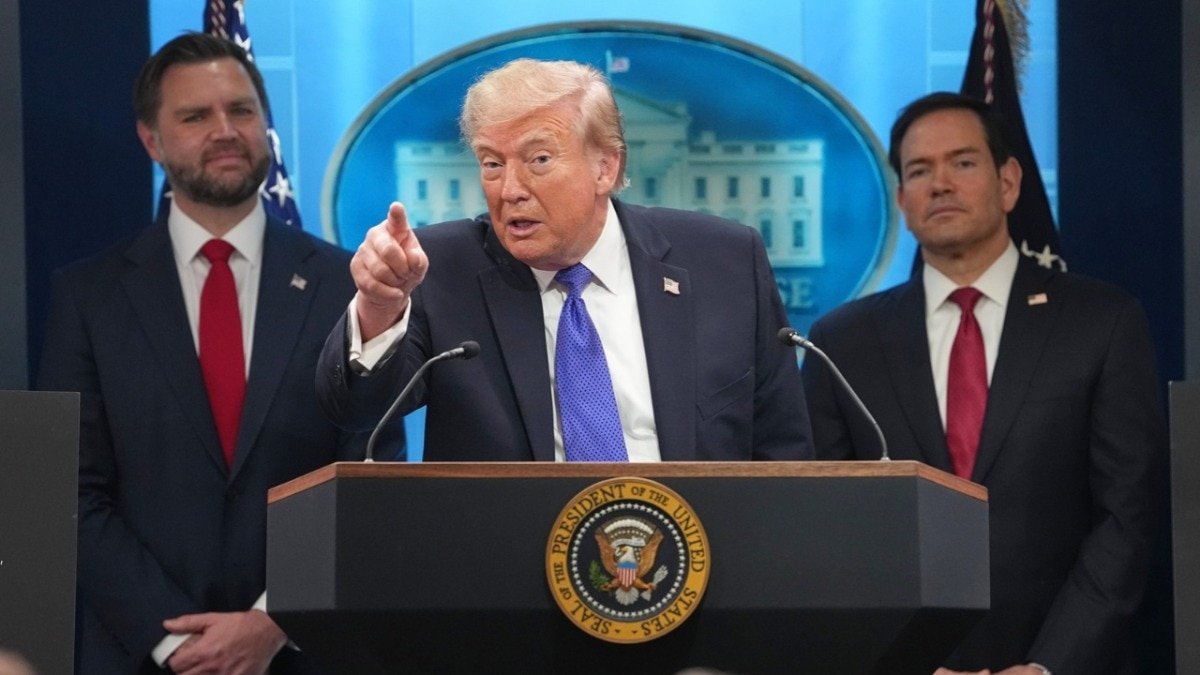
The president today in a press conference said that he didn’t think Sean was doing a particularly good job, so he replaced him. Look, anyway, you cut it, Kirsten is a competent technologist. She’s in the job.
She is very likely focusing on the — just what we’re talking about today, the outages, but also working with the nation’s critical infrastructure providers and the AI labs to find as many vulnerabilities in our most critical systems, get them patched up, and make sure that things are safe, safe and secure.
William Brangham:
Not an ideal — it’s a tough job to have right now.
Chris Krebs of The Krebs Group, great to see you. Thanks.
Christopher Krebs:
Thanks so much.










Leave a Reply