
A whole fleet of moon landers and rovers will arrive on the lunar surface at a rapid clip over the next few years if NASA can accomplish its ambitious vision.
Limited time: Save 25% on NBC News subscription
Get exclusive reporting, live Q&As and ad-free reading.

The agency announced Tuesday that it has awarded yet another round of contracts to private space companies for upcoming moon missions, this time for lunar landers to carry science equipment to the moon’s surface in late 2028.
The announcement is the latest in a stream of similar awards as NASA ramps up planned flights to the moon in preparation to build a base there. The collective goal of the various missions planned over the next two years is to test technologies and scope out locations to inform NASA’s lunar construction plans. Last month, it announced a set of funding awards totaling nearly $1 billion for the first uncrewed missions in its moon base program. In all, NASA plans to spend $20 billion on the project over the next seven years.
The recent updates send a clear message: NASA is all in on establishing a permanent presence on the moon, and it intends to do so on a tight timeline, relying heavily on commercial partnerships.
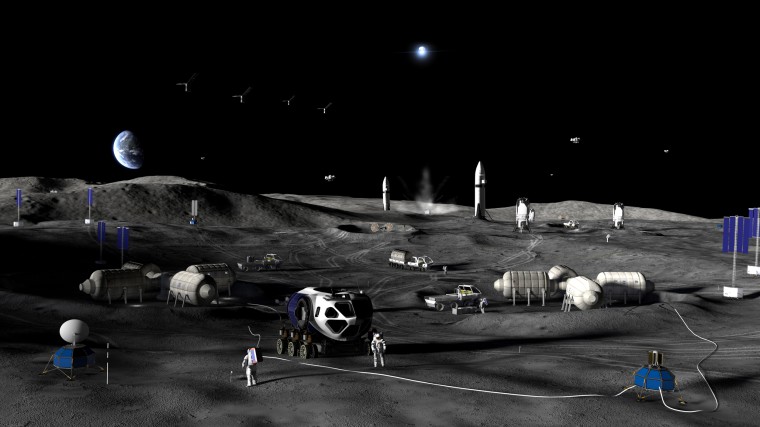
“These new awards to our commercial partners, totaling nearly $600 million to land more missions on the moon with science payloads, demonstrate our commitment to accelerating our effort to build a long-term presence on the lunar surface, and give us more opportunity to develop the skills we need to prosper there,” Lori Glaze, NASA’s associate administrator for the Human Spaceflight Mission Directorate, said in a statement.
On Tuesday, Isaacman also hinted that a test version of a NASA Mars rover might be repurposed to send to the lunar surface.
“Those that know our Mars rovers, Curiosity and Perseverance — well, there is another,” he said, adding that the test unit is named Promise. “I’d say we are thinking very hard right now about sending Promise to the moon.”
The three companies awarded new lunar lander contracts are Pennsylvania-based Astrobotic — which was already working with NASA to develop a lander to transport more than 1,000 pounds of cargo and a moon rover to the lunar surface, possibly this year — and two Texas-based companies, Firefly Aerospace and Intuitive Machines.
Firefly was awarded $144.2 million, and Intuitive Machines is getting $148.3 million, NASA said.
Astrobotic was tapped to build two additional landers for the 2028 missions, with a new contract valued at $297.9 million, according to NASA. In total, that means NASA has awarded it more than $600 million over the last six years for its work on lunar hardware.
Firefly previously won $75 million from NASA’s Jet Propulsion Laboratory to build four drones that will identify sites of interest at the moon’s south pole.
None of the companies are designing their landers from scratch; rather, they are developing upgraded versions of vehicles that have already flown in space, according to NASA.
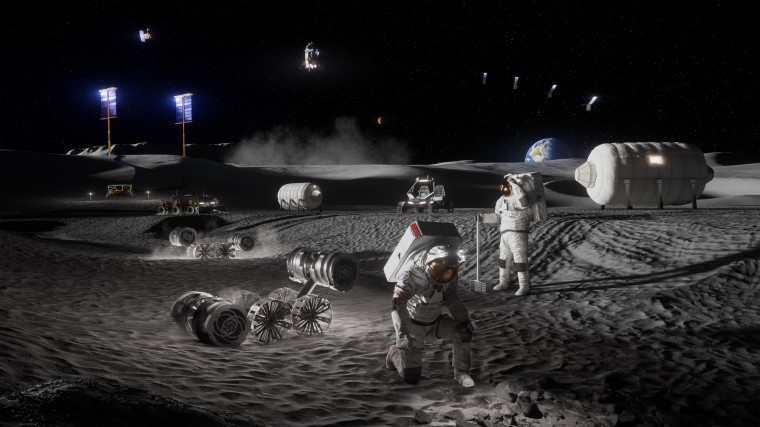
As for the Promise rover, which is at the Jet Propulsion Laboratory in California, Isaacman said there have been serious discussions about sending it to study locations at the lunar south pole and hunt for resources there.
“We outfit it a little bit differently, put some different instruments on it, and it’s going to be a highly capable vehicle for the south pole of the moon,” Isaacman said. “And we can get it there fast versus any kind of new project.”
Isaacman also offered an update on the role Jeff Bezos’ Blue Origin is expected to play. Alongside Astrobotic, NASA had selected Blue Origin to carry out an uncrewed mission to the lunar surface this year. But Blue Origin’s rocket blew up in dramatic fashion during an engine test last month, damaging its launch pad and raising questions about its ability to meet NASA’s timeline.
Isaacman said the Blue Origin failure will most likely push its moon mission into next year.
Carlos García-Galán, NASA’s moon base program manager, said Astrobotic’s lander could still fly this year.
Isaacman said NASA aims to provide monthly updates about the moon base missions. The agency also announced that it will solicit proposals over the next few months for science and technology payloads that could hitch rides to the moon on the planned missions in the coming years. Options could include experiments related to lunar energy infrastructure or communication systems, including better ways to beam data and messages between Earth and the moon.