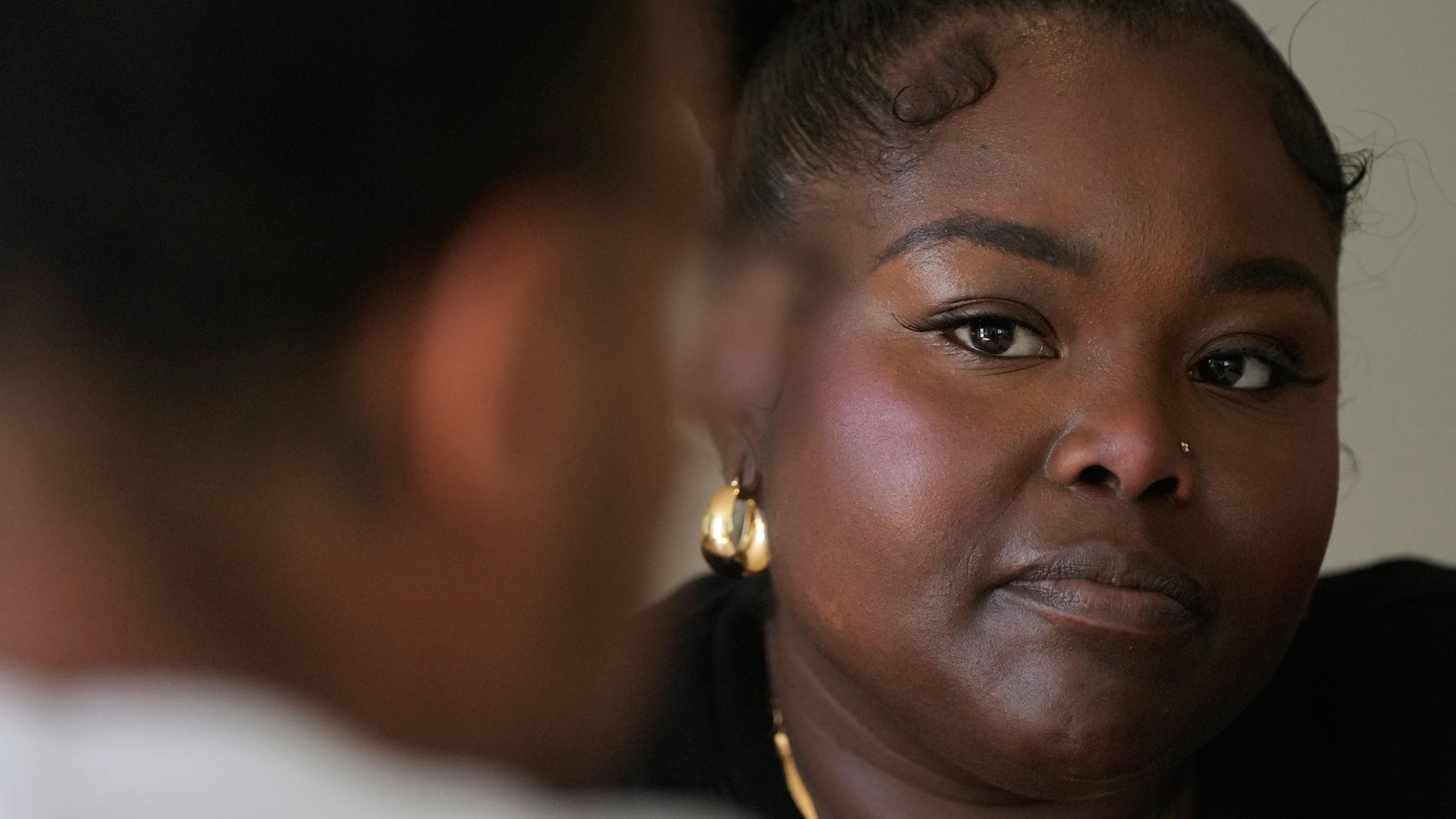
OAKLAND, Calif. — Young men at risk of succumbing to gang violence slump over tables in an Oakland church. With them are prosecutors, clergy and survivors of shootings determined to show them they have more to look forward to than incarceration, injury or death.
The message is not one of punishment but of unceasing support. The men start to perk up.
“We’re going to talk about keeping you and those you love alive and free,” Jim Hopkins, emeritus pastor of Lakeshore Avenue Baptist Church, says he told the men who gather at his church. “If you put down the gun, start taking the (city’s) services, we’ll help you find another way.”
The California city has driven homicides to historic lows, and experts say part of the credit goes to a program that identifies people who are most likely to get pulled into gang violence and pairs them with life coaches to help turn their lives around.
City officials meet weekly to review recent shootings and identify the participants. The city’s Department of Violence Prevention finds and talks to those people, one-on-one or in a group session at the church, and offers a host of services, including a life coach.
There is no single reason why a city’s homicide rate falls, but officials say the Oakland Ceasefire-Lifeline program has been key, making a difference one person at a time.
Homicides rates have plummeted in major cities across the U.S. in recent years but the shift in Oakland has been particularly dramatic.
Homicide rates have not been this low in the city of roughly 400,000 people since 1967, when the Black Panthers were a powerful force and hippies overran nearby San Francisco for the Summer of Love.
For nearly 25 years, Oakland ranked among the nation’s most dangerous cities. City police recorded annual homicide rates ranging from 16.2 up to 36.4 deaths per 100,000 people, while the U.S. rate hovered around five per 100,000.
Oakland adopted the lifeline program, which originated in Boston, after gun violence in 2011 took the lives of three children ages 1, 3 and 5 in separate incidents. The city recorded a 43% reduction in homicides from 2012 to 2017.
Officials subsequently watered the program down until it was essentially dismantled during the pandemic, according to an audit in 2023.
It wasn’t until city officials implemented changes recommended in the audit that the number of homicides declined, from 118 in 2023 to 78 in 2024.
Last year, Oakland hit a record low of 57 homicides.
Police are not involved except to provide the names of people expected to retaliate for a shooting that wounded or killed a friend or relative, or to be a victim of retaliation.
“People may underestimate how little the clients believe in themselves, and how little they value their own lives,” said Holly Joshi, chief of the violence prevention department.
Once selected, the men meet or learn of people whose lives have been forever changed by gang violence, such as parents who have lost a child, or someone left paralyzed able to communicate only by clicking their tongue.
Last year, Bernard, a 27-year-old former gang member, was among 200 people matched with a life coach. He was contacted as he was leaving prison after serving six years for attempted robbery. Today, he has a full-time job, an apartment and a new outlook.
He’s more aware of community ties, he says.
“When I was younger, I didn’t realize I wasn’t only hurting myself. I was hurting everybody around me, everybody who cared for me,” said Bernard, who asked that his last name not be used because he fears sharing his background could hurt his future opportunities.
At first, Bernard was standoffish with his life coach, 35-year-old LaSasha Long.
But then the young man who missed his mother’s funeral because he was still behind bars when she died suffered another loss. A close childhood friend had died. He had to talk to someone.
“As soon as I called Sasha, she was there with advice,” he says.
Long understood. She had a chaotic upbringing, bouncing between relatives after a stray bullet killed her mother when she was a toddler. She told him what she felt would have helped her move forward: That he’d lost a lot, but had a lot to live for too. And she reminded him his friend would have wanted him to live.
He listened.
“I can’t take the credit for it because it was all him. He was the pilot,” she says, adding that she helped with rides and reminded him of upcoming appointments. “But he wanted to change. He wanted that.”
Now, they chat on the phone every day. He makes goofy faces at her while posing for photographs for The Associated Press. She says she’ll be the best man at his wedding one day. He says she’s not a man. She says he hasn’t seen how good she looks in a suit.
Long describes life coaching as “heart work,” helping someone see light in a dark tunnel.
Bernard aspires to be like Long one day, a coach who can offer a lifeline to others who grew up surrounded by violence and with bills to pay. His mother was loving but addicted to drugs. His father was in and out of jail.
He has discovered the joy of helping people.
On a recent day, Bernard was on break from his job cleaning streets in San Francisco when he saw a teen crash his bike. The old him would not have rushed over, much less reassured the embarrassed boy that everyone falls sometimes.
But Bernard helped wash the gravel burn on the boy’s face and told him jokingly: “Tell your girl you got jumped.”
“All some of us need is to see or know that people care,” he said. “Once people realize that, I believe they start to do better, they want to do better. They figure there’s more to life.”