

Mike Minogue appears on a video call, standing at his desk, with a spray-painted canvas of the Statue of Liberty on the wall behind him. The painting belonged to the medical device company he sold for nearly $17 billion in 2022. But he kept the artwork in the deal.
The former Army officer is running for Massachusetts governor as an ex-CEO who says he will right the state’s economic ship. Like his opponent in the Republican primary, venture capitalist Brian Shortsleeve, Minogue says a key will be reversing what he sees as overly generous state spending that benefits immigrants instead of Massachusetts residents.
“We cannot bankrupt the commonwealth, and we have young people that can’t afford to pay their electricity bill, and seniors that can’t afford to stay here or keep paying their property tax,” he said. “That is not good management or leadership by Maura Healey, and I need to prioritize our citizens first.”
Massachusetts voters like to elect moderate Republicans as governor; they did so in four of the last six elections going back to 1991. Former Gov. Charlie Baker regularly sparred with the first Trump administration over immigration issues, even refusing to send National Guard troops to the Mexico border in response to what he called the “inhumane treatment of children” under White House immigration policy.
Minogue’s opponent, Shortsleeve, is casting himself as the more moderate option in the race. But on immigration, there’s little daylight between President Trump and the two Republicans running to unseat Healey in November.
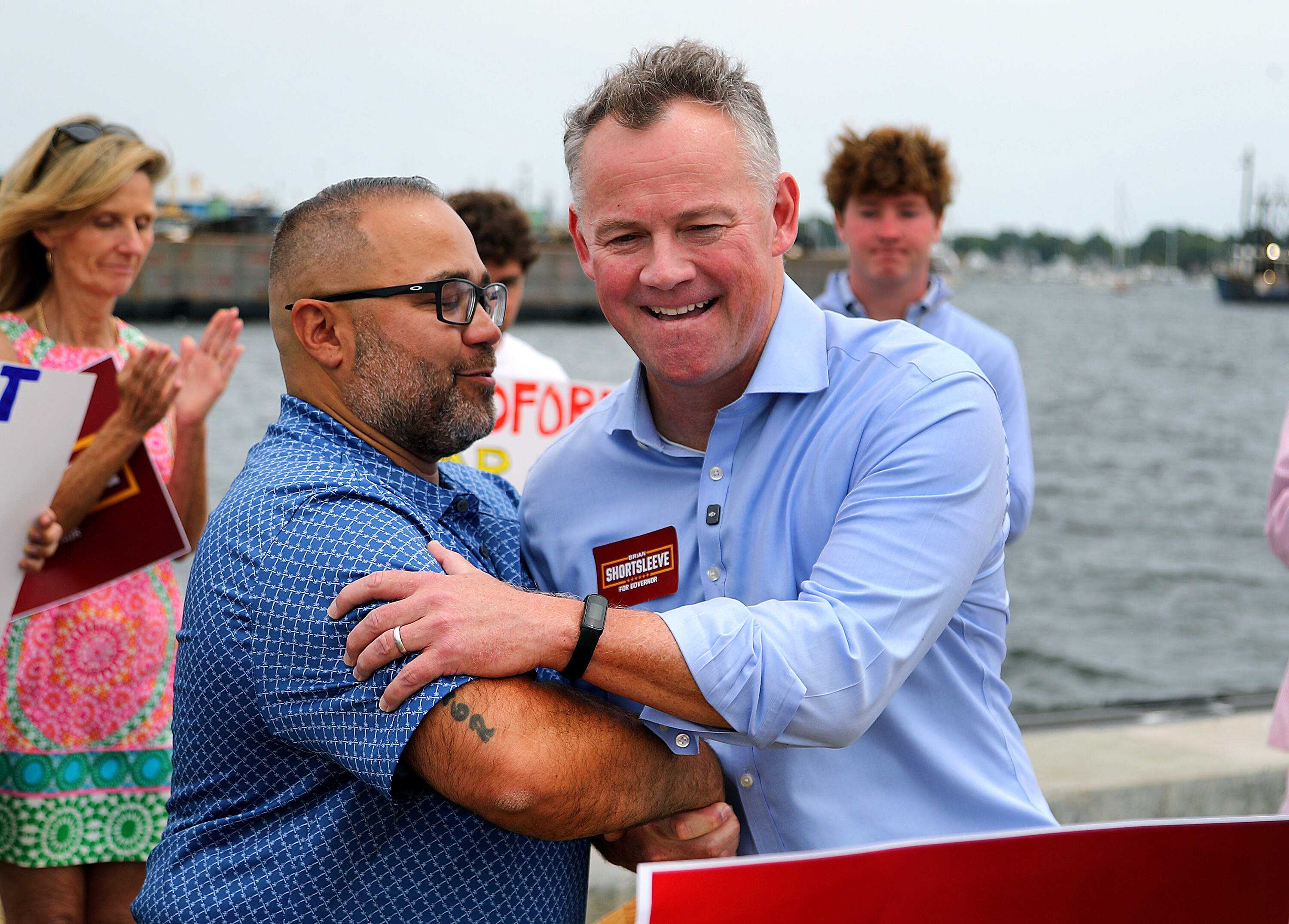
Longtime Baker adviser and GOP consultant Jim Conroy said for “smart Republican candidates,” there’s “certainly room” to talk about secure borders and the need for immigration reform. But he said criticizing the actions of U.S. Immigration and Customs Enforcement shouldn’t be off the table.
”There have been some terrible horror stories. I’m sure they are the minority,” Conroy said, “but absolutely, the candidates should be calling those out.”
Conroy worked for the campaign of Mike Kennealy, who suspended his run for governor in April. His advice for the two remaining candidates is simple: “ When it comes to beating Maura Healey, I think we need to be focused on affordability, taxes, electric rates, etc.”
Both candidates say ICE should prioritize criminals for enforcement. But recent data shows just 16% of people deported upon being arrested in Massachusetts are convicted criminals. The candidates have often focused on what Democrats are doing to restrict ICE operations, rather than calling for scrutiny of aggressive ICE action.
Shortsleeve and Minogue concur on most policies related to immigration. They want to stop giving driver’s licenses to undocumented people. And both say they would move to repeal the PROTECT Act, a law Healey signed in early August that bars ICE from making warrantless arrests on state properties, from schools to courthouses.
For Shortsleeve, that prohibition contradicts the argument that ICE should be focused on criminals.
“Look, I want ICE off the streets,” he said. “You know how you get ICE off the streets? You cooperate with the federal government, and you transfer criminal illegals in courthouses. To me, that’s a common sense solution.”
Minogue argues law enforcement opposes the new law.
“I have heard firsthand from sheriffs, from law enforcement,” Minogue said. “They’re going to be releasing violent criminals or known drug dealers back into the communities once this goes into effect.”
According to Minogue, Massachusetts is attracting the wrong kind of people under Healey.
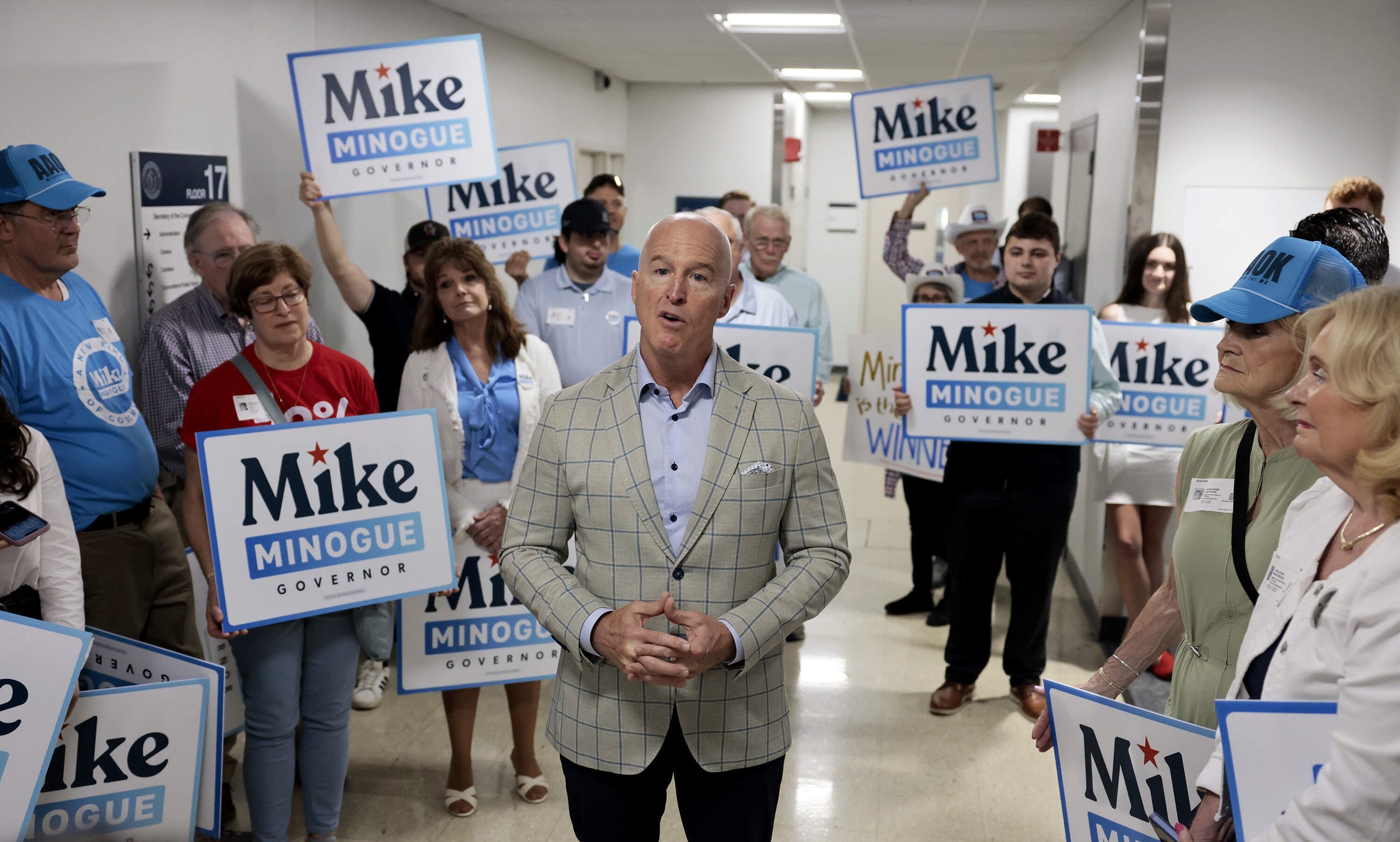
“People that are here because we’re a sanctuary state and/or they get free everything,” Minogue said, “that’s probably not the population that we want with our own people.”
Some economists warn the Trump administration’s mass deportation agenda — as well as its clampdown on legal immigration — could have dire consequences for Massachusetts. According to a recent study, the state needs to add 29,000 immigrant workers a year just to maintain current workforce levels.
But the Republicans running for governor tend to focus on other aspects of immigration in their talking points.
For Shortsleeve, the federal government needs to do more to promote legal immigration, and he’s bullish on what that could mean for Massachusetts.
“I think we ought to staple a green card on the diploma of every kid graduating from BU [Boston University], Northeastern, Tufts,” he said. “Immigration’s always been a really important part of this state. And by the way, it’s a big driver of the economy. If you look at the big companies in this country, the Fortune 500, a third of those companies are run by immigrant founders or their children.”
Shortsleeve served in the Marines and ran the MBTA under Baker. And he points to what he says are negative trends in the Massachusetts economy: for example, residents leaving the state for other parts of the country, a phenomenon that has cost the state billions in lost tax revenue.
He also has focused on the migrant shelter crisis that dominated headlines before Trump returned to office. Faced with the arrival of thousands of desperate immigrants to Massachusetts, the state turned 100 hotels into temporary shelters, with a price tag of more than $1 billion annually. That spending has since waned — and the shelters have closed — but Shortsleeve said the state’s response to the crisis was evidence of backwards priorities.
“ I’m a business guy, I care about numbers, and I care about the financial health of the state,” Shortsleeve said. “And it’s billions of dollars that I would argue would be better spent supporting cities and towns through greater local aid.”
The termination, in late July, of Temporary Protected Status for 19,000 Haitians in Massachusetts also threatens to bring pain to areas of the economy. That group contributes nearly $500 million annually to the state, according to one estimate, and provides workers for critical sectors facing labor shortages.
Minogue said he would examine the impact of the termination of the program, and possibly advocate to extend it into the future. Shortsleeve has not yet commented on it to WBUR.
Asked whether he’s hearing concerns about immigration enforcement on the campaign trail, Shortsleeve pivoted to another topic: rising business costs.
“I have visited hundreds of small businesses all over the state over the last year,” Shortsleeve said, adding they’ve told him, “ ‘You’ve got to cut our taxes, because that would help small businesses thrive.’ Number two is energy costs.”
Shortsleeve casts himself as the social moderate in the GOP primary — particularly in his support for access to abortion — and it won him the endorsement of the Boston Globe a week before the primary election.
But on immigration, a conservative message could be a problem for a candidate trying to oust Healey, said Doug Chavez, a Democratic strategist in Boston.
“Especially in Massachusetts, the candidates are a little tone deaf if they think running as a MAGA Republican when it comes to immigration issues is going to benefit them,” Chavez said.
He said Healey has been more moderate on immigration than many on the left would like. Amid widespread criticism of state spending on migrant shelters, in 2023, the state began to sharply reduce shelter eligibility, and ultimately stopped using hotels as emergency shelters. That could have been a salient issue for Republicans in 2022, Chavez said, but not so much today.
“I mean, they can try to use that, but that’s old news,” he said.
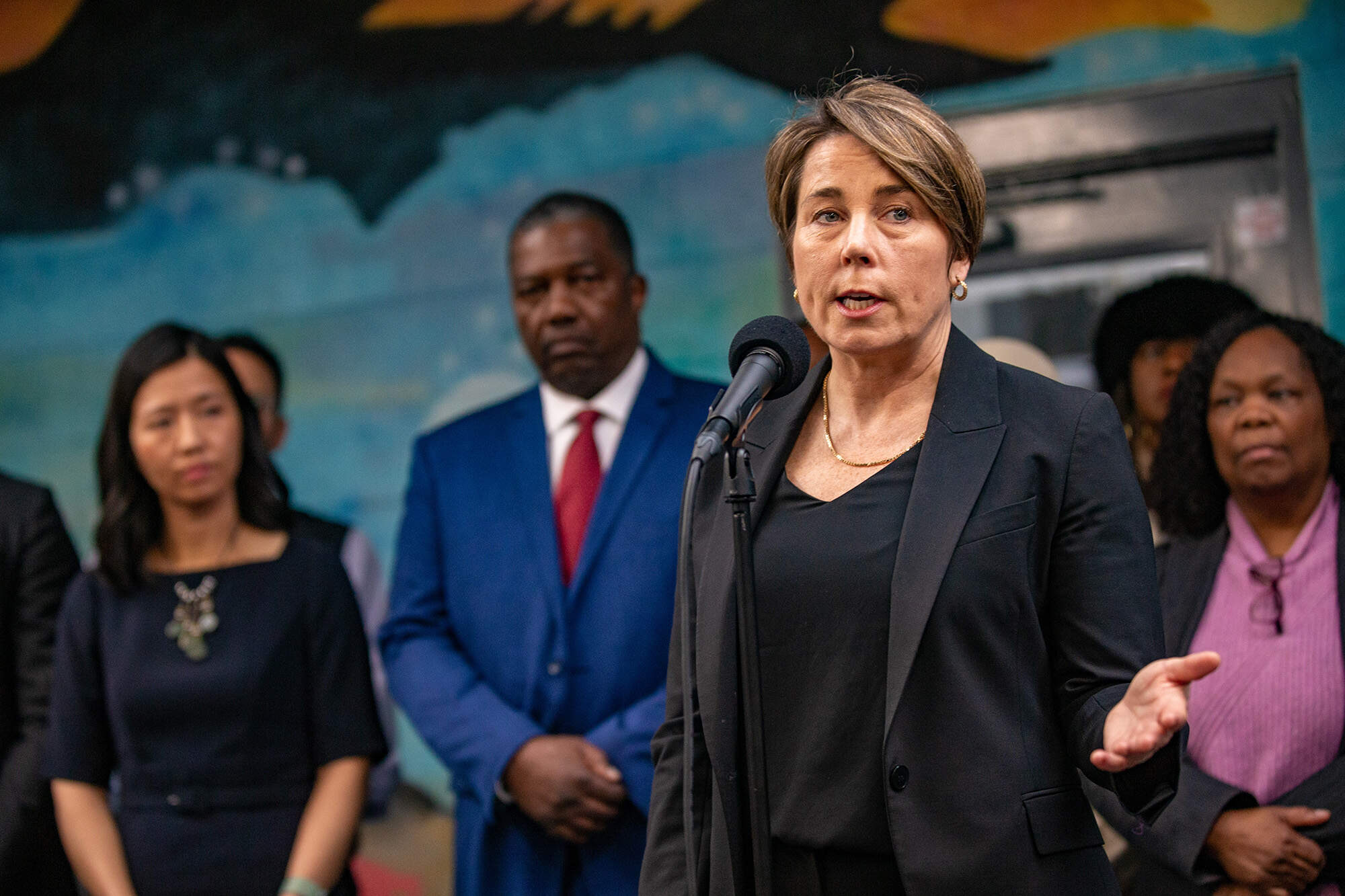
For whoever wins the GOP primary, Chavez said, it would be smart to move to a more moderate stance on immigration.
“I think the best strategy for anyone running against her now would be to be closer to the center, more of a Charlie Baker-type Republican,” he said.
Paul Craney, executive director of the right-leaning Massachusetts Fiscal Alliance, said moving left on immigration is not the smart move.
”There’s a lot of things going wrong for the state of Massachusetts right now,” Craney said. “So I don’t think necessarily tacking left on immigration is a winning approach. I think being compassionate with people in general is good, sound advice, but also acknowledging that Massachusetts cannot afford to be uncompetitive anymore.”
Whoever is elected governor next, Craney said, they should work to have a productive relationship with the president.
“It would be really smart for them to take deep breaths, pause for a minute and figure out: ‘How do I build relationships with whoever’s in the White House for the good of Massachusetts?’ ”












Leave a Reply