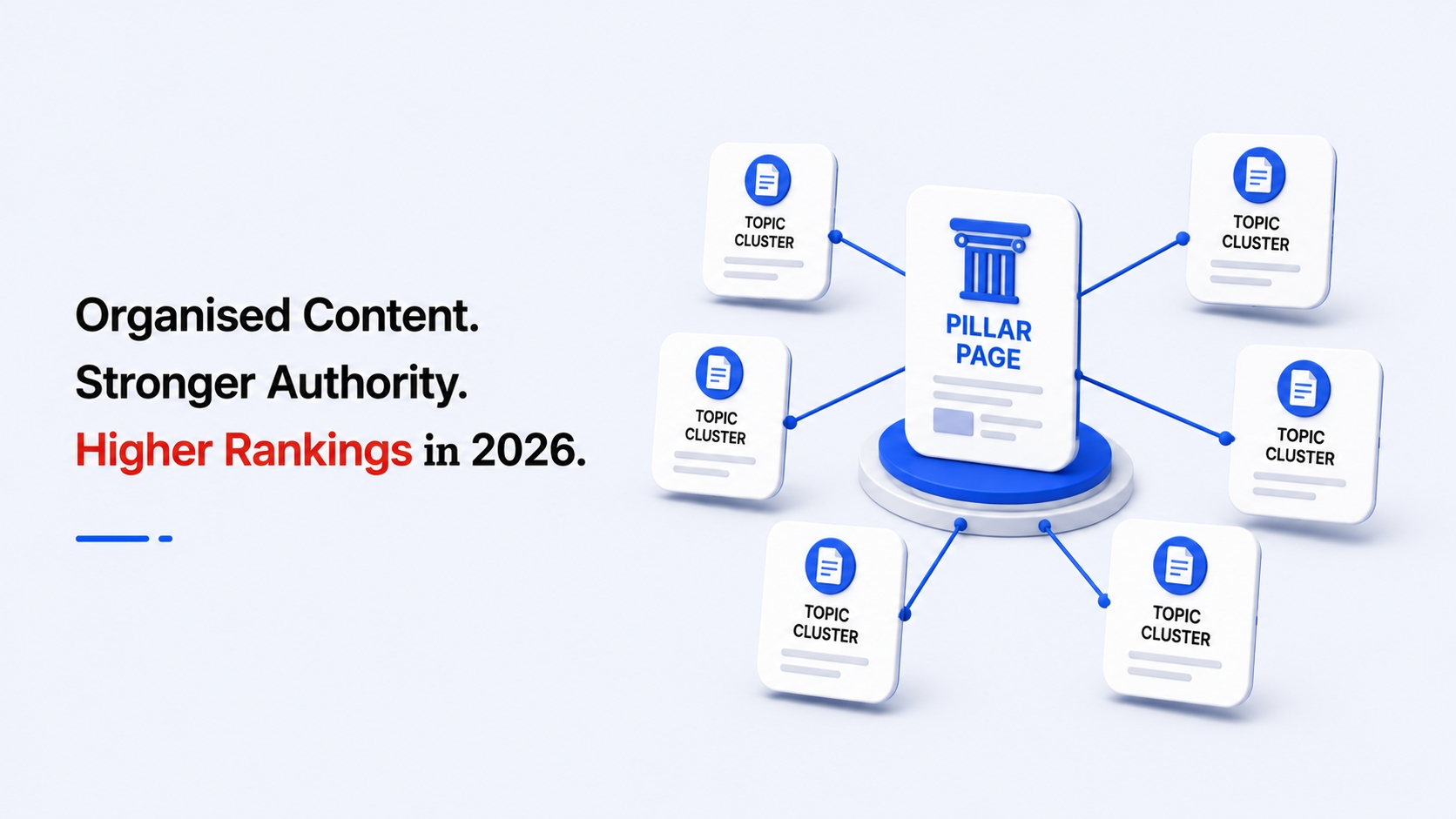
Website visibility relies on more than great content. Search engines now pay attention to how information is structured, interconnected and presented to users. This shift has placed pillar page and topic cluster frameworks at the centre of modern content cluster SEO strategy. A site’s architecture, once overlooked, is now a key differentiator. In 2026, structured content, robust internal links and AI-backed categorisation are expected for brands that aim for strong organic rankings.
Understanding Pillar Pages vs Blog Posts
Pillar pages serve as the authoritative “hub” for a broad topic, offering exhaustive coverage in ways a standard blog post cannot. Think of a pillar page as a comprehensive guide, accessible starting point and navigation tool. By contrast, blog posts address focused topics, trends or updates that fit within the pillar’s scope. For instance, a marketing strategy pillar page would cover everything from goal-setting to ROI measurement, while related blog posts might cover implementing content calendars or AI marketing consultant advice.
This difference in depth and scope has practical consequences. Pillar pages anchor major themes and help site architecture SEO by consolidating search authority. Meanwhile, supporting blog posts act as spokes, attracting niche traffic and referencing their parent pillar through strategic internal links. Together this content hub structure makes navigation logical for visitors and crawlable for search engines.
The Role of Topic Clusters in Ranking Higher
Topic clusters form the backbone of a scalable content cluster SEO strategy. Each cluster consists of one main pillar page, surrounded by multiple closely related blog posts. The blog posts all address specific user intents within the cluster, each linking back to the pillar using a consistent internal linking strategy SEO. Search engines understand this network as evidence of topical authority and trust, which can strengthen site-wide rankings.
Clustering content creates clear semantic signals for both human users and algorithms. Pages within a topic cluster accumulate contextual relevance, making it easier for AI-driven search systems to deliver accurate answers and citations. This benefits sites in traditional results, featured snippets and AI-generated results alike.
How to Build a Pillar Page and Topic Cluster
Choosing Core Topics for Pillar Pages
Begin by analysing your audience’s most significant interests. Identify themes central to your business such as marketing strategy, marketing automation or AI marketing operations platform. Use keyword cluster mapping to group related phrases, queries and subtopics. A pillar page should always target a high-level keyword that branches into multiple related subjects.
Planning Cluster Content
Once you select the core topic, brainstorm or research 8 to 20 related questions, how-tos or problems worth addressing. Look for terms where users would benefit from in-depth advice—for example, how to build a pillar page, best practises for internal linking strategy SEO and topic cluster examples. Each of these becomes a supporting article within the content hub structure.
Drafting the Pillar Page
Writing a pillar page differs significantly from producing a routine blog post. The page must serve as both a destination and a map. It should contain an overview of the main subject, links to each supporting article and easy-internal navigation. Thorough explanations, practical insights and examples belong on the pillar. Clarity is paramount, as users and search engines use it as an entry point into the topic cluster.
Grouping Keywords into Clusters
Keyword cluster mapping plays an integral role in an effective pillar page and topic cluster strategy. Start with a seed keyword closely tied to your products or services, such as AI marketing strategy or marketing automation. Use keyword research tools to identify all relevant variations and subtopics. Group these keywords by search intent rather than search volume alone. Each group should represent one informative aspect or frequently asked question related to the core topic.
For example, if the core theme is marketing automation, related clusters may include campaign workflows, AI consultant best practises or automation platform comparisons. List each keyword cluster alongside potential article angles to maximise topical coverage for each content hub structure.
Determining the Right Number of Posts in Each Cluster
No one-size-fits-all number exists, but best practise suggests aiming for 10 to 20 supporting pages per pillar. Too few posts may not establish enough subject depth, while too many dilute authority and confuse navigation. Instead, focus on meaningful variety: Include case studies, how-to guides, expert insights and troubleshooting articles. By diversifying the types of content in each cluster, you address both beginner and expert search queries and improve the chance of earning featured spots in traditional search and AI-generated answers.
Every supporting page should offer a clear value, answer a real question and connect back to the pillar. Relevance matters more than volume when constructing a credible content cluster SEO strategy.
Best practises for Site Architecture SEO
Robust site architecture SEO ensures that your content gets found, crawled and indexed efficiently. Begin by organising each pillar page as a top-level navigational hub, accessible within two or three clicks from the home page. Use clear section dividers, content tables and anchor links to enable seamless movement. Each cluster page should be nested logically in folders or categories that match its pillar’s theme.
Adopt a shallow navigation hierarchy whenever possible. If possible, expose every pillar and key cluster page in both the footer and main navigation menus. This approach ensures that internal link equity flows smoothly and no important article is orphaned from the main site graph.
Internal Linking Strategy SEO: How to Structure Links
Pillar to Cluster Links
The foundation of a high-performing internal linking strategy SEO is consistency. Ensure that every supporting blog post links to its parent pillar page, ideally in the first two paragraphs. This signals to search engines that the pillar page is the topical authority for the cluster.
Cluster to Pillar and Peer Links
Reciprocal links from the pillar to each cluster article reinforce the structure. Use descriptive anchor text that mirrors the article’s main keyword. When two cluster articles cover overlapping topics, interlink them directly. This horizontal linking helps search engines understand complex relationships and keeps users engaged longer on your site.
Navigation and Breadcrumbs
Implement clear breadcrumbs on every cluster post and pillar page. Breadcrumb navigation indicates the content’s position relative to other pages in the hub. This simplifies navigation and adds another layer of crawlable structure, complimenting a strong site architecture SEO foundation.
Do Topic Clusters Improve AI-Generated Answers and Citations?
Modern search now leverages large language models, pulling context from authoritative, tightly structured sites. Topic clusters elevate your chance of being cited in AI-generated results, since the structure helps algorithms surface relevant, well-organised explanations. Clusters that show clear relationships between pillar and subtopics become knowledge sources AI can reference confidently.
By presenting a unified narrative and supporting details throughout your pillar page and topic cluster, you signal authority to AI marketing consultant tools analysing the web. This increases the odds that your site’s content is referenced in AI-generated snippets or answers, bringing both exposure and credibility.
Retrofitting Clusters onto an Existing Site Archive
Many brands face the challenge of years of unstructured blog posts scattered across their archives. Begin retrofitting by auditing existing content for relevance and performance. Group articles by primary topic using keyword cluster mapping. Identify gaps or overlap, then designate a high-potential post to become your new pillar page for each core topic.
Next, revise internal links throughout the archive to direct authority and user flow towards the new pillar. Update navigation, breadcrumbs and category structures so old and new content fit within the new content hub structure. Revise outdated posts with fresh information, links and calls to action relevant to your AI marketing operations platform or marketing automation suite.
Measuring the Success of a Cluster
Analytics plays a vital role in assessing whether your content cluster SEO strategy produces measurable results. Monitor key performance indicators, such as organic search traffic, bounce rate, dwell time and conversion rates for both pillar and cluster pages. Track keyword rankings for main and supporting queries to identify visibility lifts. Use tools that report on how well your internal linking strategy SEO circulates search authority through the cluster.
Also, observe external signals like inbound links, social sharing and citations in AI-generated summaries or answer boxes. A robust cluster should improve both the pillar’s and its cluster pages’ rankings. Refine weak areas by adjusting anchor text, updating content or filling in gaps where users seek additional guidance.
Future-Proofing Your Content with Topic Cluster Examples and Automation
Leveraging AI and Marketing Automation Suite
AI-powered marketing tools can accelerate cluster creation, maintenance and analytics workflows. Leverage your marketing automation suite to schedule regular audits, track topical performance or automate the creation of cross-linking between pillar and cluster content. Use an AI marketing consultant to scan competitive sites, surface emerging subtopics and recommend timely optimisations.
Study best-in-class topic cluster examples from across different sectors. Note how leading sites maintain a clean site architecture SEO, unite expert-driven advice in comprehensive hubs and update cluster content promptly to maintain relevance. Implement automated alerts or dashboards that showcase which clusters underperform or need expansion so you can respond proactively in 2026 and beyond. Building content around marketing strategy and AI marketing operations platform keeps your site at the forefront of best practices.
Combining Human Expertise and AI for Scalable Clusters
While technology streamlines the process, human insight determines which cluster topics resonate and what points require in-depth coverage. Blend automated keyword research with manual review to prioritise what matters most to your users. Regularly consult your marketing strategy resources to guarantee alignment with business objectives. Strive for depth over breadth and seek out gaps competitors ignore. Refine your internal linking strategy SEO regularly to adapt to changes in search behaviour and AI model preferences.
By integrating AI-driven insights, a marketing automation suite and the expertise of an AI marketing consultant, your team can scale up topic cluster creation without sacrificing quality. In 2026’s search landscape, brands that organise their content hub structure for maximum clarity and connectivity will win both human audiences and AI-driven results alike.
!function(f,b,e,v,n,t,s)
{if(f.fbq)return;n=f.fbq=function(){n.callMethod?
n.callMethod.apply(n,arguments):n.queue.push(arguments)};
if(!f._fbq)f._fbq=n;n.push=n;n.loaded=!0;n.version=’2.0′;
n.queue=[];t=b.createElement(e);t.async=!0;
t.src=v;s=b.getElementsByTagName(e)[0];
s.parentNode.insertBefore(t,s)}(window, document,’script’,
‘https://connect.facebook.net/en_US/fbevents.js’);
fbq(‘init’, ‘1122401991165798’);
fbq(‘track’, ‘PageView’);