WASHINGTON — The Defense Department’s inspector general said Monday that it’s investigating U.S. Southern Command over its targeting of alleged drug-smuggling boats in the military’s campaign against drug cartels, which some critics have argued is illegal.
Subscribe to read this story ad-free
Get unlimited access to ad-free articles and exclusive content.

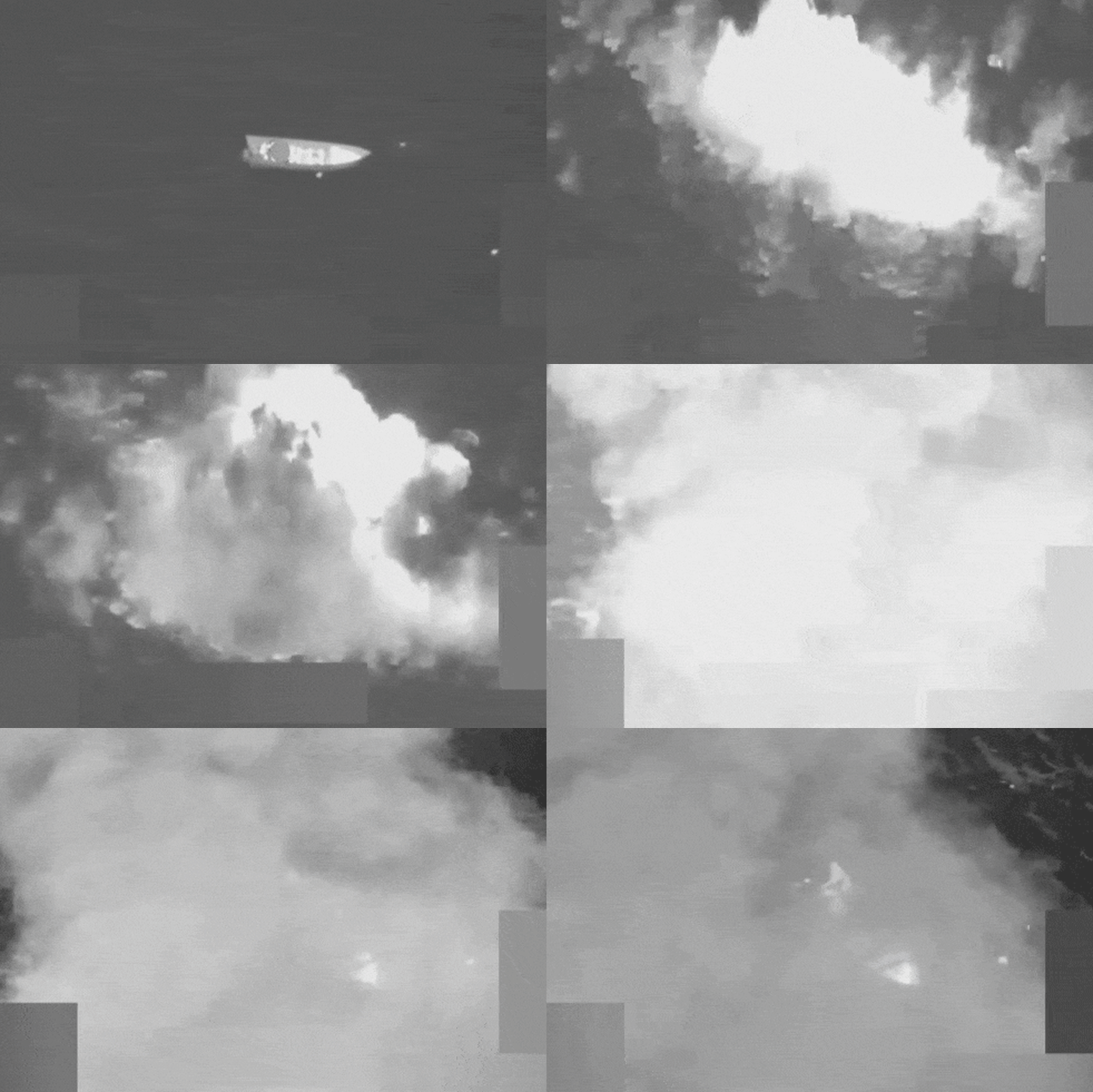
Southern Command has targeted nearly 60 small boats the military says were transporting drugs through the Caribbean Sea and the Pacific Ocean, destroying 59 vessels and killing 193 people since the campaign began last fall, according to the Pentagon.
The internal watchdog will look at the intelligence and targeting Southern Command used for the strikes, as well as other aspects of the operations against the drug cartels, according to a letter from the Pentagon’s Office of Inspector General dated May 11.
“The scope of this evaluation includes the joint process for targeted vessels in the U.S. Southern Command area of responsibility as part of Operation Southern Spear,” a spokeswoman for the inspector general said in a separate statement in response to a media inquiry.
Operation Southern Spear is the Pentagon’s name for the campaign against alleged drug-smuggling boats.
The inspector general initiated the investigation, the spokeswoman said. “This project was self-initiated based on the [Department of Defense’s Office of the Inspector General’s] ongoing assessment of … programs and operations.”
It was not clear how long the probe would take, according to a U.S. official. It will entail investigations inside the Pentagon and at Southern Command’s headquarters in Miami, according to the letter.
There was no immediate comment from Southern Command or the Pentagon.
The investigation will look into the military doctrine that governs how Southern Command targets the drug runners in the small boats, according to the letter.
In that context, the targeting process is broken into six phases: the commander’s intent, the development of each target, the analysis and intelligence surrounding each target, the decision to hit that target, planning and execution, and assessment, according to the U.S. official.
The senior military lawyer for the combatant command overseeing lethal strikes on the alleged drug-smuggling boats near Venezuela disagreed with the Trump administration’s position that the operations were lawful, and his views were sidelined, NBC News reported in November.
Many lawmakers, including some Republicans, have decried the operations, questioning their legality and demanding more oversight of them. The war with Iran has turned attention away from the ongoing strikes. Southern Command has conducted three strikes so far in May, killing seven people, according to Pentagon data.
In one instance, the U.S. targeted a boat in which there were survivors and returned with another strike that killed those people, a potential violation of the law of armed conflict.
Soon after the Pentagon began its campaign against drug cartels in September, the commander of Southern Command, Adm. Alvin Holsey, announced he was stepping down after only one year in the job. He was replaced by Marine Corps Gen. Frank Donovan.