
/filters:format(webp)/telenet/media/media_files/2026/09/04/artificial-2026-09-04-11-29-52.jpg)
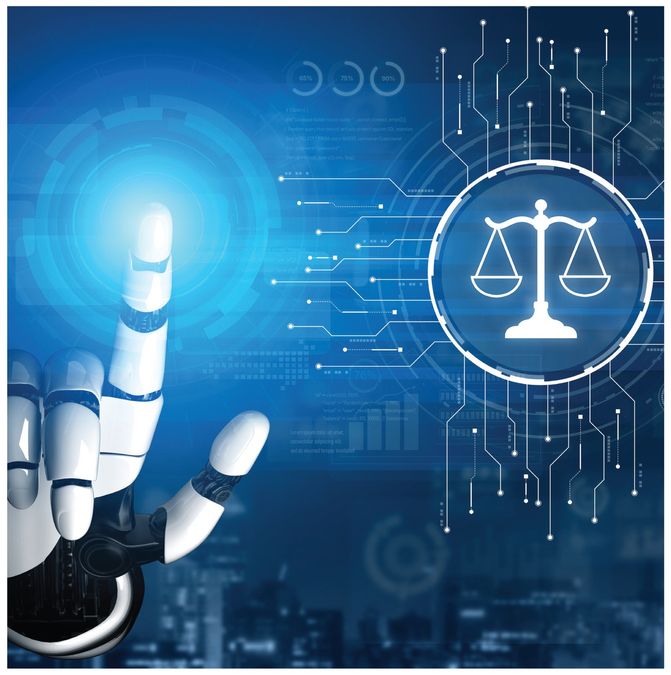
India’s artificial intelligence (AI) ambitions have moved decisively from policy paper to physical infrastructure. What began as the National Strategy for AI under NITI Aayog in 2018 has, over the past two years, translated into gigawatts of planned data centre capacity, tens of thousands of graphics processing units (GPUs), expanding fibre and 5G footprints, and a genuine race among states to position themselves as India’s AI hubs. As the country prepares to scale its digital economy, the centre and states are now working in tandem – sometimes competitively – to build the compute, connectivity and power infrastructure that AI demands.
Central government takes the lead
The union cabinet approved the IndiaAI Mission in March 2024 with an outlay of roughly Rs 103.72 billion over five years, structured around seven pillars: compute infrastructure, foundation models, datasets, application development, skilling (FutureSkills), start-up financing, and safe and trusted AI. Compute has been the mission’s most visible achievement. By February 2026, India had already crossed 38,000 GPUs against an original target of 10,000. Further, at the India AI Impact Summit, the government announced “AI Mission 2.0”, adding a further 20,000 GPUs to take total capacity beyond 58,000 units, with a target of 100,000 GPUs by the end of 2026. The expansion has been delivered largely through public-private partnerships that lease capacity from private data centre and cloud operators rather than the government building everything itself, with subsidised access priced as low as Rs 65 per GPU-hour (roughly a third of global market rates).
Alongside compute, the government has pushed hard on sovereign, homegrown AI models. The mission has identified 20 sovereign AI model proposals for support, including 12 large language models and eight small language models. One flagship output is BharatGen, described as India’s first government-funded, homegrown multimodal large language model, supporting 22 Indian languages and combining text, speech and image understanding, built specifically on domestic datasets to reflect India’s linguistic and cultural diversity.
Skilling has also kept pace with the infrastructure build-out. The government is backing 500 PhD scholars, 5,000 postgraduates and 8,000 undergraduates in AI-related research, while IndiaAI Data and AI Labs have been set up in Tier II and III cities through the National Institute of Electronics and Information Technology to widen the talent pipeline beyond the traditional metro tech hubs. On governance, the Safe and Trusted AI pillar has approved 13 Responsible AI projects across academic institutions covering bias mitigation, machine unlearning, privacy-preserving AI, explainability and deepfake detection, recognising that AI-ready infrastructure is not only about GPUs and data centres, but also about the guardrails around their use.
On the deployment side, government adoption of AI is also widening well beyond pilots. Central ministries and departments have rolled out AI-based systems for cybercrime complaint processing, multilingual document handling, health insurance claims processing and examination identity verification, with further initiatives under way in cancer screening, mineral exploration and regulatory compliance. This shift from promoting AI innovation in labs to embedding AI into everyday public administration is arguably as important to AI readiness as the compute layer itself, since it creates sustained, real-world demand that justifies continued infrastructure investment.
State governments become primary vehicles of implementation
If the centre has set the policy direction, states have become the primary vehicle for translating that vision into implementation. At least eight states, namely Rajasthan, Karnataka, Telangana, Tamil Nadu, Maharashtra, Odisha, Uttar Pradesh and Haryana, now have their own dedicated data centre policies, each offering capital subsidies, land concessions, power tariff benefits and other incentives to attract hyperscale and AI-specific data centre investments.
Uttar Pradesh bets big on GPU-ready capacity
Uttar Pradesh has made perhaps the most aggressive move. In July 2026, the state cabinet approved the Data Centre Policy, 2026, replacing the 2021 framework that had expired earlier in the year. The new policy targets more than Rs 2 trillion in private investment and over 2 GW of additional data centre capacity. The policy explicitly incentivises GPU-based and energy-efficient facilities through dedicated AI compute booster and green and sustainable operations incentives, alongside capital subsidies, interest subsidies and concessions on land, stamp duty and electricity charges. Special incentives have also been carved out for the Bundelkhand and Purvanchal regions to spread investment beyond the NCR belt. The policy is projected to create around 7,500 long-term direct jobs plus roughly 50,000 short-term construction-phase jobs. Separately, the Ministry of Electronics and Information Technology and the Uttar Pradesh government are jointly funding (with an 80:20 government-to-industry cost share) three AI centres in Lucknow and Kanpur, with industry partners including Google, Microsoft, Tata Consultancy Services, Hindustan Computers Limited (HCL), EY and the National Association of Software and Service Companies.
Telangana plans to develop Hyderabad as sovereign AI compute hub
Telangana has pursued a similar strategy, with a sharper focus on positioning Hyderabad as a sovereign AI compute hub. The state has signed agreements for AI data centre clusters worth over Rs 200 billion, including a 400 MW cluster developed with CtrlS Datacenters and another 400 MW facility developed with Japan’s NTT DATA and Neysa Networks. The latter has been designed to host what has been described as the country’s most powerful AI supercomputing infrastructure, with capacity for around 25,000 GPUs. Telangana’s stated ambition is to become the “AI capital of India”, offering sovereign, scalable and sustainable compute for both public and enterprise workloads.
Karnataka builds on an established base
Karnataka, India’s technology hub, notified a new data centre policy in July 2026 to build on an existing 2022-27 framework making it less a fresh start than system upgrade that has already been attracting investment for several years.
Other states vying to create AI infrastructure
Maharashtra and Tamil Nadu are where much of India’s AI infrastructure is already running rather than merely planned. The two states together account for close to two-thirds of the country’s currently installed data centre load, with Maharashtra alone anchoring over half of it around Mumbai and Navi Mumbai, backed by strong subsea cable connectivity and an established developer ecosystem, while Tamil Nadu’s Chennai cluster continues to draw hyperscale investment on the back of port connectivity and industrial infrastructure.
Rajasthan has been among the most active recently. In January 2026, the state unveiled its AI-ML Policy, 2026, alongside a dedicated data centre policy, and by July 2026 had secured investment proposals worth roughly Rs 430 billion in the data centre sector, backed by land availability, renewable power and a single-window clearance system. Haryana has moved fastest on policy – in June 2026, it launched the “Make in Haryana” Industrial Policy, 2026, targeting Rs 5 trillion in investment, alongside dedicated Data Centre and Global Capability Centre policies and an AI-enabled “Single Window 2.0” clearance system, along with securing an early Rs 200 billion commitment from Anant Raj for data centre infrastructure in Gurugram. Odisha has emerged as a newer entrant, with HCLTech and Sarvam AI announcing a $1.5 billion AI data centre in the state in mid-2026.
The centre and states have, on occasion, moved in the same room and on the same day. At the India AI Impact Summit in New Delhi in February 2026, the same event where the central government unveiled the AI Mission 2.0, Gujarat signed its own agreement with L&T Vyoma to build a Rs 250 billion, 250 MW green AI data centre in the Dholera special investment region, a reminder that central policy announcements and state-level deal-making are increasingly happening in tandem rather than in sequence.
The road ahead
Central mission funding and governance and supportive state-level data centre policies are strengthening India’s position in the global AI infrastructure race. The India AI Impact Summit alone is reported to have drawn over $250 billion in announced investment commitments across AI infrastructure, computing systems and data centres spanning both central initiatives and the state deals signed at the same event, underscoring how closely the two levels of government are now
moving together.
However, the harder test lies ahead. Sustaining this build-out will require reliable, affordable power at gigawatt scale. The Central Electricity Authority projects peak power demand to rise from 289 GW in FY 2027 to 388 GW by FY 2032, driven in part by growing AI infrastructure. Disciplined execution across state and central schemes will play a critical role in turning announced capacity into commissioned capacity. If India can align these elements – compute, power and execution – as effectively as it has aligned policy intent, the AI-ready infrastructure taking shape today could underpin the country’s digital economy for the next decade.










Leave a Reply