
Over the break, my family and I were in Vienna, trying to figure out where to eat. My dad pulled out his phone… and instead of opening Google, he opened ChatGPT.
He asked ChatGPT to recommend restaurants near our hotel that could handle our group dynamics: my mom was in her no-gluten era, my brother didn’t do spicy food, and we all wanted a good meal within walking distance (December in Vienna is cold).
ChatGPT gave him three options, with detailed reasoning for each. Dad proceeded to gleefully choose one, and off we marched into the cold. Dinner was… okay, if I am being completely honest.
While the eldest daughter in me was amused with the entire adventure, the marketer in me kept thinking: where exactly did that recommendation come from?
It most certainly was not the restaurant in question’s minimal, outdated, stuck-in-the-nineties website. Rather, ChatGPT synthesized around 10 different sources: several hyper-specific Reddit threads, a few TripAdvisor reviews, food blogs, and a couple of YouTube videos recommending this local spot. And without reviewing each of those sources personally, my dad just trusted the output.
And if my dad had clearly gotten in the habit of interacting with ChatGPT in this manner (mind you, this is the guy who still calls me for help navigating his GMail), then surely a lot more people are doing this as well, and we are witnessing new behavior patterns of how people research products, compare services, and decide which brands to trust being created, all in real time.
And the common thread across almost all those sources ChatGPT cited? Reddit threads where real people shared real experiences about real restaurants.
Why Reddit Actually Matters (& It’s Not Just About AI)
My personal experience with my dad’s (rather unexpected) search process in Vienna dinner is no longer an anomaly.
Conversational, summary-driven answers have become the default for go-to search experiences, and Reddit is the ultimate homebase for community-driven, conversational, almost raw content generated by users. Reddit has easily become the go-to choice for users to consult for any niche question or decision they have, and the interesting parallel that emerges today is that this natural, conversational content is in many ways mimicking how people already interact and converse with LLMs.
With the introduction of AI mode and Google AI Overviews, users increasingly access out-of-the-box answers to their questions, rather than going through the traditional search-and-click-the-blue-links motions we’ve been so used to since the dot com boom.
To Google’s credit, the tech giant clearly saw this shift coming, seeing as they signed a $60 million deal with Reddit in 2024, allowing the search engine to use Reddit as a training source for its LLMs. OpenAI followed with a similar partnership shortly after, and for an obvious reason: Reddit’s conversational format and authentic user discussions were exactly what AI models needed to sound less robotic and more human.
As of today, Reddit (along with other social sources like YouTube and LinkedIn) is consistently one of the most-cited domains across LLMs, based on an analysis of 5M+ citations across Google AI Overviews, ChatGPT, Claude, and Perplexity.
Which means the question we as marketers should be asking at this point is no longer “should we optimize for AI search?” It’s “what information are AI models actually parsing through when they research entities?”
News flash: they’re not just scanning your carefully crafted website copy or your owned thought leadership content. They’re also indexing whatever people happened to say about you on Reddit two years ago. And that becomes part of your brand reputation, whether you participated in shaping it or not.
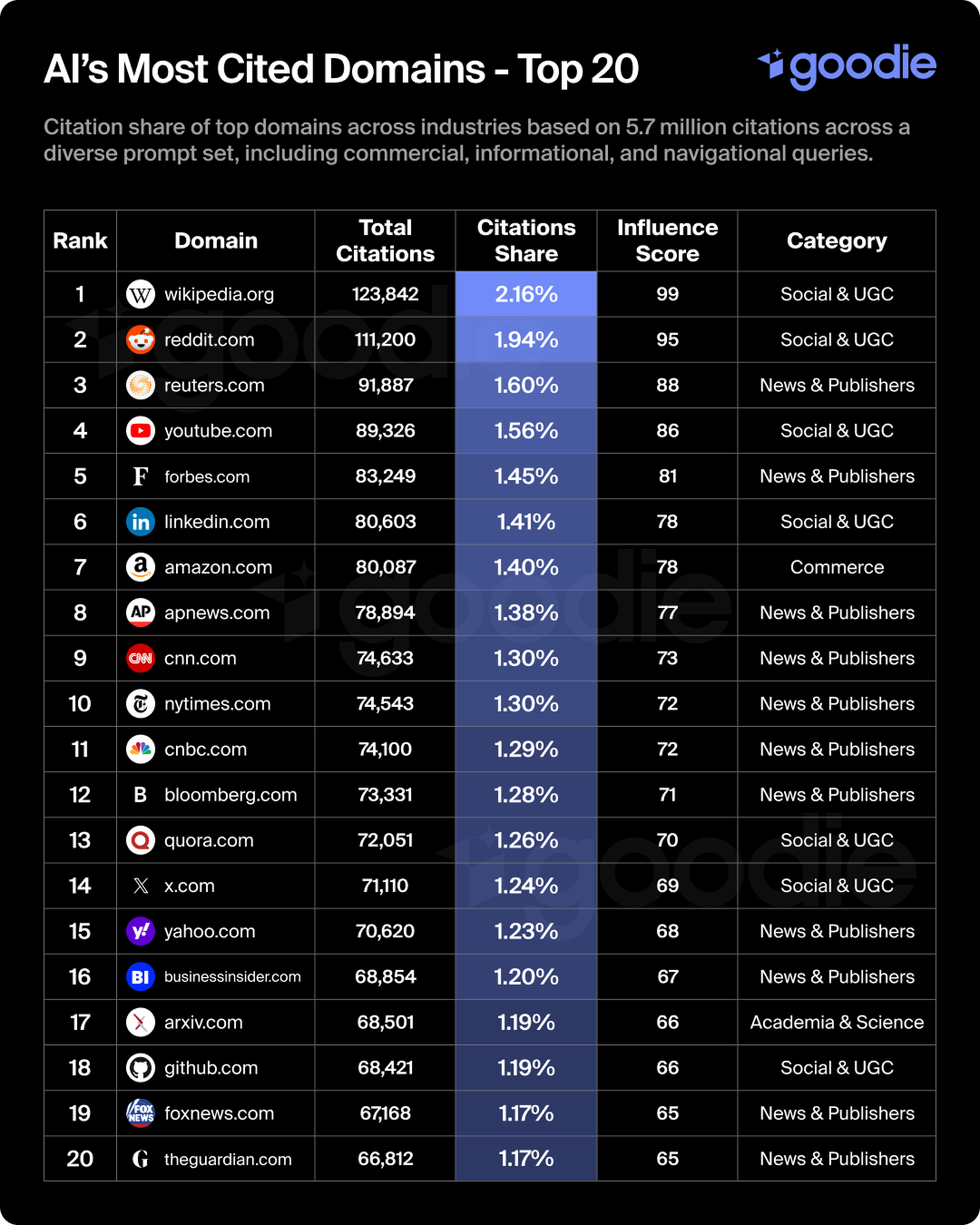
While AI search is the most salient reason why marketers should be hitting Reddit hard in 2026, Reddit matters in ways that go way beyond AI citations; reasons that have made Reddit relevant since the inception of the platform.
Think beyond numbers and into human needs: Reddit matters because it’s where people go when they don’t trust marketing. It’s where prospects research a brand before the sales call. It’s where they share concrete concerns and suspicions, and get answers from real users with real frustrations and real experiences, not manicured feature comparison charts in an on-brand color scheme.
When someone Googles “[your brand] review” or “[your brand] vs [competitor],” the Reddit threads often rank first, far above your case studies or even competitor content. And let’s be honest, how many times have you passed Google’s blue link recommendations by searching “[brand] + reddit” directly, knowing well that’s where you’ll find honest, unfiltered takes from real users instead of marketing polish? Guilty as charged.
In other words, these organic threads with built-in social proof consistently rank above everything you control.
Reddit has 116 million daily active users, 443 million weekly active users, and over 100,000 active communities generating 23 billion posts and comments. These numbers are just the tip of the iceberg when it comes to proof of where your prospects are doing research right now, today (whether you’re participating or not).
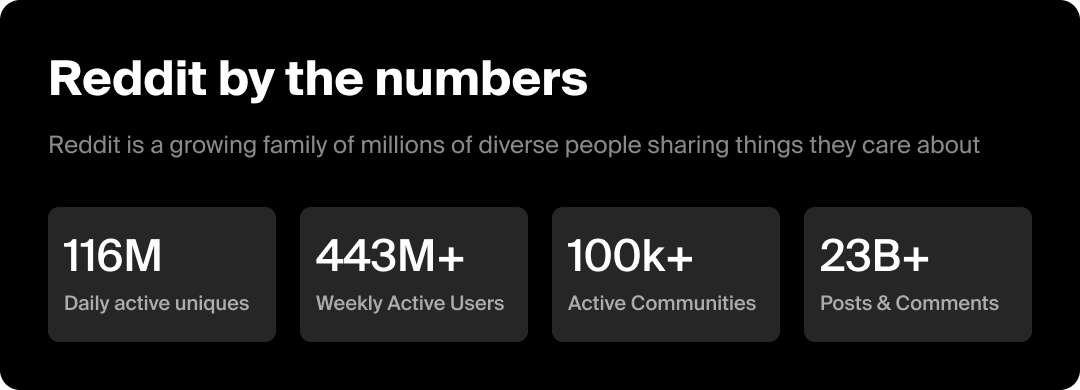
If these numbers aren’t doing the work to convince you, let me put it plainly: Reddit can’t be a social channel you should maybe, potentially, experimentally explore after you map out your owned content on owned social. It’s now an essential reputation infrastructure, and you’re either building on it intentionally, or you’re letting other people build your reputation for you.
Hint: Most brands are doing the latter without realizing it.
Why Reddit Works the Way It Does (& Why You Should Care)
At first glance, it’s easy to assume that the reason AI models pull from Reddit so heavily is the sheer volume of content; and yes, indeed, Reddit has plenty of that.
In reality, though, it’s structure. The formula is familiar and simple: someone posts a hyper-specific problem → the community provides hyper-specific solutions. The format is basically pre-optimized for how LLMs retrieve information, with a built-in Q&A formula.
Over half of Reddit content cited by AI comes from Q&A threads, followed by comparison posts and discussion threads. When someone asks “what’s the best project management tool for a remote team” on Reddit, the post format closely mimics the way humans actually ask questions, which is inherently different from how we as marketers would often structure an SEO-friendly query.
The beauty (and secret advantage) of Reddit threads is that virtually every answer already sounds the way humans actually answer: with context, caveats, personal experience, occasional typos, and usually three people jumping in to argue about edge cases, without the entire experience sounding like a design by committee. It’s no wonder there is a “gold rush” for social data as such, as exemplified by the Google and OpenAI partnerships, and even the lawsuits (don’t forget Reddit suing Perplexity for content scraping without permission).
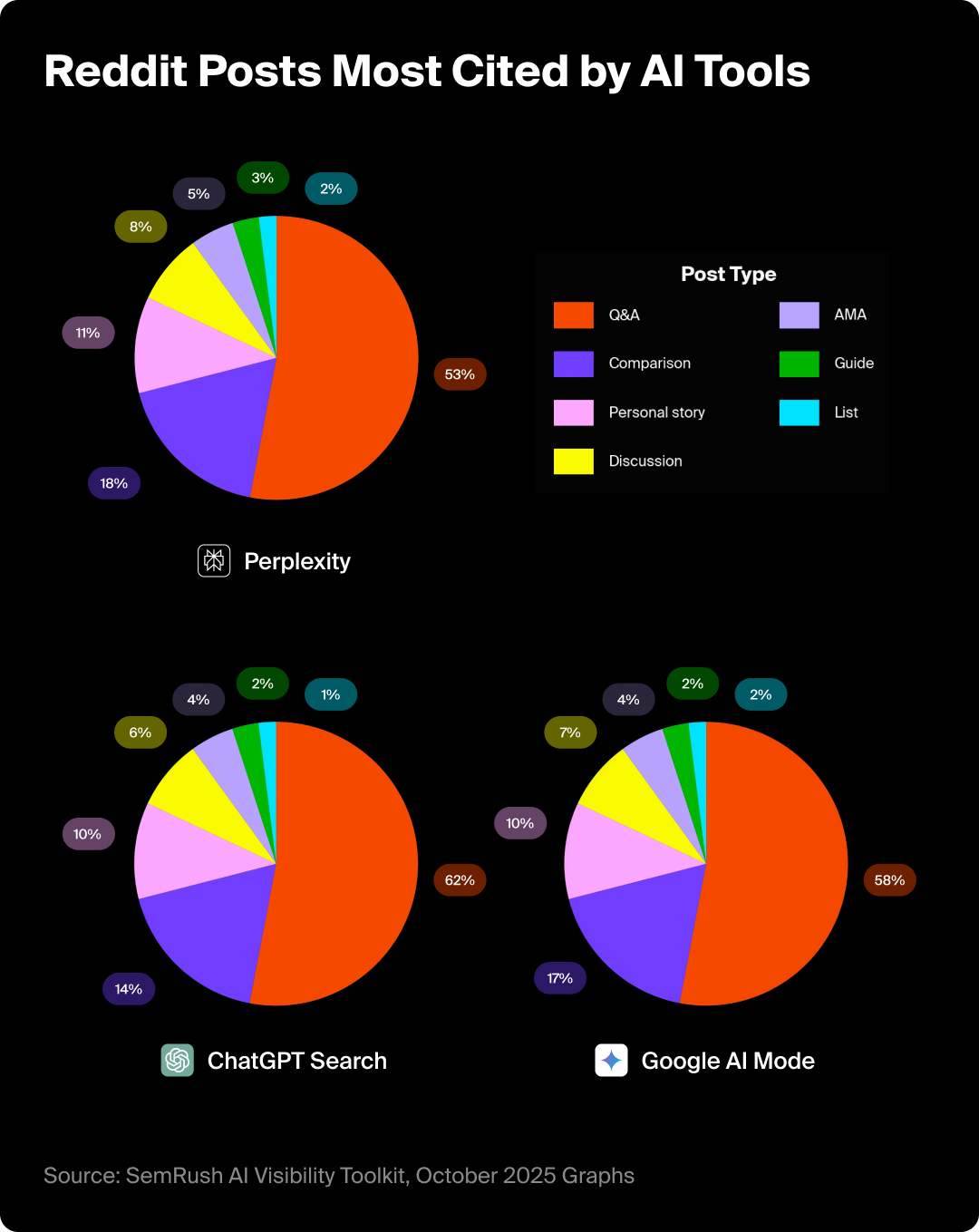
Source: Reddit AI Search Visibility Study
In marketer-friendly terms, picture this scenario: in typical B2B SaaS fashion, your website might say something along the lines of: “Our platform increases productivity by 40%.” Legal-approved, brand-safe, conversion-focused, and the copy checks all the boxes.
Right?
In the meantime, an anonymous user on Reddit might say something different: “I switched from Asana to Monday, and it’s been great for our design team, but the dev team hates it because the API integration is janky.” Both might be true, but only one sounds like a real person solving a real problem.
Perhaps the most fascinating factoid I discovered when I started looking into this was that LLMs prioritize topical clarity and alignment over traditional engagement metrics. A thread with 50 upvotes but clear, specific answers will outperform a viral post with thousands of upvotes but vague commentary.
From this, we gather that AI models are looking for signals, not popularity. They want the thread where someone explains exactly how they set up their tech stack and why they chose each tool, not the thread where everyone just says “use Notion” without context.

Source: Reddit AI Search Visibility Study
The Reddit game forces us to rewrite our approach to measuring success away from going viral, and towards prioritizing being substantive and value-first in the right places. It also means that Reddit is more forgiving of strong evergreen content, unlike certain other platforms.
TL;DR: Reddit is where real brand perception lives right now, today, whether AI is involved or not.
Choosing Your Reddit Marketing Path
Most advice about Reddit falls into two camps: “Create a branded subreddit!” or “Engage authentically in existing communities!”
Before you decide between the two, you need to answer one question: does r/YourBrand (or any version of it) already exist somewhere out there in the Reddit ether?
While you might think that the question is self-explanatory (to some brands, it’s not), depending on your brand awareness level and growth maturity stage, there’s a real probability that there’s already a subreddit about your company, team, offerings, you name it, created by fans, critics, or just people comparing you to competitors. And if there isn’t one yet, there might be scattered conversations happening across a dozen different communities.
Here’s how to assess where you actually are:
Search for a subreddit for your brand name (or variations of it). If one exists, who created it? Check the moderator list (it’s public). Are they fans? Employees? Volunteers? Is it active or abandoned?
Search your brand name as a regular query too. Where do those conversations show up? One subreddit? Five? Twenty? Are people asking questions, sharing experiences, complaining?
This assessment determines your path. There are three scenarios most brands fall into, and each requires a different approach.
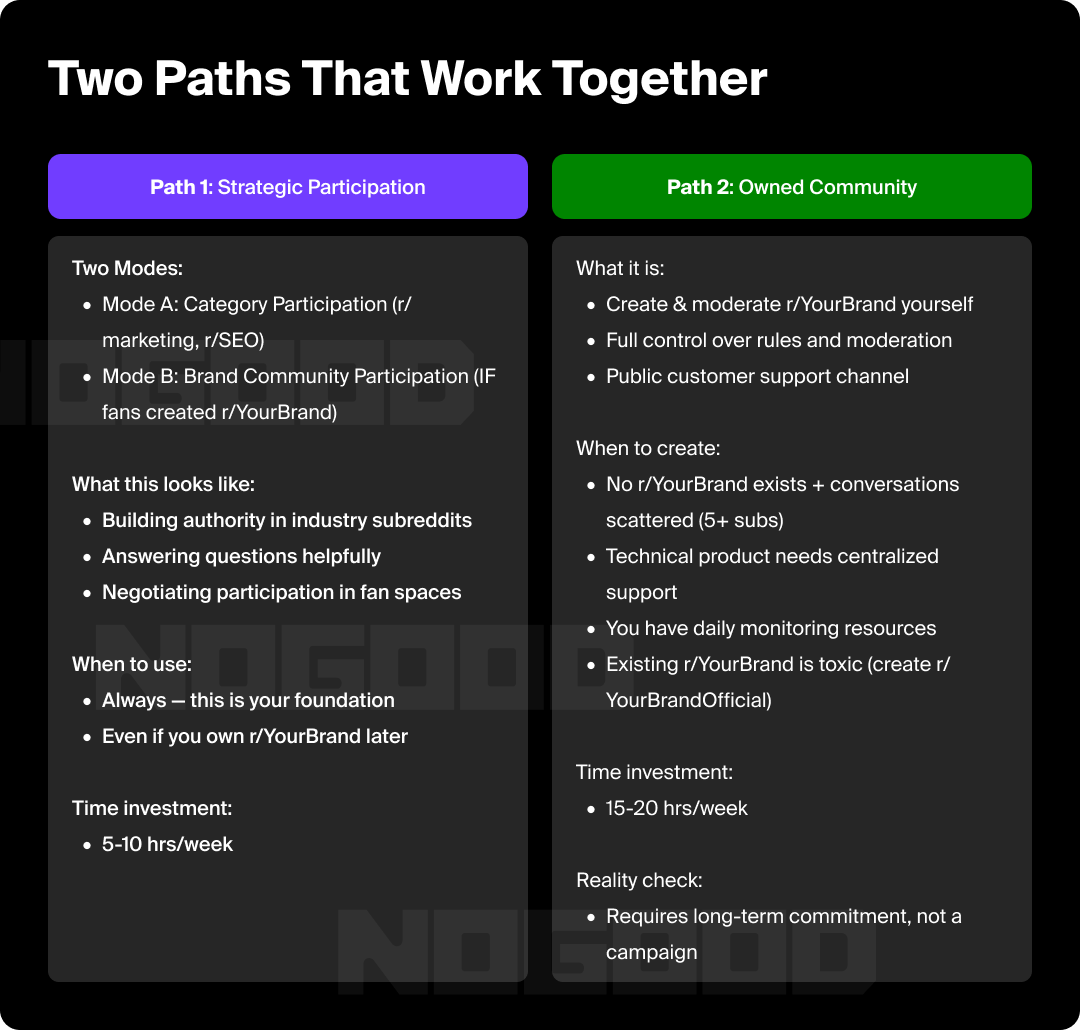
Path 1: Strategic Participation (or “Always On,” Reddit Version)
This is where every brand should start (and where you should stay at all times, even if you later create your own subreddit). With strategic participation, you’re building credibility in places where conversations already happen, adding value where you have genuine expertise.
Strategic participation has two modes, and you might consider engaging with both:
Mode A: Category Participation
Category participation is engaging in relevant subreddits about your industry, but not your brand specifically. You’re building authority where your audience already gathers by bringing value to the table.
While examples like these are so hard to track, there is one specific one I love coming back to as an example. The Ahrefs CMO, Tim Soulo, is the protagonist of this example:
Every two years on the dot, he posts the same thread in r/bigseo asking for feedback (he has been doing this since 2015, as he so astutely mentions in each annual post), including the brutal kind. In his most recent post, he opened with “It’s been 10 years since we first launched Ahrefs. Time flies.” Then he answered everything from pricing complaints to feature requests, staying in the thread for hours.
The community knows that he works for Ahrefs. But they also know that he’s there to participate in SEO conversations, not just drop links and disappear.
Semrush takes a hybrid approach. They own r/SEMrush (more on that later), but their reps also show up in r/marketing, r/SEO, and other communities to answer questions wherever they’re relevant. They own a space, yes. But they also participate where conversations already happen.

Even traditional media uses this model.
The Washington Post (u/washingtonpost) posts articles across relevant subreddits like r/politics, r/WashingtonDC, and r/Music. I admire their consistent participation in spaces where their reporting genuinely adds value, and I am simply obsessed with WashPo because of their social game in general, now adding Reddit to the list of channels they have conquered (and thus redefined traditional media’s approach to social at large).

What this might look like tactically:
- Employee accounts in relevant subreddits. Your developer answers technical questions in r/webdev. Your customer success person helps someone troubleshoot. Be sure to remain transparent about who you work for, but remember that value comes first (and include affiliation with the brand in usernames for an extra dose of transparency).
- AMAs in category subreddits. Your founder does an “Ask Me Anything” in r/Entrepreneur about building a business, not selling your product. Honorable mention to Keeanu Reeves doing an AMA on r/movies (#obsessed).
- Helpful comments on individual posts. Someone asks “What’s the best way to do X?” and you have genuine expertise. You answer thoroughly, mention you work for [company] if relevant, and move on. Repeat after me: DO NOT SELL.
The participation is transparent, but the value comes first.
Mode B: Brand Community Participation
Brand community participation is different from category participation, but still quite common. This is when r/YourBrand already exists, but fans created it, not you.
You search Reddit and discover r/YourBrand has a few thousand members. The moderators are volunteers (think: fans, power users, or just people who wanted to create a space for positive or negative feedback). You had no idea this existed, or you did, and just had to accept that your audience beat you to it.
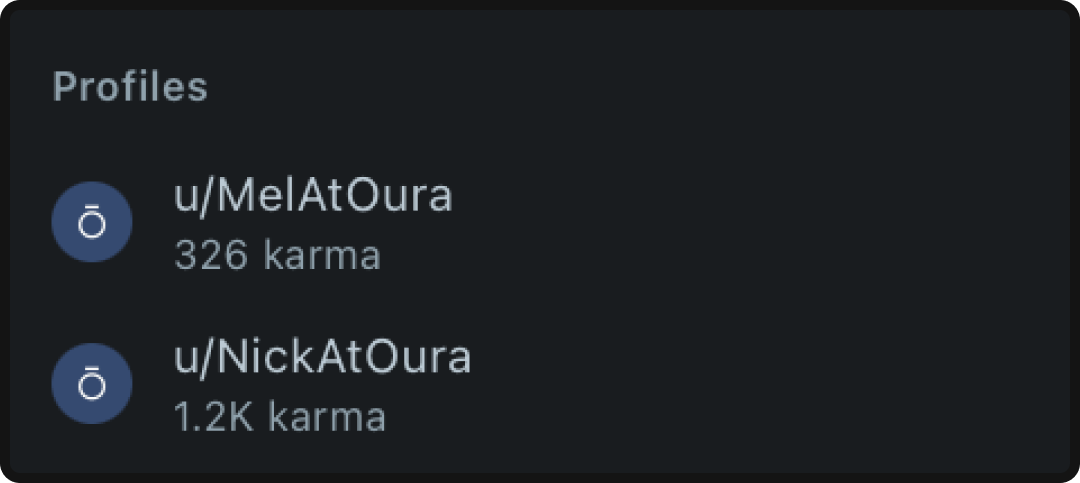
This is more common than you’d think: brands like Oura, Gymshark, Mint Mobile, and even Claude/Anthropic are navigating this right now.
What you do first is you accept the reality: you don’t own r/YourBrand. You can’t. Someone else created it, and those volunteer moderators now also control it.
But this isn’t necessarily a bad thing, because this type of engagement gives you an underrated superpower: while a community like this takes away from your ability to have total control, it also brings built-in social proof to the table because it’s grassroots and community-led through and through.
What does this mean for you? You can build a partnership where your brand participates meaningfully without taking over.
Mint Mobile’s subreddit calls itself “semi-official” right in the description, and the actual moderators are users; but Mint has multiple brand accounts that participate, like u/MintMobileAlex (Executive Care) and u/mintmobile (Official).
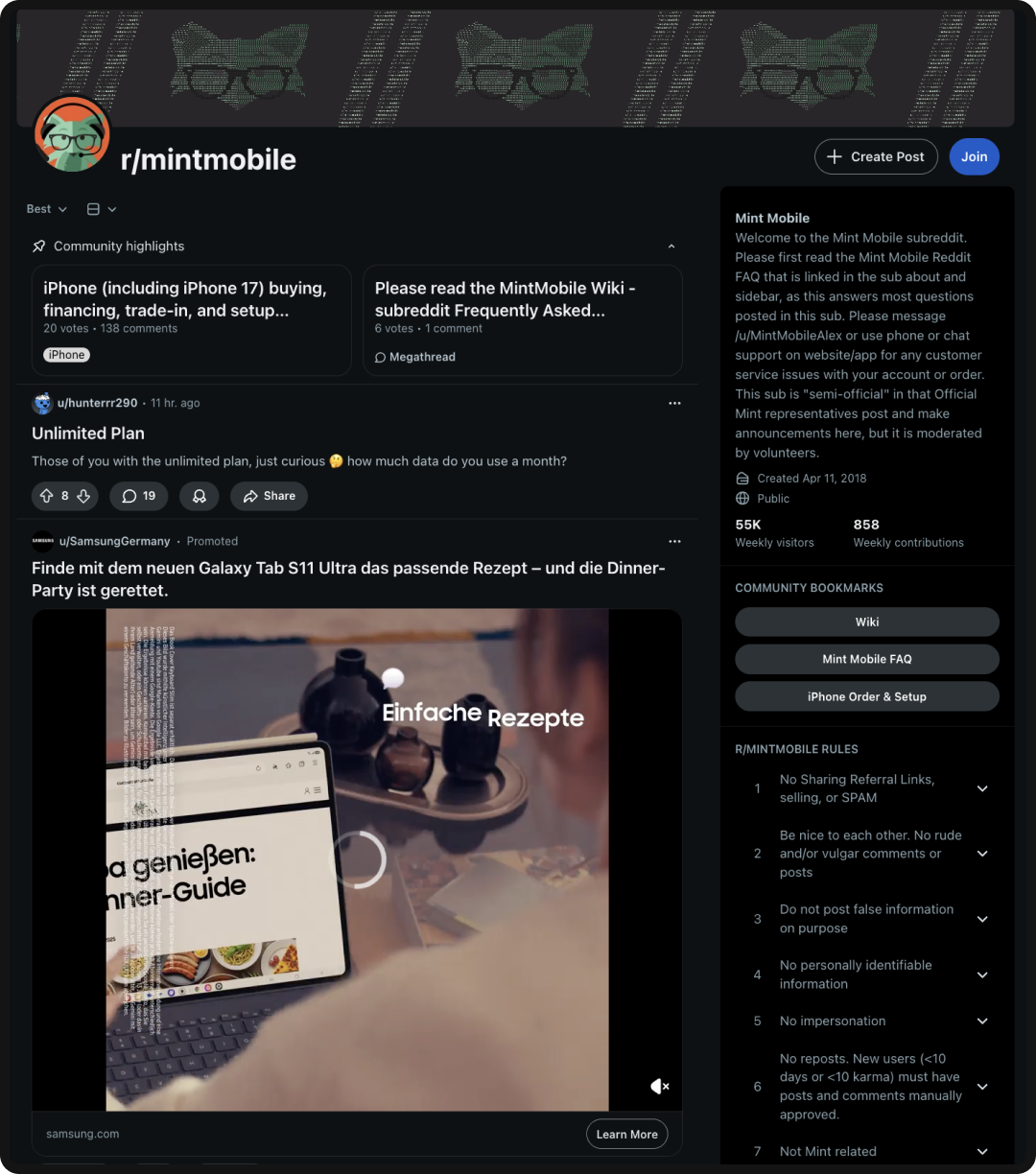
The brand doesn’t control moderation. Volunteers do. But Mint negotiated participation rights, and they use that access strategically, helping where there are gaps, answering complex questions, directing people to support when needed.
Here are some tactical ways you can tackle this scenario.
First, reach out to the moderators. Message them directly; introduce yourself. Ask if they’d be open to the brand having a presence.
If they’re open, negotiate what that looks like:
- Can you have a brand account with commenting permissions?
- Can you post official announcements?
- Can employee accounts participate too?
- What are the rules around promotion?
Then, execute with discipline for the simple reason that you’re guests in someone else’s space, even if it’s named after your brand. That means:
- Multiple accounts for different purposes. Brand account for official announcements. Employee accounts (with names and roles disclosed) for helpful participation.
- Selective participation, not saturation. Respond to specific questions. Don’t jump into every thread.
- Respect the volunteer moderators. They’re doing this for free. Don’t treat them like employees or try to negotiate your way into control.
Sometimes, you need to own the space outright. And if you’re in this camp and prefer end-to-end control (valid), get excited: you can, in fact, create and fully moderate r/YourBrand yourself.
This is the path brands like Fidelity, Wellhub, and Semrush took.
A branded subreddit immediately becomes a public customer support channel, whether you intended that or not. People will post complaints, ask detailed product questions, compare you to your competitors in real time. You can’t control that narrative; you can only facilitate it through moderation, guidelines, and pinned materials (like megathreads).
Semrush uses r/SEMrush (about 6,500 members) to host AMAs with product leads, share feature updates, and gather feedback. At the same time, they also participate in other marketing subreddits and don’t rely solely on their owned space.
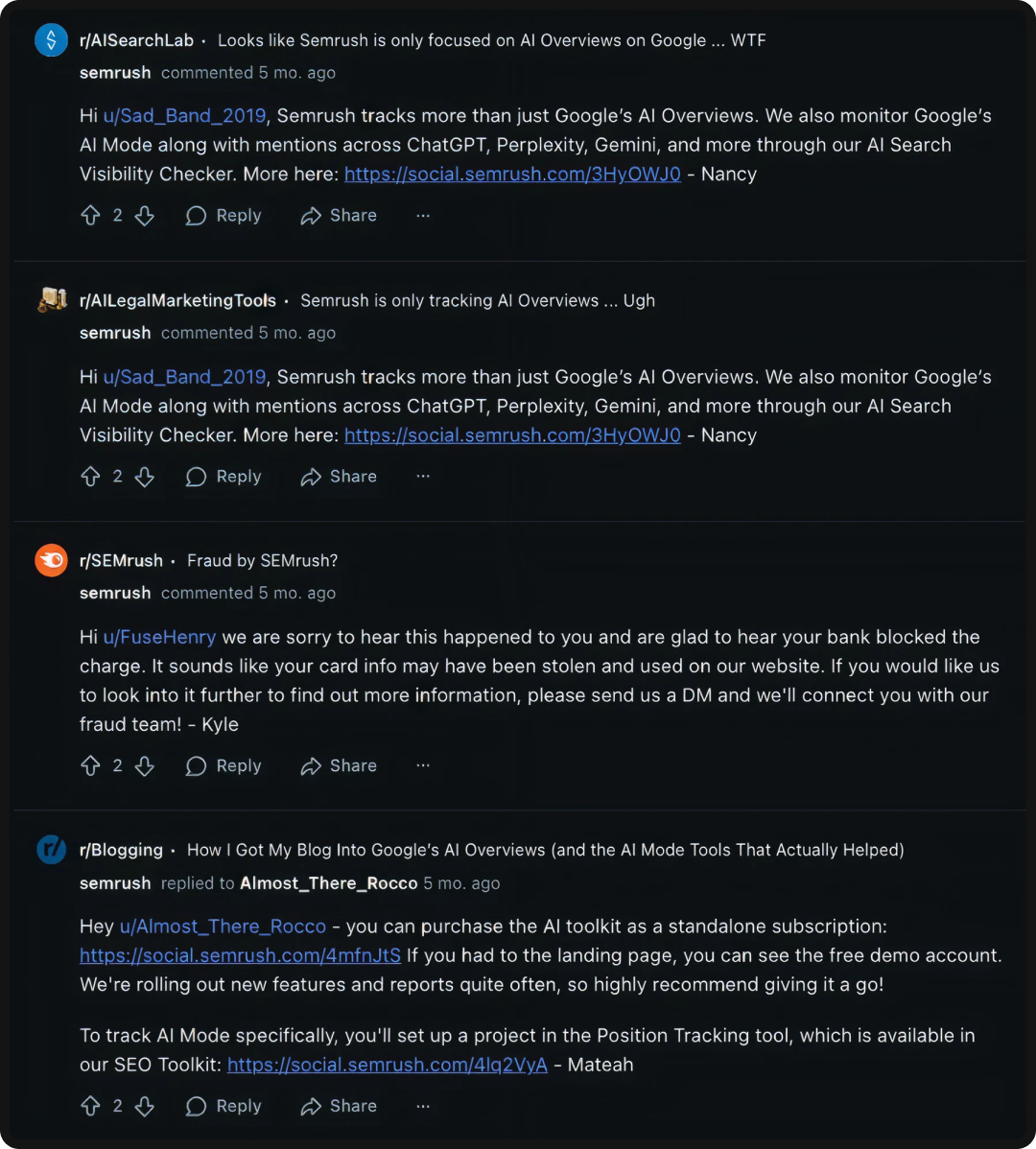
To make this a reality, you have to be honest with yourself on what resources you are willing to dedicate to the cause, so to speak, and what your comfort zone really (I mean really) looks like. Here’s what you need:
- Team members (or an agency partner) who can monitor and respond daily. This is ongoing infrastructure with listening and creation, not a campaign.
- Comfort with public feedback, positive and negative. If you’re not ready to see complaints aired publicly (and learn to selectively address them), you’re not ready.
- The ability to treat this as customer service and research, not just marketing. The value is in what you learn and how you help.
- An understanding of Reddit’s culture. Self-promotion is generally prohibited unless you’re in a community you own. Redditors vote to elevate content, not algorithms. And trust; they will call you out (goodbye, Karma points).
If you’re on the fence deciding whether or not to create an owned subreddit, here’s a handy checklist for when creating your own makes sense:
- No r/YourBrand exists and conversations about you are scattered across 5+ subreddits (centralize them)
- You have technical products that generate ongoing support questions
- You have dedicated team members who can monitor daily
- You’re comfortable with public feedback
- You can commit long-term as infrastructure
- An existing r/YourBrand is toxic and you need to create r/YourBrandOfficial as an alternative
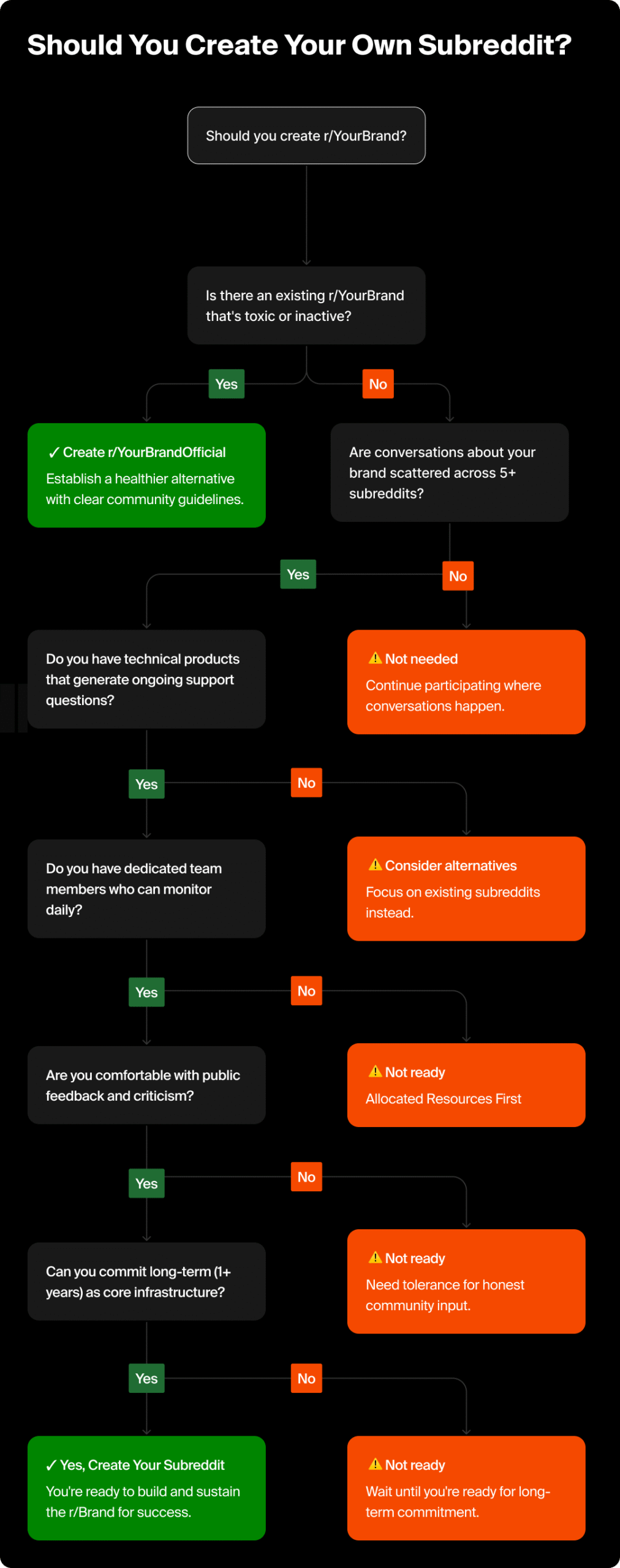
But you also need to be honest with yourself when you shouldn’t.
If you’re not ready to respond to public complaints within hours, or you don’t have the community management capacity, don’t create a branded subreddit. An abandoned r/YourBrand with three posts from six months ago is worse than not having one at all (sorry, but it’s true).
How to Decide Which Path Makes Sense
The best Reddit strategies often combine approaches (surprise!).
Ideally, the question shouldn’t be “which scenario do I pick?” It’s “which combination makes sense for my current resources and goals?”
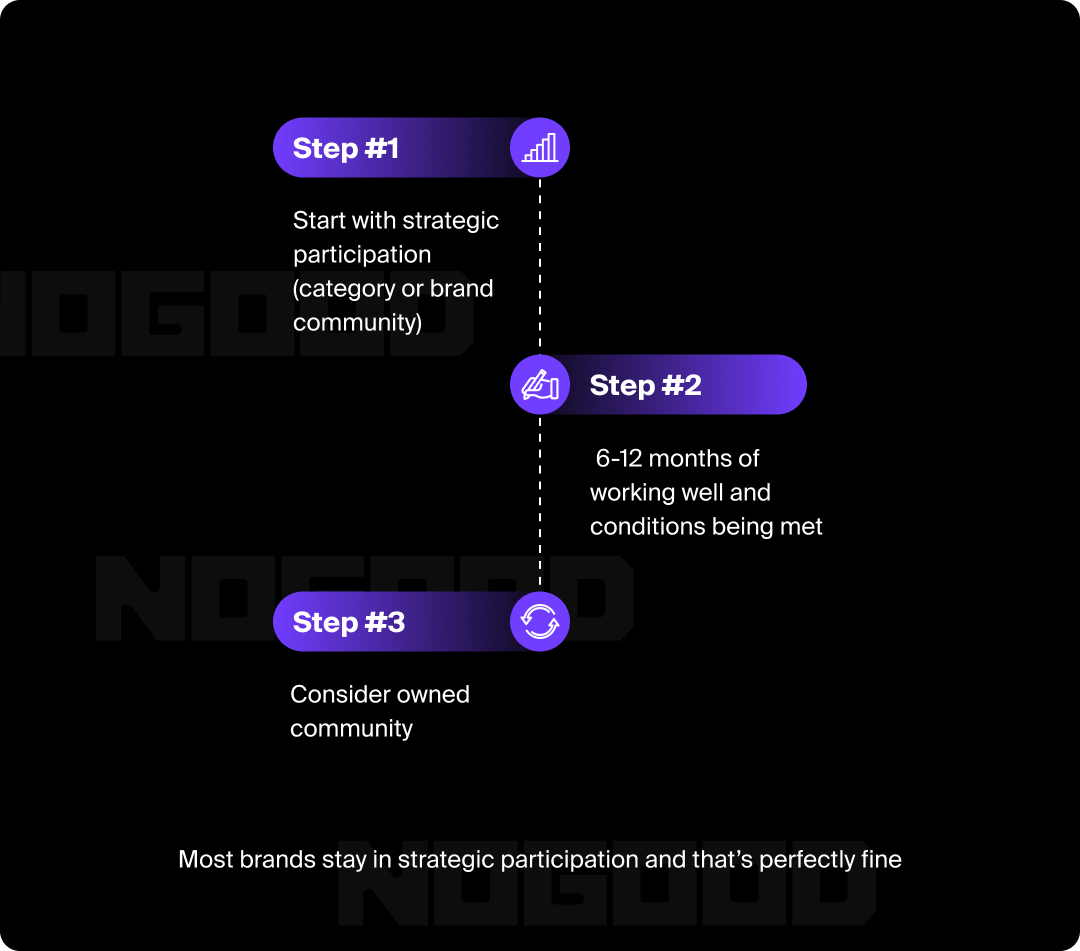
For most companies, I will always recommend starting with and focusing on Path 1. If it works and conversations intensify (or there is need for an owned space for various reasons), layer on Path 2.
But never stop doing Scenario 1; that’s where category authority lives, and where, frankly, you can peacefully linger in perpetuity.
How to Execute a Reddit Marketing Strategy Without Getting Banned
The thing about Reddit is that everyone knows the rules (be genuine, add value, don’t promote), but executing that consistently is where most Reddit marketing strategies fall apart. Because “being genuine” sounds easy until you’re staring at a thread where someone’s asking about your exact category and your instinct is to jump in with your solution.
The discipline is resisting that instinct.
I’ve been watching how brands that actually succeed on Reddit approach this, and what they have in common is they start by listening for way longer than feels comfortable. Not just monitoring your brand mentions or setting up keyword alerts (though that helps), but actually spending time in relevant subreddits. Reading the top posts. Reading the comments. Noticing what language people use when they talk about problems in your category. Noticing what gets upvoted versus what gets ignored or downvoted.
I am all for machine learning and automation to speed up processes, don’t get me wrong, but nothing (and I repeat, nothing) beats manual tracking and deep familiarity with the spaces that your audience occupies.
The threads where brands show up (and it works) are usually ones where there’s a genuine gap: someone asked a specific question, the existing answers are incomplete or outdated, and the brand rep adds something that would be useful even if that person never becomes a customer.
The threads where brands show up (and it backfires) are the ones where the question didn’t really need another answer, or where the “help” that’s provided is obviously just steering people towards a product.
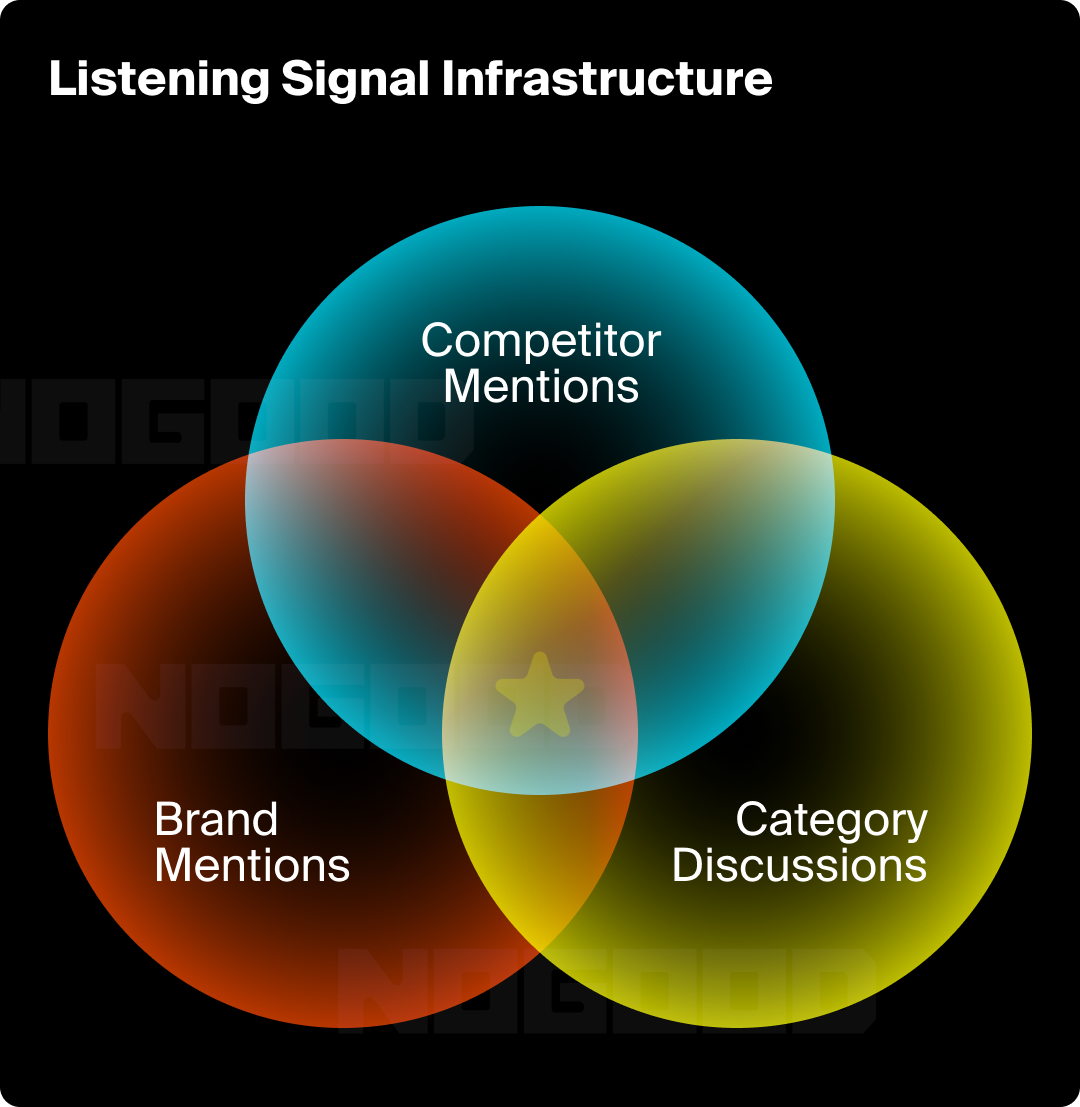
The signal for when to engage isn’t complicated:
- Is there a real question?
- Is there a gap in the answers?
- Do you have specific expertise that would help?
If all three are true, you can probably add value. If any of those are false, you’re better off not saying anything. When you do engage, the transparency piece is non-negotiable, but it also shouldn’t be a huge production. “I work for [Brand]” at the beginning of your comment is enough; curating details like a naming convention for your community management or customer teams.
I keep coming back to the Ahrefs example because it’s so clear. Tim Soulo shows up in r/bigseo every two years on the dot, asking for brutal feedback, down to the nitty gritty: pricing complaints, feature requests, and everything in between.
He stays active in the thread for hours answering. The community knows he works for Ahrefs, but they also know he’s there to participate in SEO conversations, not just drop links and disappear. That’s the difference between strategic participation and lazy promotion.
When you’re participating in category subreddits, the help should be 90% of the comment. The brand mention is maybe one sentence (if it’s relevant at all). You’re building category authority first, brand awareness second.
AMAs are trickier, because they feel like an obvious play, but they only work if you have something legitimately interesting to share.
Adidas had a strong example of this: they ran an AMA series in r/RunningShoeGeeks with Simon Lockett, their Global Category Director for Running, answering technical questions about cushioning, durability, and design choices. It worked because they put product leaders and athletes directly in front of communities who had real questions only those people could answer, tapping into the idea of bringing the audience along for “insider knowledge” sharing or the scoop.
Conversely, if your AMA is limited to “we’re launching a new product, ask us anything” that’s just a press release with Q&A formatting; Reddit sees through it immediately.
The longer game (and this is what takes the most discipline) is building up recognition as someone helpful in your category before anyone really thinks of you as a brand rep. That means:
- Participating regularly
- Adding value where you can
- Being useful more often than you mention your company
It’s the compound effect of showing up consistently over months, not running a campaign for a quarter.
Measurement: How to Tell If Your Reddit Marketing Strategy Is Actually Working?
Here’s the hard truth that often is the reason Reddit strategies never fully take off, or fall apart completely: a lot of teams try to measure it like other social channels. Impressions, engagement rate, follower count, and other “standard” metrics that work for Instagram or LinkedIn or wherever else you’re active on social media.
None of that tells you whether your Reddit marketing is actually working.
The problem is Reddit impact doesn’t show up the way you’re used to measuring things. Someone reads your helpful comment in a subreddit. They don’t click through to your website. They don’t follow you. They just… remember that your brand showed up with useful information when they needed it. Three months later, they’re evaluating tools in your category and they remember seeing your name associated with helpful expertise, and that tips their perception slightly in your favor. How do you measure that?
You can’t, really. Not directly, at least. But there are signals that tell you if you’re building the right kind of presence.
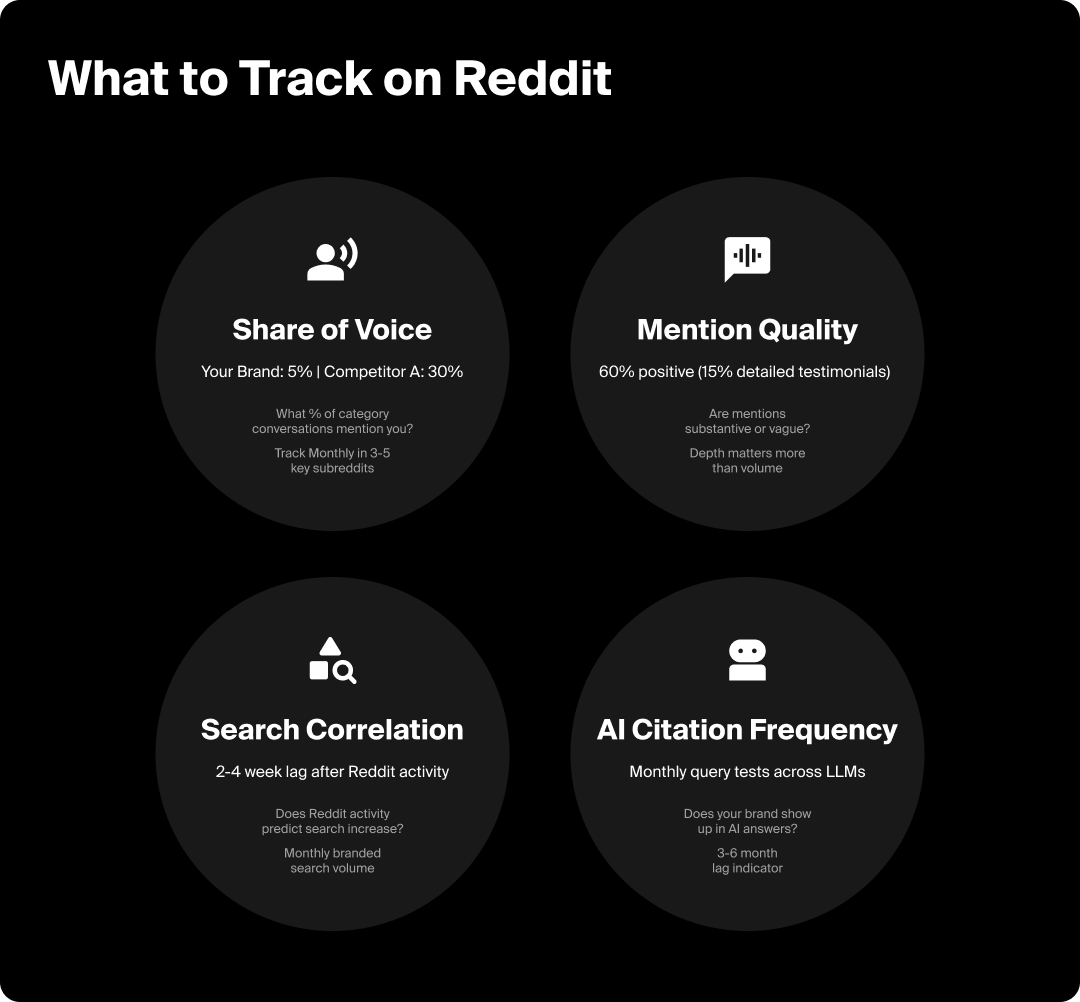
What Metrics to Track (& Why)
1. Share of Voice in Relevant Subreddits
If you search Reddit for your category and scan through the top threads, what percentage mention your brand? Not in a promotional way, but specifically in an organic “I’ve been using X and here’s my experience” way.
Now take that and compare it to competitors. If they’re showing up in 30% of category conversations and you’re in 5%, there’s your gap. It’s not one that you can close quickly, but simply knowing it exists helps you understand the baseline.
Track this monthly:
- Pick 3-5 subreddits where your category gets discussed
- Search your top 5 category keywords
- Count mentions in the top 20 threads for each
- Compare your share vs competitors
2. Sentiment Depth
Think of “depth” this way: a substantive, positive mention where someone details their actual experience carries more weight. It’s the quality of the mention that matters; whether someone took the time to explain why something worked for them, what problems it solved, and what the trade-offs were. That’s what influences other people researching your category.
Things you should be looking for:
- High Value: Detailed testimonials with specific use cases
- Medium Value: Brief but positive mentions in context
- Low Value: Generic “X is good” with no explanation
The goal is to get more high-value mentions, not just a higher quantity of mentions.
3. Traffic Correlation
This is useful if you’re linking to anything within your posts and responses (though you should be linking rarely). More useful is watching whether branded search increases after you’ve been particularly active, or whether you see referral patterns that suggest people found you through Reddit even if they didn’t click a direct link.
Look for:
- Branded search volume lift 2-4 weeks after increased Reddit activity
- Referral traffic spikes (even if small) aligned to Reddit-specific wins
- Increase in direct traffic (aka people remembering your brand)
The lag matters. Reddit doesn’t drive immediate traffic; however, it’s able to build awareness that converts later.
4. Citation Frequency in LLM Responses
This is the hardest to track systematically, but it’s increasingly important. Test this manually by searching relevant queries about your category across ChatGPT, Claude, Perplexity monthly and noting whether your brand shows up, in what context, and with what framing.
Pro Tip: If manual AI visibility tracking isn’t something you have the resources for, we’ve got a tool recommendation for you: Goodie. We love it, and we’re sure you will, too.
Whether you’re tracking manually or using Goodie, build a topic or query set:
- “Best Artificial Intelligence tools for [use case]”
- “How to solve [problem your product addresses]”
- “[Your category] comparison”
- “What do developers/marketers/[persona] use for [task]”
You should closely track: if your brand was mentioned or not, the context quality, competitor mentions, and source citations (did the LLM response reference Reddit?).
The lag indicator is, admittedly, the hardest part; especially for marketers who are of the “results, fast, now” school of thought. Reddit presence today shows up in how AI models (and users) understand your brand in three to six months. The helpful comments you’re leaving now become source material for citations later. You’re building long-term infrastructure, meaning this type of commitment requires reframing your approach you’d normally apply to running a campaign with immediate KPIs.
That’s a hard sell internally, especially when someone asks “what’s our Reddit ROI?” but it is the reality of how this works.
Getting Started With Reddit Marketing: Your 30-60-90 Day Plan

Month 1: Listening & Auditing (Days 1-30)
The first month of your Reddit strategy should be almost entirely listening. I know that feels passive and uncomfortable, especially if you’re used to working within social channels where you post regularly and measure engagement weekly.
But jumping into Reddit without understanding the specific communities you’re entering is how brands set themselves up for failure.
Where is your category actually being discussed? Not where you think it should be discussed, but where is the conversation actually happening? Search Reddit for your brand name. Search for your competitors. Search for the top three problems your product solves, phrased the way normal people would phrase them, and not the way your marketing copy does.
Notice where these conversations are concentrated:
- Are they in a few specific subreddits?
- Are they scattered across dozens of communities?
- Are they happening at all?
If you search and find almost nothing, that’s useful information, too; it might mean Reddit just isn’t where your audience gathers, or it might mean there’s an opportunity to be the first helpful voice within a space.
Read the top posts in relevant subreddits from the past month. Obsess over the comments. Notice the tone, the norms, what seems to get rewarded versus ignored. Each subreddit has its own culture. The way people interact in r/entrepreneur is completely different from r/cscareerquestions or r/marketing, and your homework is to understand those differences before you try to participate.
Also notice:
- Where do competitors show up?
- How do they engage?
- Are they getting positive responses or pushback?
You can learn a lot from watching what works and what doesn’t for other brands in your space.
Month 2: Strategic Testing (Days 31-60)
Around week four or five, you can start testing. Pick two or three relevant subreddits that you’ve been observing. Build some karma first through genuine participation that has nothing to do with your brand and answer questions where you have personal expertise, contribute to discussions, and upvote quality content.
Warning: you are absolutely not gaming the system. Instead, you’re on a mission to become part of the community before you represent your company there.
Then, test one contribution. Find a thread where there’s a genuine question or incomplete answer and you have specific expertise that would help. Add value with clear disclosure of your affiliation. See what happens:
- Does it get upvoted?
- Do the comments suggest you were helpful or too promotional?
- Does anyone click through if you included a relevant link?
The response will tell you a lot. If it landed well, that’s a signal that you read the room correctly. If it flopped or got ignored, now your job is to figure out why. Maybe the question didn’t actually need another answer, or maybe your response was more promotional than you realized. Maybe you misjudged what that particular community values; at this stage, you are risking smaller failures in favor of a more risk-proof approach by Day 90.
Month 3: Iteration & Expansion (if Applicable) (Days 61-90)
By month three, you should know whether this is worth continued investment. If your test contributions consistently add value and get positive responses, expand to more subreddits with the same careful approach. If you’re getting downvoted or ignored, either you’re in the wrong communities, or your approach needs refinement.
This is also when you decide: should we stay in participation mode or consider an owned community? If you’re seeing your brand mentioned organically across multiple subreddits, if conversations are scattered and could benefit from centralization, if you have the infrastructure to maintain an owned space, then maybe a branded subreddit makes sense.
But for most brands, especially in the first year, strategic participation in existing communities is the right path.
And remember: the owned community question is one you can revisit at any point in the future; most answers you’ll be looking for will be answered through incremental participation strategies.
TL;D(Reddit Marketing)
If I didn’t emphasize this enough, Reddit should not be just another platform you toss into your channel mix when you plan your quarterly editorial calendar. Reddit marketing is all about nuance: understanding where brand perception actually forms in 2026, and deciding whether you want to participate in shaping it.
The conversations happening on Reddit today are the source material for how prospects research you, how AI models understand you, and how your reputation compounds over time. Your competitors are either already there, or about to figure this out.
You can build that infrastructure intentionally, or you can let it build itself while you optimize for channels that matter less every month.
That’s the actual choice.
Appendix: Your (Non-Exhaustive) Reddit Glossary
If you’re going to participate on Reddit, you need to speak the language. Here is a helpful guide that goes over the essential terms:
Platform Basics:
- Subreddit (r/): A community dedicated to a specific topic (e.g., r/marketing, r/SEO, r/Entrepreneur)
- Upvote and Downvote: How users vote on content quality; upvotes increase visibility, downvotes decrease it
- Karma: Points earned from upvotes on your posts and comments; signals credibility
- OP (Original Poster): The person who created the post or started the thread
- Mod (Moderator): Volunteer who enforces rules within a subreddit
Content Types:
- AMA (Ask Me Anything): Live Q&A session where someone answers community questions
- Thread: A post and all of its comments
- Crosspost: Sharing a post from one subreddit to another
- Flair: Tags that categorize posts or identify users (e.g., “Question,” “Discussion,” “Official”)
Common Acronyms:
- TL;DR (Too Long; Didn’t Read): A brief summary of a long post
- FTFY (Fixed That For You): Usually a playful correction
- AFAIK (As Far As I Know): Qualifier indicating limited knowledge
- TIL (Today I Learned): Sharing new information
- CMV (Change My View): Inviting debate on an opinion
- OOTL (Out Of The Loop): Asking for context on something you missed
- ELI5 (Explain Like I’m 5): Request for a simple explanation
Reddit Culture:
- Cake Day: Anniversary of when someone joined Reddit (indicated by cake icon)
- Lurker: Someone who reads but rarely posts or comments
- Throwaway: Temporary account typically created for anonymous posting
- Brigading: Coordinated group effort to upvote or downvote content (this is against the rules)
- Shadowban: When your content is invisible to others but you don’t know it
- Astroturfing: Fake grassroots marketing; Reddit users can spot this immediately
Is Reddit a good place for marketing?
Reddit is a good place for marketing if you’re willing to redefine what “marketing” means. Traditional promotion doesn’t work here; self-serving posts get downvoted into oblivion.
But if you’re ready to show up as genuinely helpful, answer real questions, and build credibility over months (not days), Reddit becomes one of the most valuable channels you can invest in. The upside is that Reddit discussions shape how prospects research your brand and how AI models understand your category. The requirement is patience and discipline most marketing teams might be short on.
What is the 90-9-1 rule on Reddit?
The 90-9-1 rule is an old internet principle that roughly 90% of users lurk (read but don’t post), 9% contribute occasionally, and 1% create most of the content. On Reddit, this means the vast majority of your audience is watching without engaging.
For brands, that’s actually useful: you’re not just talking to the person who asked the question, you’re talking to the hundreds or thousands of people reading the thread later. Your helpful comment in a subreddit today could influence someone researching your category six months from now who never upvotes or comments.
How do I know if I need Reddit marketing?
You need Reddit marketing if prospects are researching your category there, whether you’re participating or not. Try this simple test for a quick assessment: search “[your brand] reddit” and “[your category] reddit” and see what comes up:
- If active threads are discussing your product, comparing you to competitors, or asking questions you could answer, that’s your signal.
- If you find almost nothing, either Reddit isn’t where your audience gathers (possible), or there’s an opportunity to be the first helpful voice in the space (also possible).
Either way, you learn something useful in about 10 minutes.
What are the pros of using Reddit for marketing?
Reddit gives you direct access to how prospects actually talk about your category, in its purest and most honest form, devoid of marketing or sales jargon. The conversations happening there become training data for how AI models understand your brand, which means your Reddit presence adds up into better AI citations over time.
You get real product feedback, competitive insights, and visibility into what language resonates with the end consumer, all while building credibility in places where people are actively researching solutions. When done right, Reddit becomes both a listening tool and a reputation-building engine that pays dividends for years.
What are the cons of using Reddit for marketing?
Reddit requires more patience and discipline than most marketing channels. You can’t automate it, you can’t buy your way in, and you won’t see immediate ROI. If someone on your team posts something overly promotional or tone-deaf, the community will call it out publicly… and that becomes part of your brand history. It also demands ongoing monitoring and response capacity.
If you create a branded subreddit and then abandon it, or if negative threads surface and you’re not ready (or able) to address them transparently, Reddit can become a liability instead of an asset. The channel rewards long-term commitment, and it will only work if you make time and resources for it.
Some icons and visual assets used in this post, as well as in previously published and future blog posts, are licensed under the MIT License, Apache License 2.0, and Creative Commons Attribution 4.0.
https://opensource.org/licenses/MIT