
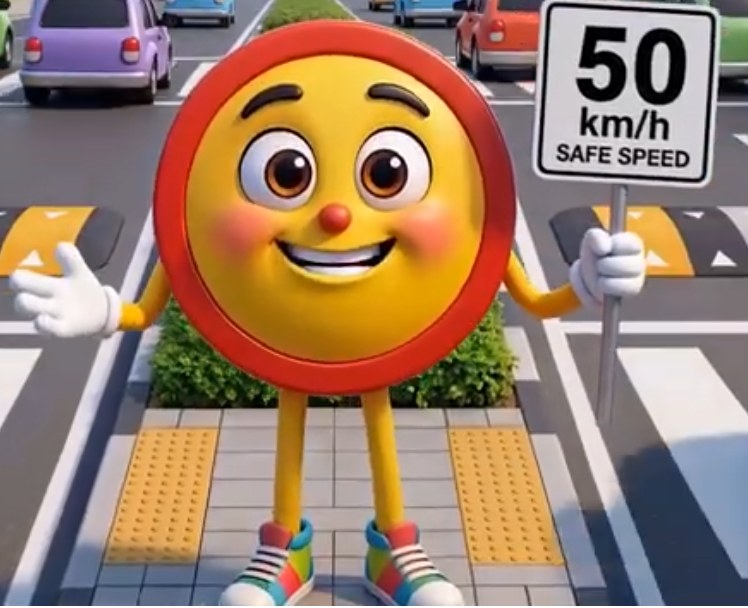
Ahead of World Trauma Day on 17 October, the Road Safety Network (RSN) has released an AI-led film titled “What Speed Is Actually Safe? | Speedy Swamy Explains”. It features “Speedy Swamy”, an AI-based speed limit board that acts as a storyteller. The film argues that a speed that is safe on an open highway can be dangerous on a busy street shared with pedestrians, cyclists and two-wheeler riders.
Through relatable road scenarios, the character explains how road design, surrounding activity, the presence of vulnerable road users and the human body’s ability to withstand impact all shape what a safe speed is. A residential street, a school zone and a highway each need a different speed.
The film cites national figures from the Ministry of Road Transport and Highways. India recorded 5,13,563 road accidents and 1,83,382 deaths in 2025, and speeding accounted for 82,124 accidents, around 16% of the total. It also cites the World Health Organization, which says every 1% rise in mean traffic speed is linked to a 4% rise in fatal crash risk and a 3% rise in serious crash risk. RSN says this shows the need to manage speed by context, alongside safer road design, visible pedestrian crossings and traffic-calming measures.
The film follows RSN’s earlier AI-driven initiative, “Sahi Seat, Surakshit Safar”, made with the Ministry of Road Transport and Highways to promote child restraint systems in cars.









Leave a Reply