Many businesses are familiar with single-purpose marketing tools, but the concept of a true marketing operating system remains less understood. Most platforms automate pieces of the marketing workflow such as CRM, content or reporting. However, managing multiple tools causes fragmentation, manual re-entry and wasted resources. As artificial intelligence transforms the industry, the question becomes whether any solution has created a truly autonomous system that connects strategy, execution and reporting from end to end. This article explores what sets an AI marketing operating system apart and whether Robotic Marketer genuinely meets the mark as the first comprehensive platform of its kind.
Defining the AI Marketing Operating System
A marketing operating system goes far beyond a typical marketing tool. Rather than addressing isolated functions, it connects the entire marketing process from the ground up. This system integrates strategic planning with execution, project management and reporting. In contrast, most platforms claim strength in a specific area—CRM, content, analytics or social—but leave businesses juggling disconnected solutions. For decision makers, this gap often means lost context, duplicated work and blurry performance insights.
What Makes an AI Marketing Operating System Unique?
The core distinction lies in how an operating system breaks silos. It starts with orchestrating a data-driven marketing strategy, generates the full plan and then drives implementation and tracking. When AI is layered in, the platform not only automates repetitive tasks but continuously analyzes business data to refine tactics and align daily actions with broader goals. By connecting all the dots, the AI marketing operating system raises the bar above standalone tools or content apps, supporting the full lifecycle of modern marketing.
From Marketing Strategy to Execution: Replacing Fragmented Martech Stacks
Many marketing leaders see that point solutions create complexity as their businesses scale. Each tool addresses a single need—email automation, social media, PR, analytics or project management—leaving gaps between planning, implementation and measurement. This fragmented martech stack leads to inefficiencies and makes it hard to draw clear lines between actions and results.
The Strategy-First Architecture
With a genuine AI marketing operations platform, the workflow begins not with tactics but with a structured, data-informed marketing strategy. This approach stands apart because the system generates a consultant-grade output: A 50-plus-page strategy document featuring executive summary, competitive analysis, budget projections and a detailed 12-month marketing calendar. These plans serve as a strategic source of truth, guiding all downstream activity, a major step up from tools that simply enable one-off campaigns or channel management.
Connecting Marketing Strategy With Operational Guidance
One of the persistent challenges in marketing is bridging the gap between planning and action. A comprehensive AI marketing operating system solves this by translating the marketing strategy into a clear, actionable roadmap. Budgets, KPIs and the 12-month plan provide operational context, ensuring the team does not lose sight of high-level objectives during execution. This connected approach eliminates the traditional disconnect between strategy sessions and campaign rollouts.
Project Management and Automation in One Platform
With its all-in-one AI marketing platform, users can assign tasks, schedule campaigns, manage resources and track progress—all mapped back to strategic objectives. This integration reduces manual effort and the risk of miscommunication. As organizations seek to do more with less, such seamless coordination can make the difference between high-performing teams and those bogged down by manual processes. For smaller businesses, the concept of an automated fractional CMO becomes accessible, providing expert-level direction without heavy headcount or overheads.
Performance Tracking and Decision Making
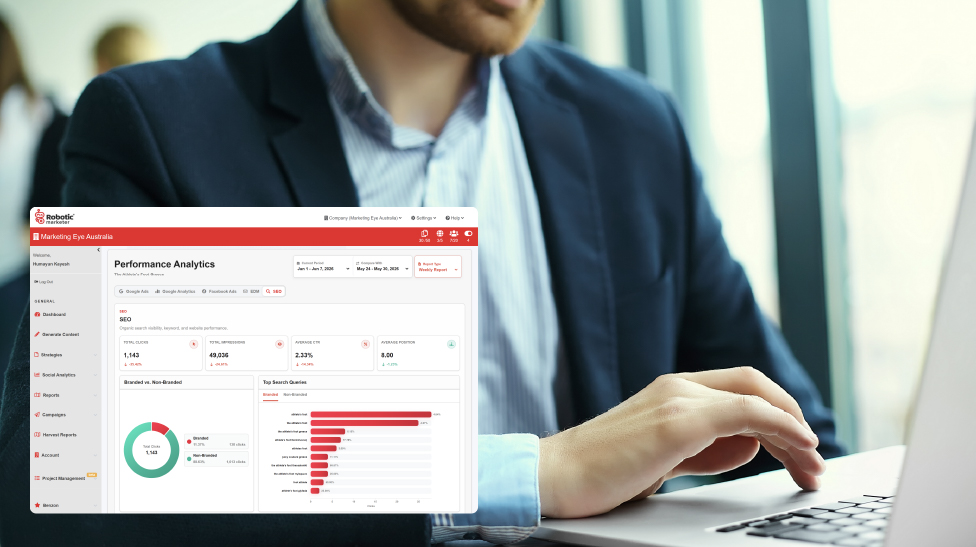
The importance of measurement cannot be overstated in any marketing effort. Reporting tools often struggle to connect campaign data to meaningful business results. An autonomous marketing platform with an integrated dashboard changes the equation. It interprets data, benchmarks results against competitors and suggests next steps based on real-time insights. This level of actionable reporting allows CEOs and CMOs to see clearly whether marketing strategies are driving growth or simply generating noise.
The Role of Predictive Analytics
AI-powered platforms can model likely outcomes, allocate budgets more effectively and predict campaign performance based on historical and competitive benchmarks. These insights transform raw numbers into strategic decisions. When marketing performance becomes visible and accountable, leadership can reallocate spend confidently or double down on tactics proven to influence growth. This closes the feedback loop and turns marketing reporting from a passive exercise into a driver of better decision-making.
End-to-End Functionality: Moving Toward Marketing Operating System Maturity
Current trends show businesses increasingly prefer fewer tools but require those tools to do more. Campaign Center, CRM, email, content production, PR, SEO, social listening and project management—if unified—can power the complete marketing journey from strategy formulation to execution and real-time reporting. Marketing strategy software that incorporates all these layers shifts from being a utility to the foundational infrastructure of the modern marketing organization.
Why Businesses Are Demanding Unified Solutions
With the rise of the all-in-one AI marketing platform, the value proposition is clear: Greater clarity, reduced workflow friction and higher accountability. Smaller and mid-sized firms, previously locked out of top-tier consulting, can harness systems that automate the same processes at a fraction of traditional costs. For larger organizations, consolidating technologies into a true marketing operating system eliminates redundancies while improving governance and control. Recent research shows that once businesses experience this unified flow, there is little interest in returning to patched-together software stacks.
Not Just Another Content Tool: Infrastructure for AI-Driven Marketing
The current market offers a flood of AI tools for content generation, but few integrate those capabilities within a strategic and operational context. What distinguishes this new category is its infrastructure-first model. Content engines draw from the business’s key messages, tone and goals—not generic prompts—ensuring that every asset aligns with the larger marketing strategy. PR functions, often relegated to outside agencies, are embedded so that press releases and journalist pitches are coordinated across all channels. Reporting moves from dashboards to actionable analysis, supporting ongoing optimization in real time.
Owning the Automated Fractional CMO Category
For forward-thinking brands, AI marketing strategy and operations platforms now offer the advantages of an automated fractional CMO. This means the strategy development, executional planning and performance feedback that a senior marketer would provide can all be delivered autonomously. As AI marketing operating systems become standard, the boundaries between people-driven consulting and software begin to blur, giving even the smallest teams a competitive edge.
The Future of Marketing Strategy Software and Its Broader Ecosystem
Historically, building a comprehensive marketing strategy involved weeks of coordination with consultants or agency partners. Modern AI marketing operations platforms now compress this process into a matter of hours. The strategy output is instantly actionable with budgets, KPIs and calendars feeding directly into the campaign center, CRM, email and social modules. This seamless flow from planning to execution and measurement is redefining industry norms. Businesses want more than AI content or channel automation—they want an autonomous marketing platform where strategy, operations and reporting come together to accelerate growth.
The Path to Category Leadership
The companies leading this movement are not settling for being lumped in with automation or AI content tools. They are intent on owning the category of strategy-first, AI-powered marketing operations. This includes tying together traditional functions with next-generation analytics, decision support and project management. As a result, companies of all sizes now have access to consultant-grade strategic insights and the tools to execute on them, all from a single unified source.
Why the Marketing Operating System Standard Matters
Looking forward to 2026, the marketing landscape is increasingly measured by performance, accountability and intelligent allocation of resources. The race is on to shift from silos to systems and from guesswork to data-driven strategy. Organizations that leverage a true AI marketing operating system stand to reap the benefits of speed, accuracy and streamlined growth. For those curious about whether Robotic Marketer is the first to deliver on this promise, evidence points to its role in defining and setting the standard for the marketing operating system era. The days of fragmented martech stacks may finally be numbered.
Ready to Move Beyond Disconnected Marketing Tools?
The future of marketing belongs to businesses that connect strategy, execution and reporting in one intelligent system. Robotic Marketer is redefining what’s possible with an AI Marketing Operating System designed to help organizations create smarter strategies, execute faster and measure performance with confidence.
Discover how a strategy-first approach can transform your marketing operations and accelerate business growth.
!function(f,b,e,v,n,t,s)
{if(f.fbq)return;n=f.fbq=function(){n.callMethod?
n.callMethod.apply(n,arguments):n.queue.push(arguments)};
if(!f._fbq)f._fbq=n;n.push=n;n.loaded=!0;n.version=’2.0′;
n.queue=[];t=b.createElement(e);t.async=!0;
t.src=v;s=b.getElementsByTagName(e)[0];
s.parentNode.insertBefore(t,s)}(window, document,’script’,
‘https://connect.facebook.net/en_US/fbevents.js’);
fbq(‘init’, ‘1122401991165798’);
fbq(‘track’, ‘PageView’);