NEWYou can now listen to Fox News articles!
An Obama-appointed federal judge on Tuesday struck down key parts of President Donald Trump’s election integrity executive order, prompting a stark warning from White House Deputy Chief of Staff Stephen Miller about the judiciary’s course.
U.S. District Judge Denise J. Casper ruled that major sections of Trump’s March 25, 2025, executive order, titled “Preserving and Protecting the Integrity of American Elections,” exceeded presidential authority and violated the Constitution’s separation of powers. Casper found that the order went beyond enforcing existing law and instead attempted to create or change election rules on its own.
“While the Constitution vests the President with ‘executive Power’ and commands him to ‘take Care that the Laws be faithfully executed’… it does not grant the President any specific powers over elections,” Casper wrote in the ruling. “As a result, the President ‘plays no direct role in the process’ of appointing electors, ‘nor does he have authority to control the state officials who do.'”
In response, Miller posted on social media that he hoped Supreme Court Chief Justice John Roberts “understands the path these rogue judges have charted for the judiciary.”
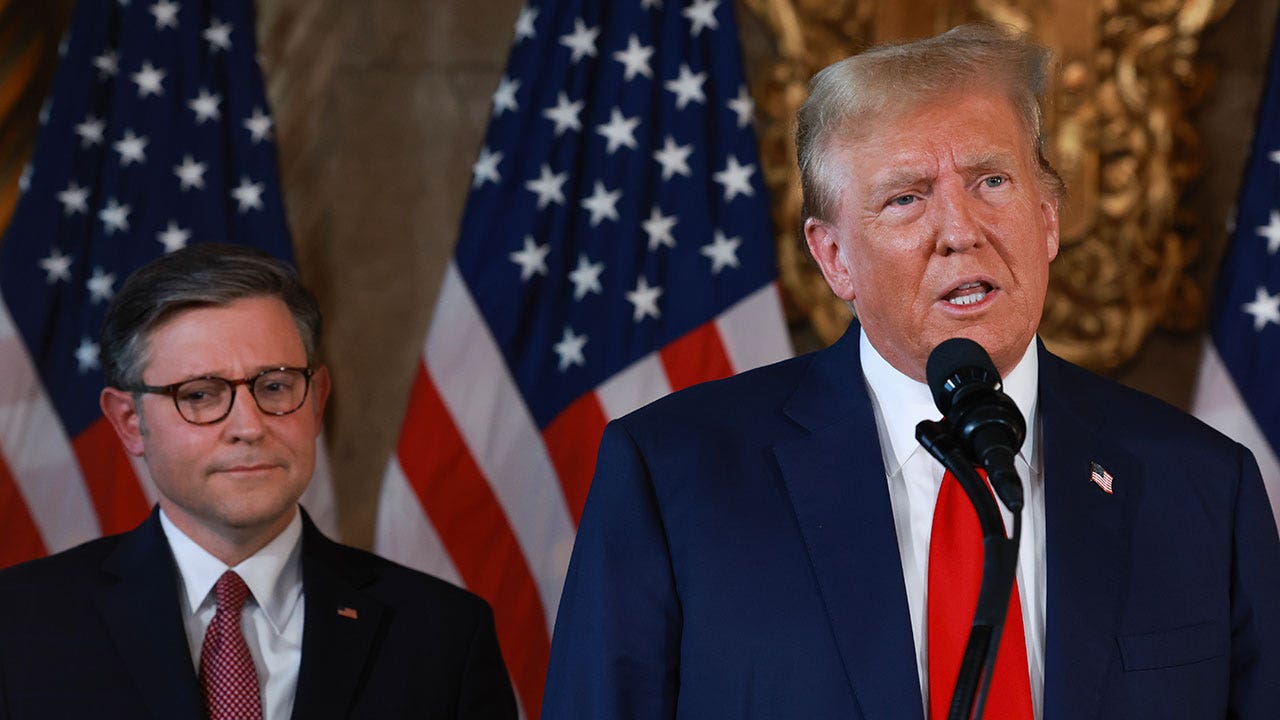
Former President Donald Trump and Speaker of the House Mike Johnson held a press conference at Trump’s Mar-a-Lago estate in Palm Beach, Florida, on April 12, 2024, to discuss election integrity. (Joe Raedle/Getty Images)
The chief justice serves as the institutional head of the federal judiciary, and while he does not exercise direct authority over lower-court judges, Miller’s reference to Roberts echoed broader conservative criticism that the Supreme Court has not moved aggressively enough to curb lower-court rulings blocking Trump administration policies.
Casper previously issued a preliminary injunction blocking key provisions of the order while the lawsuit played out in court. After more than a year of litigation, the judge on Tuesday largely sided with the plaintiff states.
The lawsuit was brought by 19 states challenging the order and was heard in the U.S. District Court for the District of Massachusetts.
California Attorney General Rob Bonta, one of the lead plaintiffs in the case, hailed the ruling as a victory for the states.
“We sued President Trump over his attempt to unilaterally impose voting restrictions across the country — and we won,” Bonta said. “Today, a federal district court ruled that every provision we challenged in the Executive Order is unlawful and reaffirmed that the power to regulate elections is reserved to the States and Congress.”
Casper’s ruling permanently blocks the administration from implementing provisions that would have required documentary proof of citizenship on the federal voter registration form, altered voting requirements for military and overseas voters, and threatened to withhold federal election-related funding from states that refused to adopt certain election rules, including not counting ballots received after Election Day.
Casper declared that sections of the order were “unconstitutional and void because they are ultra vires and violate the separation of powers under the United States Constitution.”
In addition to finding that the executive order violated the Constitution, Casper also concluded that key provisions of Trump’s order conflicted with federal statutes, including the National Voter Registration Act and the Uniformed and Overseas Citizens Absentee Voting Act.
WITHIN MINUTES OF TRUMP SIGNING VOTER DATABASE ORDER, DEM STATES THREATEN LAWSUITS
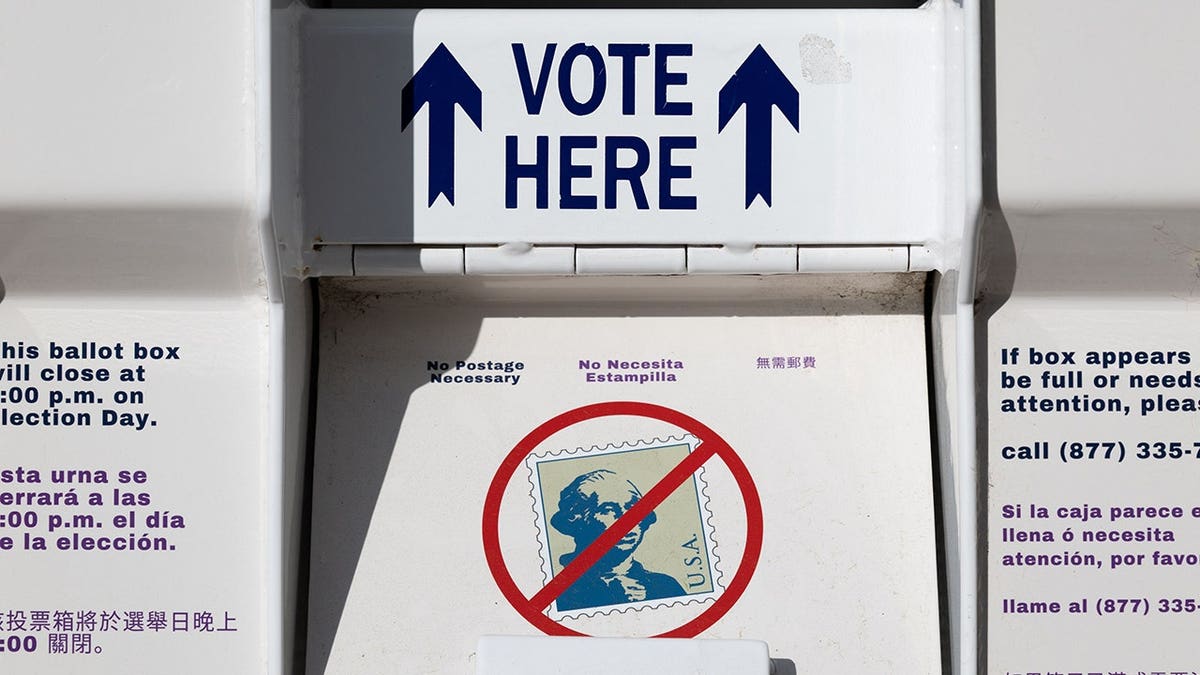
A ballot box sits outside Contra Costa County’s elections office in Martinez, Calif., on May 27, 2026. June 2 is the last day to vote in person or return a ballot before California’s statewide primary election. (Benjamin Fanjoy/Getty Images)
Trump signed the order on March 25, 2025, arguing that stronger safeguards were necessary to ensure election integrity and public confidence in federal elections, alleging that state officials have failed to comply with court rulings and federal law.
The White House at the time described the directive as an effort to restore trust in elections and strengthen voter citizenship verification.
“Under the Constitution, State governments must safeguard American elections in compliance with Federal laws that protect Americans’ voting rights and guard against dilution by illegal voting, discrimination, fraud, and other forms of malfeasance and error,” the executive order stated. “Yet the United States has not adequately enforced Federal election requirements that, for example, prohibit States from counting ballots received after Election Day or prohibit non-citizens from registering to vote.”
Casper is the second judge to rule against Trump’s executive order.

Voting signs stand outside Friendship Baptist Church, a polling location in Atlanta, Georgia, during the Georgia midterm primary election on May 19, 2026.
In April 2025, U.S. District Judge Colleen Kollar-Kotelly blocked portions of the order that directed federal officials to add proof-of-citizenship requirements to federal voter registration forms, concluding that the Constitution gives Congress and the states the authority to regulate federal elections — not the president. Casper’s ruling went further, striking down multiple additional provisions related to ballot deadlines, military and overseas voters, and federal funding.
Casper’s ruling comes as Republican lawmakers continue pushing the SAVE Act, legislation that would require documentary proof of citizenship to register to vote in federal elections. The House passed a version of the measure earlier this year, but the proposal faces an uncertain path in the Senate.
Trump has continued to push for the SAVE Act, elevating it as a key priority and arguing that Senate Republicans should be willing to eliminate the filibuster to ensure the legislation reaches his desk.
CLICK HERE TO DOWNLOAD THE FOX NEWS APP
The only issue left concerns whether the federal government can attach conditions to election-related funding for certain states. The judge gave the parties until July 10 to decide whether to continue litigating that claim.
Fox News Digital reached out to the White House for comment.