
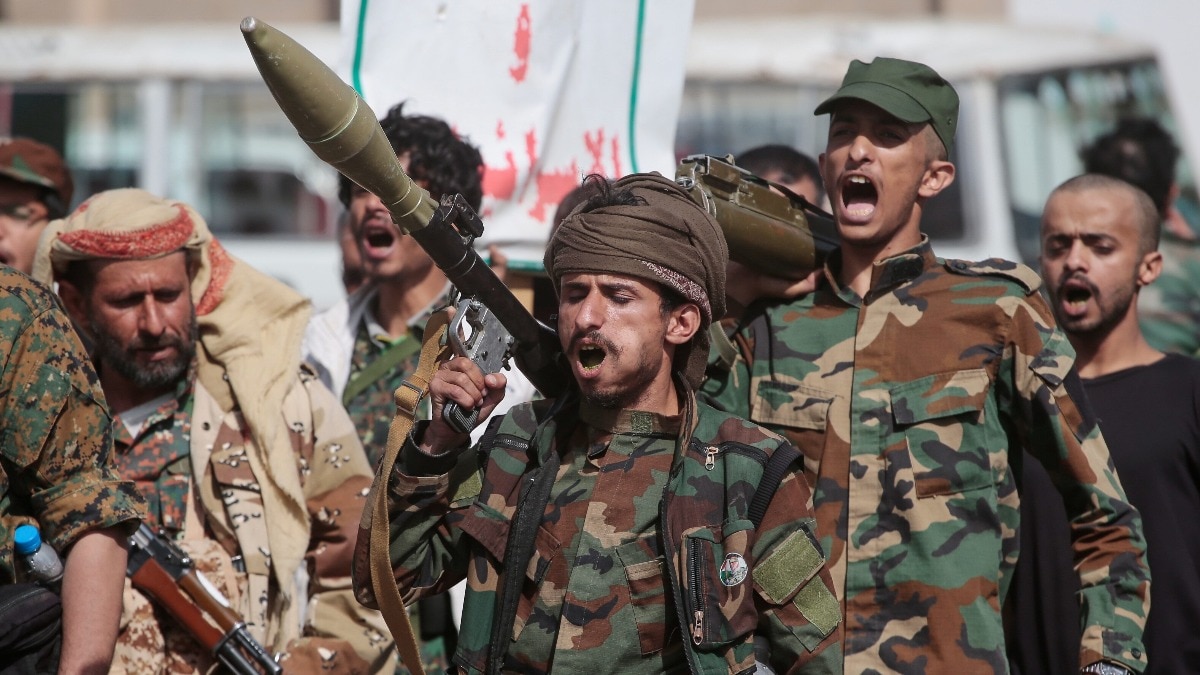
Saudi Arabia is struggling to combat the resurgent Ansar Allah, better known as the Houthis, in Yemen, while its principal ally, the US, might have cut a deal with the Iran-backed militia, leaving Riyadh to deal with the threat on its own. The US and the Houthis have reportedly engaged in direct outreach, potentially reshaping the dynamics of the conflict in Yemen.
The Iran-backed Houthis had launched a surprise offensive last week that saw them blitz across Yemen’s Red Sea coast and take control of several islands along the Bab el-Mandeb strait, one of Riyadh’s key oil export routes. At the same time, Houthi drones and missiles continue to menace Saudi cities and energy infrastructure, with one drone setting off civil defence alarms at the holy city of Mecca.
But even as Saudi-backed forces were pushed back by the Ansar Allah militia and repeated air strikes have failed to dislodge the Houthis from the territory they have captured, Riyadh’s allies have been reluctant to intervene.
Pakistan and Turkey, which are signatories of the Mecca Defence Alliance, have entirely ruled out combat operations in Yemen, while the US and UK have rejected requests to conduct air strikes against Ansar Allah positions. In fact, reports have emerged of Saudi Arabia having approached Israel — a country it does not even recognise as an independent nation — for intelligence assistance.
The Houthis have long been adversaries of the United States. The US has designated Ansar Allah as a “foreign terrorist organisation” since March 2025 and has previously launched bombing campaigns targeting Houthi munitions stocks and missile assembly facilities. That being said, both sides might have just struck a deal, leaving Riyadh in the lurch.
US OFFICIALS, HOUTHI REPRESENTATIVES MET IN OMAN
News of a US-Houthi meeting was first reported by news agency Reuters. It was reported on September 16 (Wednesday) that US officials met representatives of Yemen’s Houthis in Oman over the last weekend, following the Houthi blitz along Yemen’s Red Sea coast. The meeting reportedly took place at the US Embassy in the city of Muscat, and was organised by long-time regional mediator, Oman.
According to reports in The Times of Israel and Al Jazeera, in the course of the meeting, which reportedly took place on Sunday, the Houthis told US officials they had no intention of attacking US vessels and were committed to the 2025 ceasefire with the US. Reuters further reported that the Houthi delegation assured they would not target Israeli shipping, but would strike any and all Saudi shipping in the Red Sea.
The US delegation was identified by Reuters as “embassy personnel”, while the Ansar Allah delegation included senior Houthi officials like Mohammad Abdulsalam (who is currently sanctioned by the US) and Abdelmalik al-Ajiri.
Following the Sunday meeting, US Vice President JD Vance was reported by Axios as telling reporters on Monday that the US is negotiating with the Houthis. “We’ve also been engaged in direct conversations with the Houthis themselves, so we actually feel like we are on top of the situation,” he said.
DID THE US SIGN A DEAL WITH THE HOUTHIS AFTER MUSCAT MEET?
At the moment, even though the US and Ansar Allah are holding negotiations, as confirmed by Vice President JD Vance, it is difficult to say that a deal has been signed in the absence of official confirmation from either side.
That said, there are several signs pointing to some kind of understanding between the two sides. According to a State Department spokesperson quoted by Axios, “The United States’ core interests in the Middle East include ensuring freedom of navigation in the Red Sea and the region.”
It was these “core interests” that led the then-Joe Biden administration to launch a massive bombing campaign against the Houthis in 2024, after the group effectively disrupted shipping through the Bab el-Mandeb Strait with a sustained barrage of missile and drone attacks on commercial vessels.
The US eventually reached a ceasefire with the Houthis in 2025, under which Ansar Allah agreed to halt attacks on vessels in the Red Sea, except those belonging to Israel.
Cut to September 2026. With the US now entangled in a war with Iran, Washington no longer has the resources it had in 2024 to mount another sustained campaign against the Houthis or counter a renewed attempt to blockade the Bab el-Mandeb.
Against this backdrop, Ansar Allah’s reported message that it would respect freedom of navigation for all vessels, with the exception of those belonging to Saudi Arabia, might have given Washington an incentive to accept some form of understanding.
Nabeel Khoury, a former US deputy ambassador to Yemen, told The Guardian that there appears to be a “kind of tacit understanding” between the Trump administration and the Houthis following the Muscat meeting.
“The Houthis are promising the American administration that American and international navigation will not be affected in the Red Sea, but the only danger is to Saudi ships or those carrying Saudi oil,” Khoury told the newspaper.
The US’s decision not to launch strikes against the Houthis, despite condemning the group’s attacks, could therefore have followed assurances that commercial shipping would not be targeted in the Red Sea. However, there is no official confirmation that such an understanding was reached.
In any case, whether it is a formal deal or a tacit understanding, the development could have serious implications for Saudi Arabia. Its Yemeni allies have so far failed to halt the Houthis, while hundreds of Saudi airstrikes have also failed to decisively halt their operations.
With Ansar Allah refusing to back down and allies, from the US to Pakistan, showing little appetite for direct intervention, Saudi Arabia could increasingly find itself having to confront the Houthis largely on its own.
– Ends





Leave a Reply