


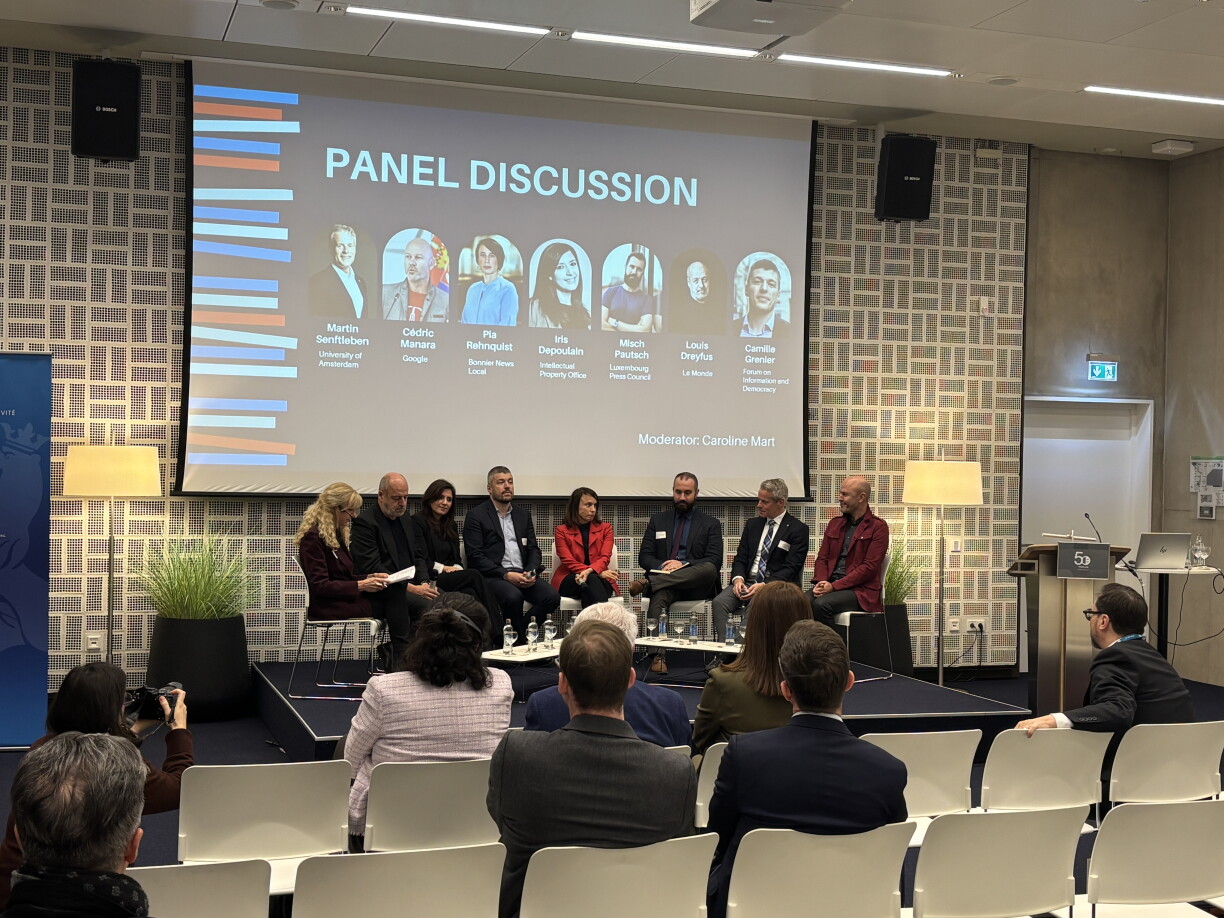
The conference, which lasted over four hours, focused on the financial business model for media companies in Luxembourg, rather than the everyday tasks or content. A dozen speakers and a round-table moderated by Caroline Mart covered the topics at hand.
In 1976 Luxembourg introduced press subsidies, or ‘Pressehëllef’, for print media, to assist with rising costs and dwindling profits. 50 years later, media outlets across print, television, radio and online sites are struggling financially, gradually replaced by social media over the last two decades, and now facing the threat of artificial intelligence.
Media minister Elisabeth Margue said: “Search engines have become answer engines, whereas that used to be the traditional role held by the media. We live in a time of disinformation, with malicious actors poisoning AI training models with false or distorted information.”
Margue emphasised the urgency for AI systems to base themselves on viable information from deontological journalism.
Pluralism with state subsidies?
The state subsidies accorded to media outlets, based on the number of journalists in a newsroom, remain necessary for this reason, the minister said. But is the help enough? Editor-in-chief of the Journal, Misch Pautsch, also president of the press association, joked that one could always ask for more, but that it was good they could count on the support. Without it, advertising revenue and subscriptions would simply not be enough.
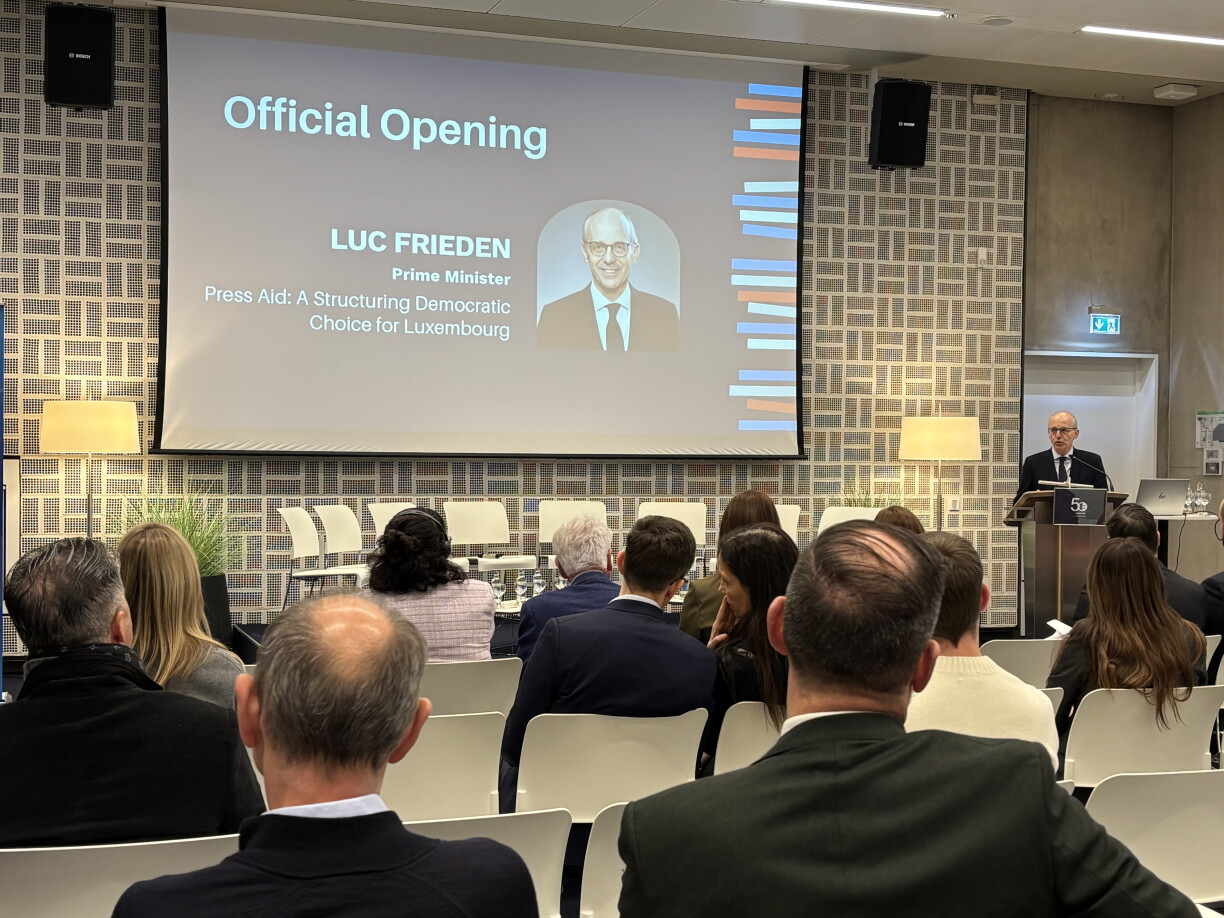
When asked how the terms pluralism and independence fit together with state aid, Pautsch replied: “I understand the concern, I understand the fear that many people have.” However, the reality is that journalists are represented on the committee that decides on press aid and that there is a control function.
“Unfortunately for all those people who imagine all sorts of interesting things, this is an extremely bureaucratic and quite boring process.”
Big Tech, media and the public
The conference on Wednesday touched upon the tension between journalists’ copyright on the one hand and social media on the other, as well as the impact of AI, which uses the content for its so-called “training”, but also for the answers it produces.
The only representative of the tech industry was Cédric Manara, director of copyright at Google, who explained that the US tech giant had negotiated licences for its search engine with media houses in order to pass on a fraction of the revenue to them. This would now happen with AI: “We are all learning together, but we will continue to develop such partnerships and we will not pit the future of AI against the press, but with the press.”
Louis Dreyfus, CEO of French Group Le Monde, was in agreement with Manara, as his newspaper had signed a deal with OpenAI (the parent company of ChatGPT), and was now able to reach more people, and thereby recruit more staff. Pautsch and Pia Rehnquist, the head of a local news network in Sweden, Bonnier News Local, expressed more scepticism over these links.
Martin Senftleben, an expert in intellectual property from the University of Amsterdam, has argued very succinctly that an AI prompt, that is, an instruction or an order given by a user, should cost something.
RTL also receives limited state aid, which the state negotiates with our parent company, the RTL Group. This aid covers our public service, is capped and only covers a financial deficit that remains after calculating revenues, the contribution from Clt-Ufa and the use of the reserve.














Leave a Reply