

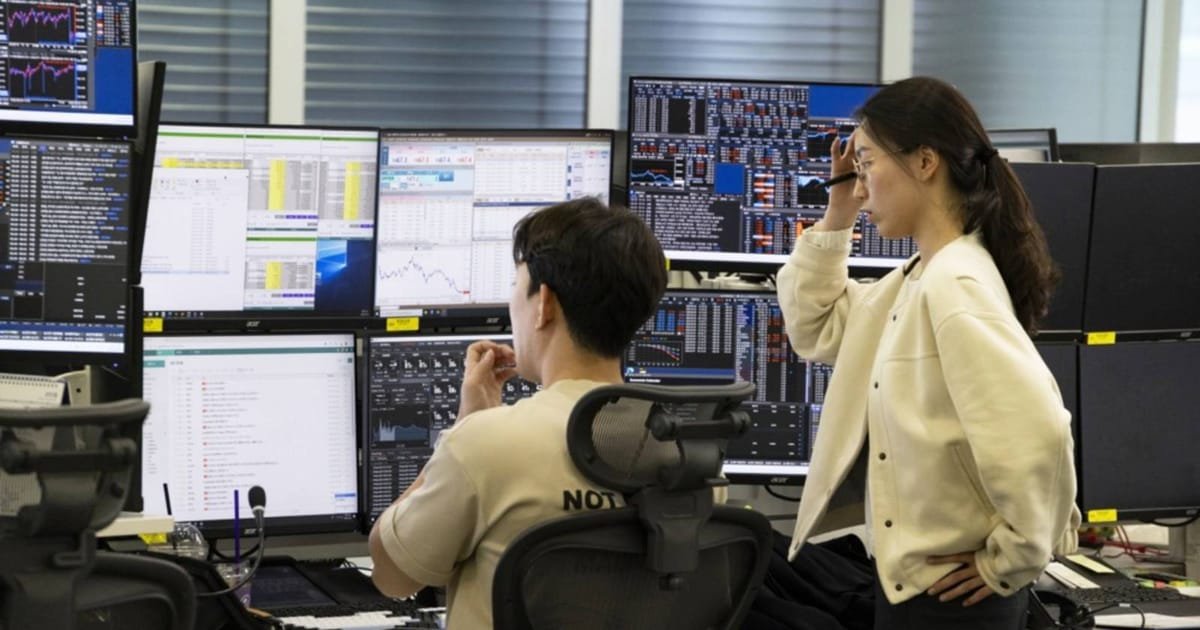

Japanese and South Korean shares plunged Friday after US shares tumbled overnight on worries that midterm election results could slow or derail the artificial intelligence data center investment boom.
Tokyo’s benchmark Nikkei 225 index fell 5.1% to 56,930 points in early trade.
Seoul’s Kospi index dived 8.5% to 4,923 — triggering a circuit breaker which suspended trading for 20 minutes.
Investors had initially cheered Tuesday’s Democratic drubbing of US President Donald Trump’s Republican Party.
But they have since taken a more anxious stance, centered on worries that the electoral shakeup will hit key AI investments seen as important to economic growth.
Of the major US indices, the most impacted was the tech-focused Nasdaq, which finished down 5.5% in a sell-off that battered Nvidia and other semiconductor stocks.
It was the Nasdaq’s worst session in terms of percentage loss since April 2025.
In South Korea on Friday, memory chip makers — whose advanced chips are used alongside other data-crunching semiconductors to power AI tools — also suffered.
Samsung Electronics plunged nearly 10% while SK hynix fell more than 11%.
The tech rout also hit chip-related shares in Japan, with Tokyo Electron shares trading down around 9% and Kioxia shedding 13%.
“Following the Democratic victory in the midterm elections, concerns about stricter regulations on AI-related technologies have led to a sell-off across the entire (US) market, particularly in technology stocks, causing all three major US market indices to decline,” online brokerage Monex said.
“In particular, there are concerns that stricter regulations on data center construction will slow down construction projects.”
Governments and tech giants worldwide are racing to build data centres to train and run AI models — part of a global construction boom costing hundreds of billions of dollars.










Leave a Reply