
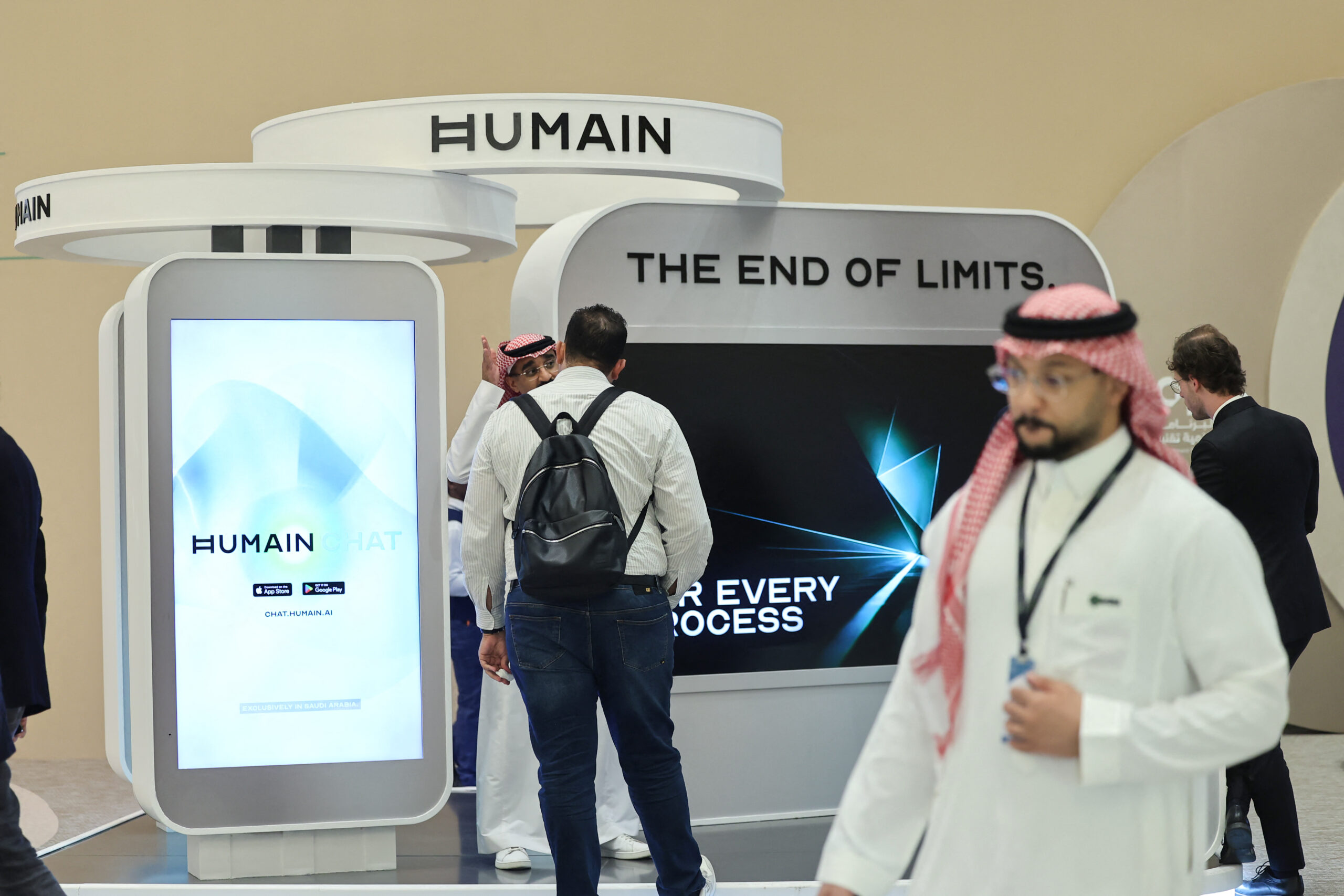
The popular backlash to the compute buildup in the United States has added further impetus for American tech giants to invest in the construction of such infrastructure in the Middle East, even as the Iran war has forced the Gulf to harden or build these facilities underground. But the US is not the only potential partner for Middle Eastern states looking to develop the technological prowess as well as build out local compute capacity necessary to establish their own artificial intelligence sectors. China is offering the region its AI “stack” — the associated collection of silicon, model, infrastructure and networking, and know how — as an alternative to the American one, thus intensifying global US-Chinese AI competition across the Middle East.
This panel will unpack what the American AI stack is and what it entails beyond silicon chips. Against the background of the US-Chinese global tech competition, how should the US think about export control requirements? What is and isn’t working in the AI export program vis-à-vis key Gulf partners? And how has the Iran war changed the conversation in the region about the relative value of the US versus the Chinese AI stacks?
Speaker Biographies
Mohammed Soliman is a senior fellow at the Middle East Institute, where he focuses on the intersection of technology, geopolitics, and business in the Middle East and other emerging markets. He is the author of the acclaimed book West Asia: A New American Grand Strategy in the Middle East (Polity Press, 2026). A trained engineer, he is also a director at McLarty Associates, a non-resident senior fellow at the Foreign Policy Research Institute, and a visiting fellow with the National Security Program at Third Way.
Hon. Nazak Nikakhtar is an international trade and national security attorney, an international trade economist, a partner at the Washington, DC, law firm of Wiley Rein LLP, Chair of Wiley’s national security practice and Co-Chair of the CFIUS (Committee on Foreign Investment in the United States) practice. From 2018 to 2021, with unanimous confirmation by the US Senate, Ms. Nikakhtar served as the Department of Commerce’s Assistant Secretary for Industry & Analysis at the International Trade Administration (ITA), the Department’s CFIUS lead, and Under Secretary for Industry and Security at Commerce’s Bureau of Industry and Security (BIS).
Ruth Berry leads Global Policy on the Government Affairs team at NVIDIA. Prior to this role, Ruth spent nearly 15 years in the federal government, most recently at the Department of State as the Acting Deputy Assistant Secretary for Digital Policy in the Bureau of Cyberspace and Digital Policy, where she oversaw a broad range of technology policy issues including data governance, digital connectivity, internet governance, and technology competition. From 2021 to 2022, Ms. Berry was the Director for Digital Technology Policy at the White House National Security Council.
Rishi Iyengar (Moderator) is a staff writer at Foreign Policy, covering the intersection of geopolitics and technology. Prior to joining FP, he spent six years at CNN Business as India editor in New Delhi and a technology writer in San Francisco, as well as two years reporting for Time Magazine from Hong Kong.









Leave a Reply