


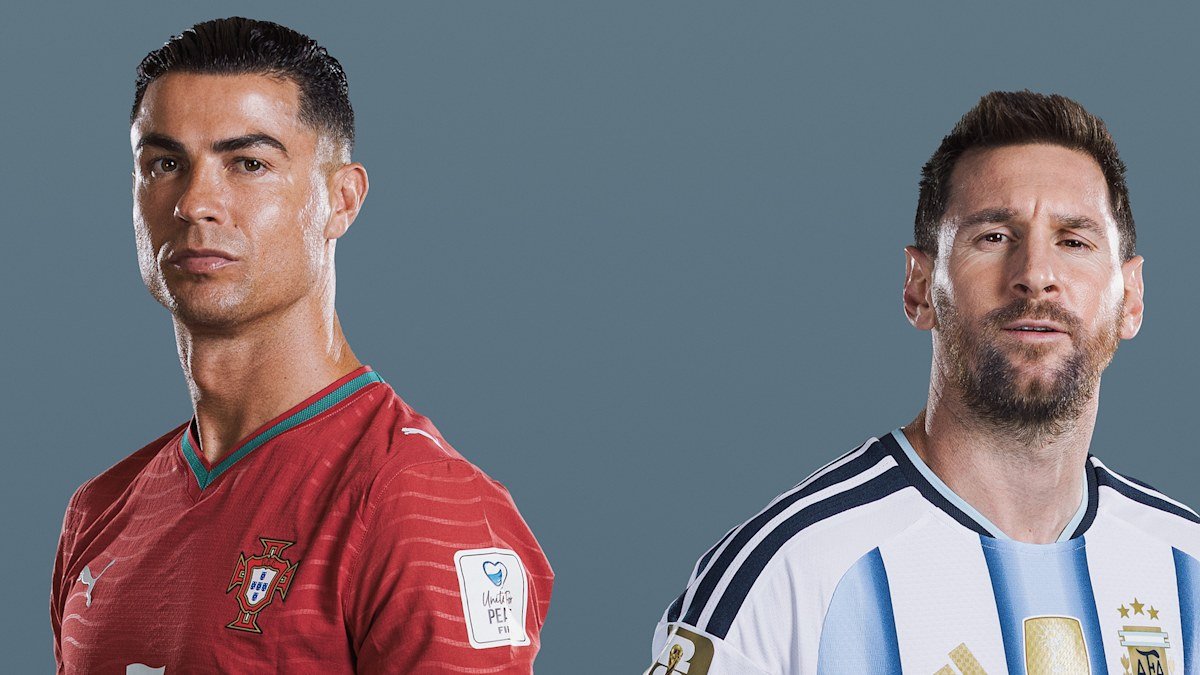
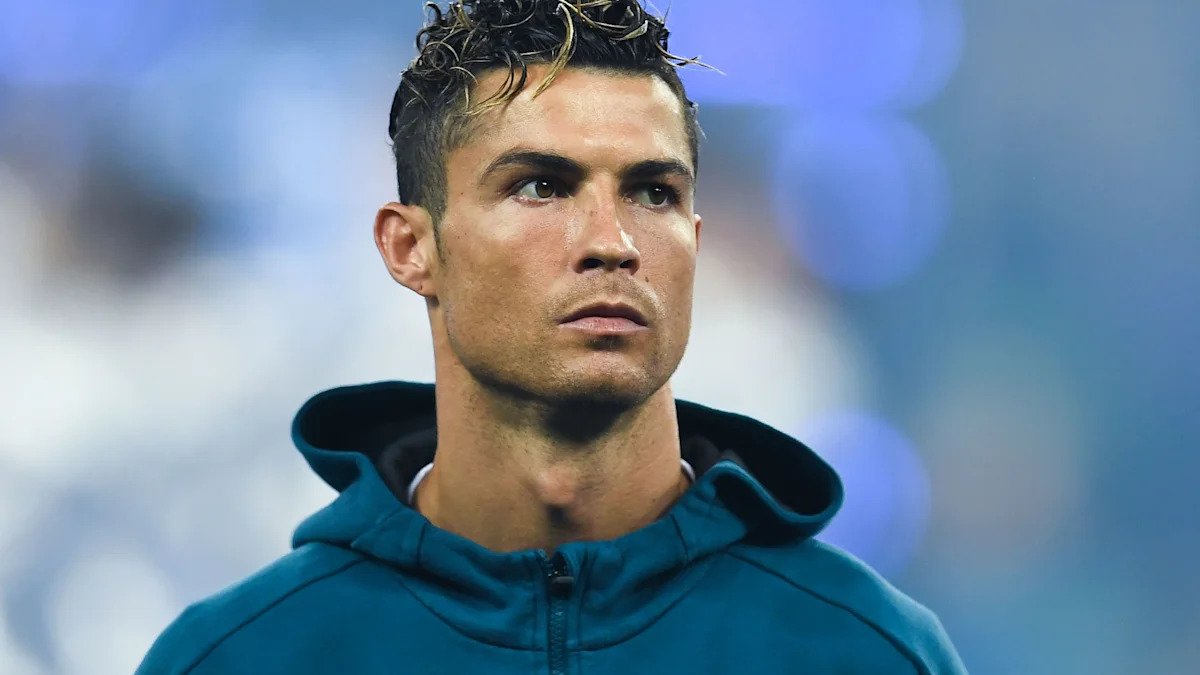
On Thursday, November 5, Portugal’s Cristiano Ronaldo announced his retirement from international football, bringing an end to a 23-year association with the national team. The announcement came just over two months after Argentina’s Lionel Messi also called time on his international career on August 31, 2026. Together, the two footballers have defined an era that spanned more than two decades.
Ronaldo and Messi leave international football as the two highest goalscorers in the men’s game, with 146 and 126 goals, respectively. Their records, individual honours and achievements at club and international levels have established a benchmark that the next generation will find difficult to match.
However, football’s history has repeatedly demonstrated that the end of one era creates opportunities for another. While replacing Ronaldo and Messi is an enormous challenge, several players have already established themselves as leading figures in world football.
From prolific goalscorers such as Erling Haaland and Kylian Mbappe to creative talents such as Lamine Yamal and Michael Olise, the next generation has the potential to shape the sport’s future.
An unmissable era of Messi-Ronaldo dominance
Cristiano Ronaldo and Lionel Messi
Before looking at their potential successors, it is important to understand the scale of the dominance enjoyed by Messi and Ronaldo.
The rivalry between the Argentine and Portuguese forwards became the defining storyline of world football, particularly during their respective spells at Barcelona and Real Madrid. Their competition extended across La Liga, the UEFA Champions League, the Ballon d’Or and international football.
Between 2008 and 2017, Messi and Ronaldo won every Ballon d’Or award, with Messi claiming five and Ronaldo four during that period. Their dominance was interrupted by Luka Modric in 2018, before Messi won again in 2019. Messi eventually took his tally to eight Ballon d’Or awards, while Ronaldo finished with five.
Their goalscoring records were equally remarkable. Ronaldo became the first player to score 900 official senior career goals in September 2024, while Messi also followed suit soon after. Ronaldo holds the men’s international goalscoring record with 146 goals in 234 appearances for Portugal, while Messi finished his Argentina career with 126 goals in 208 appearances.
In the Champions League, Ronaldo remains the all-time leading goalscorer with 140 goals, while Messi follows with 129. Ronaldo also holds the record for the most appearances in the competition, with 183.
Their international achievements further strengthened their legacies. Messi captained Argentina to the 2022 FIFA World Cup and the 2021 and 2024 Copa America titles. Ronaldo, meanwhile, led Portugal to the 2016 European Championship and the UEFA Nations League titles in 2019 and 2025.
The two also shared the stage at six World Cups, from Germany 2006 to the 2026 edition. Their departure from international football, therefore, marks the end of a period in which individual records, club rivalries and international achievements were consistently measured against their standards.
The successor to Ronaldo: Haaland and Mbappe make the strongest cases
Erling Haaland and Kylian Mbappe are arguably the two strongest candidates to carry forward Ronaldo’s legacy as one of football’s leading goalscorers. Both have already established themselves among the most productive forwards in the game, although their styles and strengths differ.
The Norwegian striker has built his reputation around his physical presence, movement inside the penalty area and exceptional finishing ability. Since joining Manchester City from Borussia Dortmund in 2022, Haaland has consistently delivered goals across domestic and European competitions.
In the 2025-26 season, he scored 38 goals in 52 appearances across all competitions for Manchester City, including 27 in the Premier League and eight in the Champions League. He also won the Premier League Golden Boot for the third time in four seasons.
Haaland’s scoring rate is a major reason why he features prominently in discussions about the next generation of elite forwards. His ability to score with either foot, dominate aerial situations and convert chances from close range gives Manchester City a consistent goal threat.
At the international level, he is already Norway’s leading goalscorer, having crossed the 50-goal mark. His next challenge will be to translate his club success into major international honours.
Kylian Mbappe
Mbappe, meanwhile, offers a different attacking profile. The French forward combines pace, dribbling and finishing with the ability to operate across the front line. Having established himself at Paris Saint-Germain before joining Real Madrid, he has continued to deliver at the highest level.
In the 2025-26 season, Mbappe scored 42 goals in 44 appearances for Real Madrid across all competitions, including 16 in the Champions League. He also registered 16 goals for France in 12 international appearances during the season.
His international record already includes a FIFA World Cup title in 2018, a runners-up finish in 2022 and a hat-trick in the 2022 final against Argentina. He also won the Golden Boot at the 2022 World Cup with eight goals.
At 27, Mbappe has already achieved milestones that many forwards spend their entire careers pursuing. His challenge now is to maintain that consistency and add further major trophies to his collection.
The next Messi: Yamal and Olise up for the challenge
While Haaland and Mbappe are leading candidates to inherit the goalscoring spotlight, the search for a player who can influence games through creativity, dribbling and playmaking brings Lamine Yamal and Michael Olise into focus.
At just 19, the Barcelona winger has already established himself as one of the most exciting attacking players in world football. Having progressed through Barcelona’s academy, La Masia, Yamal made his senior debut at the age of 15 and quickly became a regular in the first team.
His ability to beat defenders, create chances and deliver in important matches has drawn comparisons with Messi, although their playing styles and career trajectories remain different.
Yamal played a major role in Spain’s Euro 2024 triumph, becoming the youngest player to appear and score at a European Championship. He also won the tournament’s Young Player of the Tournament award.
During the 2025-26 domestic league season, Yamal registered 16 goals and 11 assists in 28 appearances for Barcelona. Those numbers underline his growing influence as both a goalscorer and creator.
His biggest challenge will be maintaining consistency over several seasons while continuing to develop physically and tactically. At his age, his career is still at an early stage, but his performances have already placed him among the leading candidates to define the next era.
Bayern Munich’s Michael Olise is another player who has emerged as a leading creative force. The France international combines technical ability, close control, passing range and an effective left foot, making him a threat from the right flank.
After making his name in the Premier League with Crystal Palace, Olise joined Bayern Munich in 2024 and continued his development in the Bundesliga.
His 2025-26 domestic league campaign was particularly productive, with 15 goals and 19 assists in 32 appearances. His 34 goal contributions demonstrated his ability to influence matches both as a scorer and as a provider.
Unlike traditional centre-forwards, Olise’s strengths lie in creating opportunities, carrying the ball into dangerous areas and linking up with teammates. His performances have made him an important part of Bayern’s attacking structure and strengthened his position in France’s national team setup.
Messi and Ronaldo continue their club careers away from Europe
Lionel Messi and Cristiano Ronaldo (L-R)
Although their international careers have ended, neither Messi nor Ronaldo has announced his retirement from professional football. Both continue to play at club level, albeit outside Europe’s major leagues.
Messi remains with Inter Miami in Major League Soccer (MLS), where he has continued to produce goals and assists since joining the American club in 2023. In the 2026 MLS regular season, he registered 21 goals and 13 assists in 24 appearances, underlining his continued attacking influence at 39.
Ronaldo, meanwhile, continues to represent Saudi Arabian club Al-Nassr. The Portuguese forward has been a central figure in the Saudi Pro League since moving from Manchester United in December 2022. His club career remains focused on adding to his extraordinary goalscoring record and pursuing further domestic and continental honours.
Their decisions to continue playing at the club level mean football fans will still have opportunities to watch two of the sport’s most influential players, even though their international careers have reached their conclusion.
For the next generation, however, the challenge is no longer simply to emerge from their shadows. It is to establish individual identities, build their own records and deliver the performances that can define an era.




Leave a Reply