
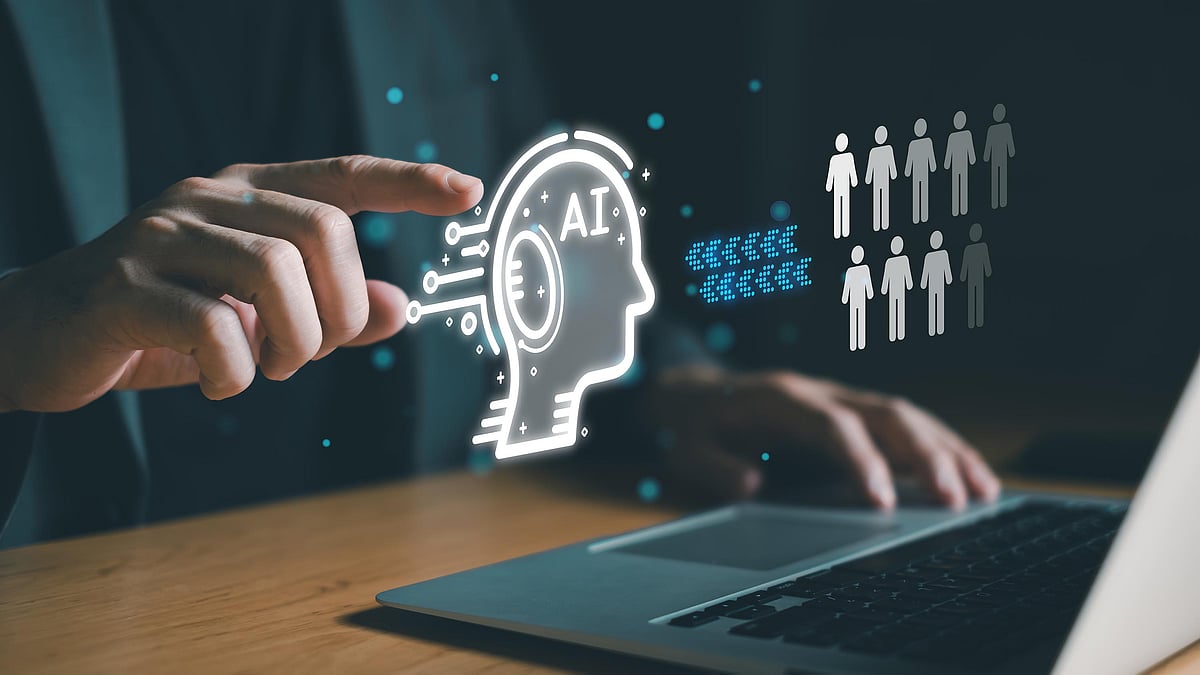
India is betting big on artificial intelligence (AI) to accelerate economic growth for Viksit Bharat. AI could add up to $1.7 trillion to the country’s GDP by 2035, making this a once-in-a-generation opportunity.
Prime Minister Narendra Modi’s recent announcement to formally train one crore youth in AI skills within the coming year, has signalled the need for urgent action. Latest reports of the fertility rate falling below the replacement level have further raised concerns about whether India can capitalise on its demographic dividend in time. India risks growing old before it grows rich. A shrinking workforce, before the transition to an advanced economy, could offset years of progress. Economic growth would stagnate. Healthcare, welfare and family support systems would be burdened enormously.
This comes at a time when technology, economic uncertainty and stricter immigration policies are reshaping labour markets. AI is upending how we work. It is changing job skills so rapidly, that every Indian will need to upskill and reskill, or risk being left behind. Before the demographic window of opportunity narrows, millions will need a way to build AI skills for high-paying jobs. AI proficiency will be essential even for non-technical roles. However, traditional brick-and-mortar institutions alone cannot address skill development or capacity expansion at the scale India needs, to meet its AI moment.
Solving this challenge would need agile innovation, through the systemic adoption of technology-enabled, flexible learning pathways, according to a report by the Confederation of Indian Industry (CII) and Grant Thornton Bharat. It calls for transformation with virtual learning ecosystems and credit-based online programmes, to exponentially increase access to learning.
This is a critical moment, but also an opportunity. India has shown it can leapfrog for tremendous impact—in recent years revolutionising public digital infrastructure to bring near universal financial inclusion. The next big leap must come in education, by rethinking skill development with an AI lens. The magnitude and nature of this challenge demand new approaches that can equip Indians with AI skills at an unprecedented speed, and at population scale.
India already has the policy support and building blocks in place for this. By focussing and amplifying its efforts, the country can turn its time-bound demographic dividend into a lasting AI workforce advantage.
Skills are the new foundation in the AI age
Traditionally Indians have focussed on getting a knowledge-based education. Advancing AI has shifted the focus from knowledge to skills and app-applied skills. Where earlier curriculum approval took years, critical employer skills are now changing in months.
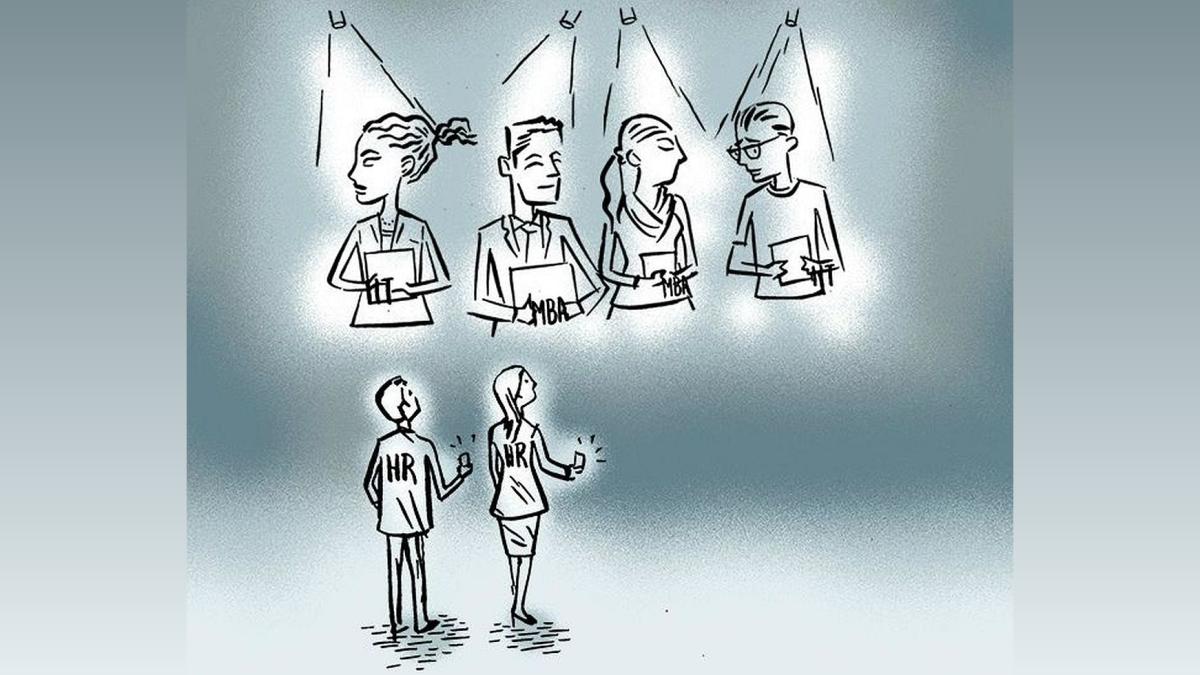
Learning will have to prove what learners can do, not just what they studied. Providing verifiable proof of learning and evidence of job-ready capabilities will be crucial to finding employment in India’s skills-first economy. The challenge is, how to widen access to the skills companies are hiring for, so students across the country can channelise their efforts to become employable.
The Indian government’s forward-thinking approach to online learning has already laid the foundation for the shift to skills. College students can take up to 40% of credits from online courses, and many are using this approach to build job skills through industry micro-credentials. There’s huge demand among students for micro-credentials, which offer a strong signal to employers. A Coursera report finds that 100% of Indian employers are willing to offer higher starting salaries to students with a micro-credential.
Globally, degree programmes are changing. Universities are embedding job-relevant micro-credentials into degree pathways to improve graduate employability. Institutes like Chandigarh University have accelerated curriculum innovation by integrating credit-bearing online content to teach in-demand skills. This has enabled students to build the AI and digital competencies sought by employers and led to a significant improvement in placement rates. The National Skills Qualification Framework (NSQF) alignment has paved the way for more Indian universities and employers to provide credit recognition to industry content, through micro-credentials. Opening up access to a wider catalogue of critical skills through micro-credentials, would help students even in smaller towns, develop specific job skills.
India’s expanding digital learning and skilling ecosystem can also flexibly help people in the workforce pivot to new opportunities. With roles in India’s IT industry widely impacted by AI, NASSCOM has called for a massive workforce shift—to recast talent into higher-order, AI-augmented roles. This will only be possible through concerted reskilling and upskilling. If India’s IT workforce is empowered to upskill at scale, it can become the world’s AI workforce, bridging AI talent shortages in India and globally.
Policymakers, institutions and citizens will need a skill-based mindset while learning at every stage, starting early—initiatives like Skilling for AI Readiness (SOAR) have begun helping students from Classes 6 to 12 build foundational AI skills in school. Continuous learning is going to be the norm as AI becomes more deeply embedded in work. AI-native learning in the flow of work can help Indians practice and master skills in the context of their everyday jobs, for quicker business impact. India’s civil servants are leading this change by example. Mission Karmayogi, which is upskilling India’s civil servants, is the world’s largest civil services capacity-building reform. Flexible, digital-first learning is helping officials who shape India’s policy and oversee governance, access advanced, specialised learning, aligned with evolving governance needs.
A country’s skills policies can play a pivotal role in fostering equality of opportunity, according to the OECD. In India, improving access to AI learning for vulnerable, under-represented sections, will be necessary to bridge the digital job divide, leaving no one behind. Every citizen will need basic AI literacy to participate in the digital economy. The IndiaAI Mission is addressing this through free foundational online courses like YUVA AI for ALL.
With AI and mobile technology, high-quality learning that is affordable and accessible can reach Indians wherever they are. AI can accelerate skill-based learning for diverse learners, with unprecedented personalization and effectiveness. AI translated or dubbed online content could allow Indians from different regions to learn in their native language, gaining access to new job skills much faster than before.
India’s thrust on self-reliance and entrepreneurship would also get a boost at the grassroots level through skill development. Enabling people in the informal sector to learn relevant skills on mobile, would help them grow their livelihoods and cross over to the formal economy. With online and digital learning, diverse sections can overcome barriers to build skills at their pace, level and at any point in their lives. For India, equipping women with AI capabilities could increase their participation in the workforce. Coursera data shows strong persistence among Indian women learners once they gain access to high-quality learning. Women in India are completing Generative AI courses at 3% higher rates than men. This suggests that access—rather than capability or motivation—may be the primary barrier.
The future of AI will be shaped by the diversity of people building and using it. Expanding access to AI skills with more learning pathways, will be key to unlocking the potential of India’s talent. A flexible, skill-based education that reaches all Indians would be a precursor to Viksit Bharat, where the benefits of economic growth are shared by all.
(The author is Managing Director, India and Asia Pacific, Coursera. Views are personal.)








Leave a Reply