

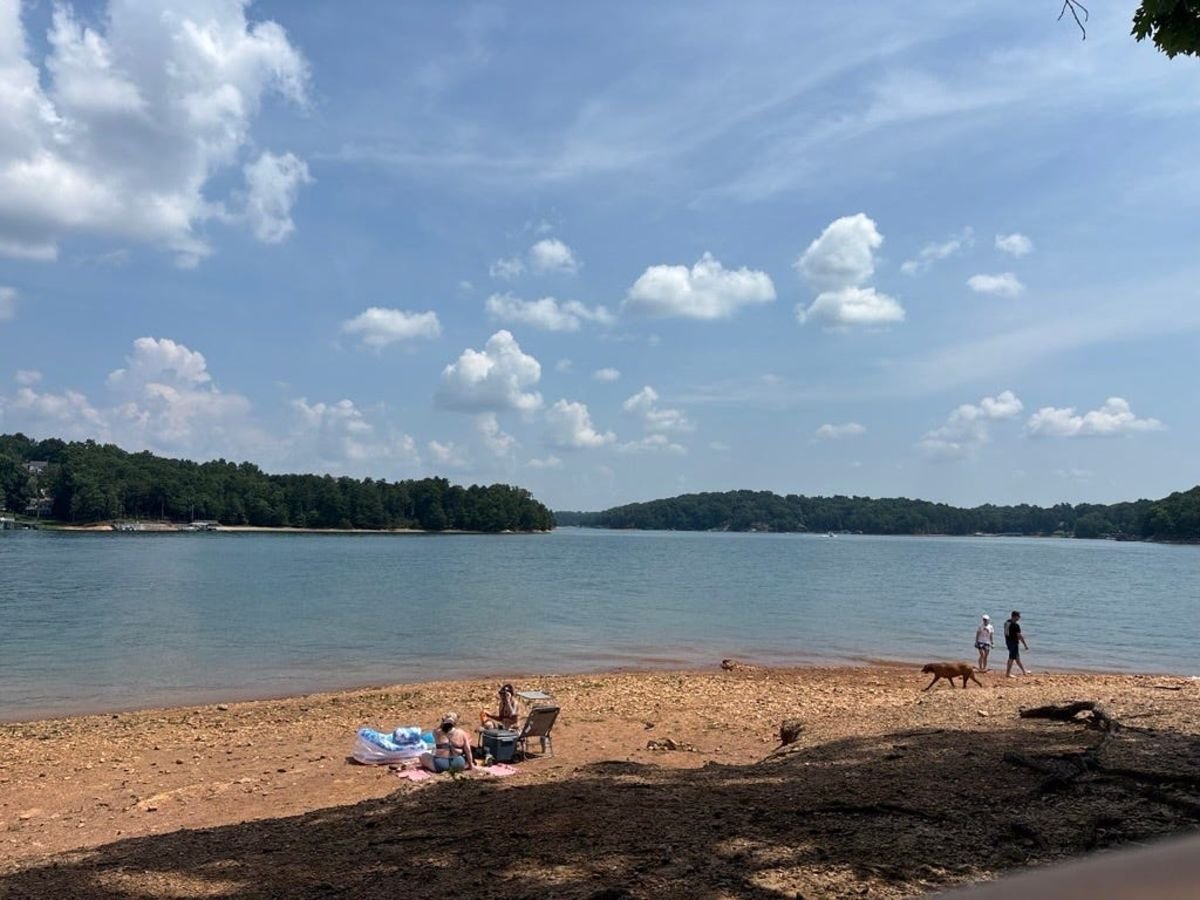
Colder temperatures are here in Georgia, and while many might welcome the change from steamy summer days to chilly winter mornings, what the Southeast really needs is rain.
The state of Georgia has been under drought conditions this year, despite some smaller periods of heavy rainfall, and it has caused the water levels in the state’s reservoirs to drop significantly.
Atlanta has received 35.3 inches of rain so far this year, down significantly from the 30-year average, according to the National Weather Service.
The Georgia Environmental Protection Division declared a statewide drought response level 1 in April, meaning utilities were required to warn residents about the impacts of drought and ways to mitigate them.
Now, state officials are taking the next step to keep Atlanta’s water system moving.
Army Corps to limit reservoir releases
The Army Corps of Engineers manages and operates Buford Dam, the dam at the southern end of Lake Lanier, a massive reservoir about an hour north of Atlanta. The Dam and lake are fed by the Chattahoochee River, and the river continues to flow on the south side of the dam all the way down to Florida.
When water levels are low in the reservoir, typically during drought, the Corps will limit how much water is released from the lake into the river.
The Atlanta metro gets its water from this reservoir and the surrounding watershed, so for now the Corps has been releasing enough water to meet the city’s needs, but not too much that the water level drops too low in the lake.
Drought operations were triggered at the beginning of November, according to the Corps, prompting additional actions.
“As prescribed in the Water Control Manual, Buford Dam has been making minimum daily releases for drinking water intakes, wastewater effluent dilution, and industrial cooling in support of the metro-Atlanta area. These releases will now have to increase,” the Army Corps told CBS News in a statement.
Clyde Morris, the Lake Lanier Association President and Secretary, shared an open letter to residents that explained the rainfall patterns over the past few years that has contributed to the low levels, and said that it is “Mother Nature” and not the Corps “pulling the strings” in the lake.
“What we have experienced over the past two years can reasonably be viewed as a prolonged drought-like pattern interrupted by a few unusually wet months. Those episodes of heavy rainfall have periodically replenished Lake Lanier and masked the severity of the underlying cumulative rainfall deficit. Without them, the lake would be substantially lower today,” Morris wrote.
Officials said the additional releases shouldn’t impact the water in the greater Atlanta metro for now, but it does feed into the controversy between states over water use. It also will make the lake harder to use recreationally in the meantime.
The three states involved in the Apalachicola-Chattahoochee-Flint River System, Georgia, Alabama and Florida, have disputed access to the water for years. It escalated as far as the U.S. Supreme Court more than a decade ago when Florida sued Georgia to stop taking so much water from the system for Atlanta. The state accused Georgia of creating irreparable harm to the Apalachicola zone, an area known for its oysters. Georgia ultimately won the case, and the city has continued to grow in the years since.
Wet winter predicted across Southeast
According to the Farmers’ Almanac 2026/2027 Winter Weather Forecast, published at the beginning of September, El Niño weather conditions will play a big part in the winter experience in Georgia.
The southeast is expected to experience “frequent storm systems, muddy fields and occasional surges of cold air.” In cases where the cold air meets moisture, those storms could produce sleet, freezing rain or in some cases wet and heavy snow.
The moisture and precipitation is good news for the watershed, and could help bring the state closer to normal water levels by the end of the year.
Irene Wright is the Atlanta Connect reporter with USA Today’s Deep South Connect team. Find her on X @IreneEWright or email her at ismith@usatodayco.com.
This article originally appeared on USA TODAY: Water releases planned as drought conditions continue in metro Atlanta









Leave a Reply