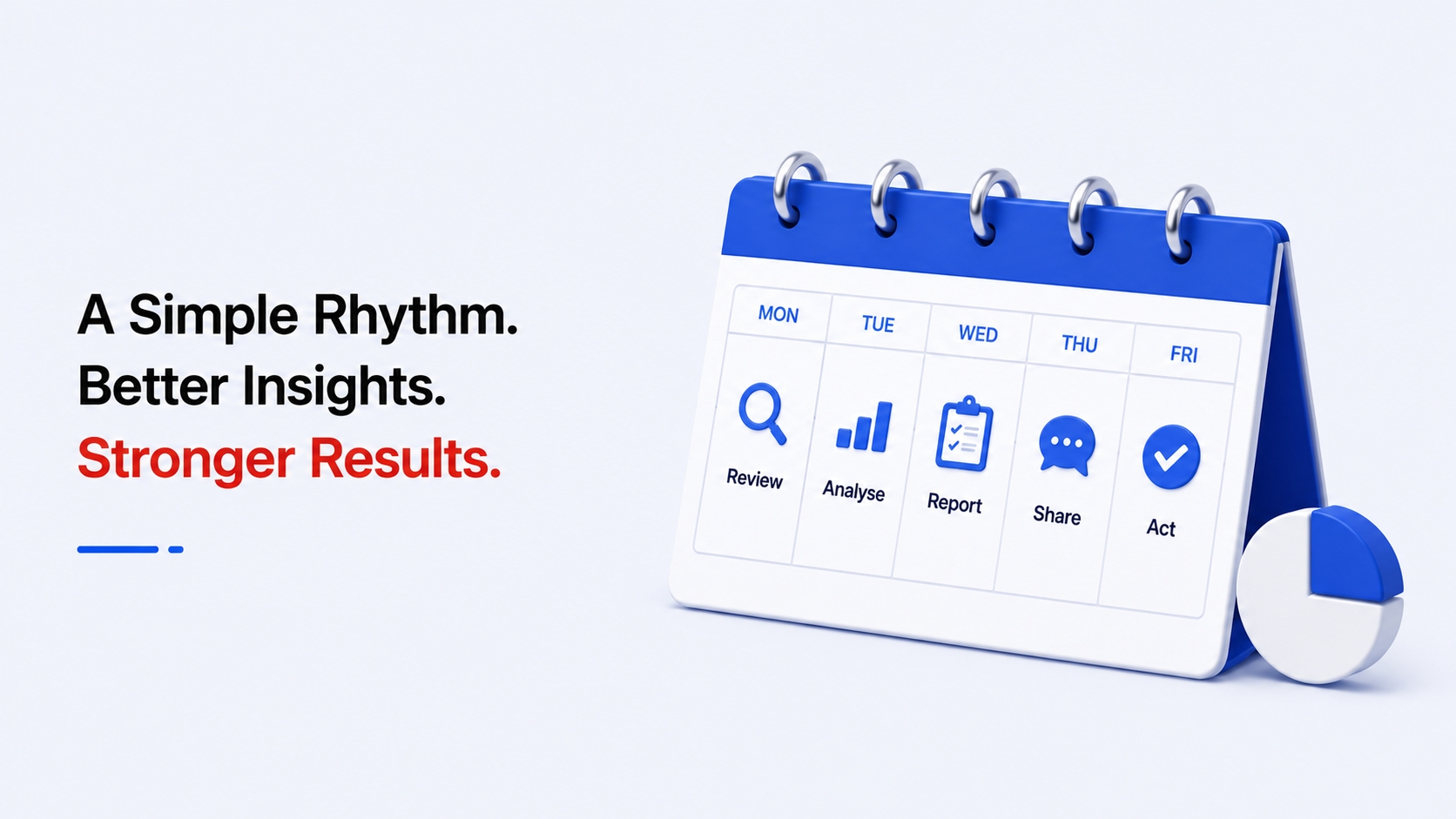
Keeping a marketing team aligned starts far before the workday begins. Consistency in reporting provides transparency, accountability and momentum but only when reporting remains practical. Too many teams either dread the weekly session or treat it as a checkbox, leading to reports that gather digital dust. The answer lies in creating a weekly marketing reporting rhythm: A tailored process using a reliable weekly marketing report template, underpinned by an optimal cadence and fuelled by the right tools and mindset. Teams from startups to mature departments benefit from developing a structure that everyone will actually use.
Understanding the Core Purpose of Weekly Marketing Reporting
The first question most marketers ask is, “How often should a marketing team report on performance?” Although reporting can occur daily or monthly, weekly marketing reporting strikes the ideal balance. It provides a current snapshot of key initiatives, allows prompt adjustments, and highlights early wins or signals problems before they grow. A well-designed marketing reporting cadence ensures teams remain focused without being overwhelmed by data floods or getting lost in lengthy narratives. Prioritising what matters for the week keeps stakeholders engaged and accelerates decision-making processes.
Defining Your Marketing Reporting Cadence
Getting the cadence right avoids both report fatigue and unhelpful blackouts between reviews. A weekly reporting rhythm helps address questions about what the team achieved, where projects are lagging, and what needs adjusting. For smaller teams, a consistent cadence may be one stand-up each week supplemented by a live marketing dashboard setup. Larger or agency teams might increase the touchpoints while streamlining what is discussed at each level. The trick is determining what belongs in the weekly session versus what should wait for monthly or quarterly reviews. Stay flexible—adapt the cadence as the team grows, drawing clear boundaries to avoid meeting bloat.
What Goes Into a Weekly Report Versus a Monthly One?
Not every important metric needs weekly review. Decide what belongs in the weekly marketing report template—think of activity-based updates, project progress and short-term campaign results. Weekly reports focus on tactical actions and immediate outcomes: Lead counts, traffic spikes, content published and initial advertising performance. Deeper strategic insights, brand health and longer trends typically belong in monthly or quarterly reports. By reserving in-depth analysis for these longer windows, teams can use their weekly sessions to stay agile without drowning in metrics. This division allows everyone to contribute meaningfully, limiting time spent on data collection and maximising impact from discussion.
Choosing the Right Weekly Marketing Report Template
Standardising for Clarity and Action
Select a template that stays adaptable but is rigorous enough to avoid ambiguity. Start with core sections: Campaigns in flight, key metrics, project blockers, immediate action items. Teams often use cloud-based documents or slide decks tailored to their marketing strategies. For under-resourced teams, simple is often better—avoid templates that require excessive manual data entry or copy-pasting from disparate systems. Use a weekly marketing report template that drives outcomes, not just updates. Look for options pre-built into your AI marketing operations platform if available, to enable seamless integration.
What Weekly Metrics Matter Most?
The answer depends on your channels, goals and business model. Generally, include website traffic, new leads or contacts generated, campaign reach (impressions or clicks), email engagement, social growth and basic AD metrics. For agency client reporting, prioritise outcomes that relate directly to agreed-upon KPIs. For in-house teams, always link metrics to the strategic objectives outlined in your 12-Month Implementation Plan. Weekly sessions keep things honest: Highlight both wins and setbacks. This weekly pulse makes it easier to spot changes quickly and recalibrate marketing strategies on the fly.
Setting the Ideal Marketing Team Meeting Agenda
Anatomy of a Productive Marketing Stand-Up
Effective meetings start with a tight agenda. The best marketing team meeting agenda usually includes five core items: Review of previous actions, top-line dashboard results, new blockers or opportunities, feedback on ongoing campaigns and next-step assignments. Allocate specific times to each section and encourage brevity. Where possible, distribute the weekly marketing report template to the team ahead of the meeting, so no one encounters surprises and time is used efficiently. The meeting should end with clear owners for specific action items.
Addressing the Common Pitfalls
Do not let meetings devolve into status monologues or data reviews. Instead, treat the marketing stand-up as an operating rhythm: A forum to support the team, solve immediate issues and energise execution. Use the agenda to surface blockers early and triage them. Weekly meetings should build a culture of proactive updates, not defensive reporting—especially when results come in below target. That way, the meeting remains honest and constructive.
Optimising Marketing Dashboard Setup for Weekly Reviews
Centralising Reporting for Ease
A cluttered dashboard kills enthusiasm to report. Aim for a dashboard that brings all channels, campaigns and content performance into one interface. The best AI marketing strategy tools integrate marketing automation and reporting, reducing time on manual compilation. Dashboards should show only what the team needs each week—no more, no less. Use your AI marketing operations platform to automate marketing reporting wherever possible, so dashboards update automatically from real data sources. Visual clarity and real-time updates help keep sessions focused and forward-looking.
Automate Marketing Reporting but Keep Control
Teams waste hours piecing together spreadsheets from different campaign systems. Automate marketing reporting processes to eliminate this time drain. Set up your marketing automation suite to sync with channel analytics, CRM and other platforms. Maintain control by scheduling periodic spot-checks or rotating dashboard reviews among team members to validate key numbers. Automation enables marketing strategies to scale with less manual intervention but should always allow for drill-downs where numbers look unusual. Automation is not about letting go but about freeing resources for interpretation and action.
Scaling the Reporting Rhythm as the Team Grows
From Small Teams to Scalable Processes
Reporting cadence must remain fit for purpose as staffing increases. In a start-up or a small team, a single weekly marketing stand-up and dashboard may suffice. As more people join, splitting meetings by function or project type may reduce crowding and improve relevance. Agency client reporting, for example, often requires tailored outputs for different clients, calling for robust reporting templates and flexible dashboards. Ensure new hires onboard quickly into the reporting rhythm by sharing best practises and tool access up front.
Supporting Accountability and Performance at Scale
Larger teams or agencies should consider a Marketing Strategy Performance Coach to lead sessions, provide strategic perspective and hold different functions accountable. Set expectations early about participation and follow-up. Keep the structure of marketing reporting cadence transparent—everyone needs to understand when data collection happens, which metrics are reviewed and what decisions are made each week. Plan regular reviews of the reporting process itself, pruning what no longer serves your evolving team’s needs.
Agency Client Reporting: Making Insights Actionable
Agency teams juggle multiple clients, each expecting relevant and easy-to-understand updates. Use a dedicated weekly marketing report template for each client. Focus weekly reporting on deliverables, channel performance and progress against agreed KPIs, while reserving deep dives for monthly or quarterly sessions. Custom marketing automation and AI marketing operations platforms can automate client-specific dashboards, reducing time spent on manual entry and increasing impact through strategic insight. Ensure that each agency client reporting session identifies actionable next steps that drive direct client outcomes.
Ensuring Reporting Remains Honest and Constructive
A good cadence shines during setbacks. Teams must share both positives and negatives. Encourage open discussion about underperforming campaigns or unexpected shifts. Leaders should foster a culture where honest reporting is not punished but used as a tool for learning. Address “bad news” as soon as it appears on your dashboard so that your 12-Month Implementation Plan can adapt. Keeping reporting honest maintains trust within the team and with stakeholders or clients. Documentation in the weekly marketing report template supports learning for future campaigns and avoids repeated mistakes.
Reducing the Burden of Reporting With Marketing Automation
Manually gathering data and writing reports can consume a disproportionate amount of the week. Reduce this effort by automating all data pulls, dashboard updates and report formatting through a marketing automation suite or an AI marketing strategy tool. Standardise the report template so it takes minimal time to update. Assign responsibilities on a rotating basis or let your Marketing Strategy Performance Coach oversee the process for consistency. Reclaim hours lost to repetitive reporting and allow more time for execution and creativity.
Troubleshooting Common Reporting Challenges
Over-Complicating the Weekly Report Template
Avoid the temptation to make templates over-detailed. Ensure your weekly marketing report template is easy to populate and laser-focused on critical actions. Regularly revisit content and strip out any metric or section that does not support your marketing strategies or influence near-term decision-making. In agency settings, customise templates to each client’s reality without sacrificing efficiency or clarity.
Dealing With Reporting Fatigue
To prevent reporting from consuming the whole week, keep the cadence strict and block all unnecessary side discussions outside the agreed agenda. Use your AI marketing operations platform and marketing automation suite to automate as much as possible and conduct periodic reviews. Monitor for “report bloat,” where reports grow longer but insights diminish. Set expectations on meeting duration and stick to them rigorously.
Integrating Reporting With Long-Term Marketing Strategy
The Role of the 12-Month Implementation Plan
Weekly reporting works best when linked directly to your longer-term marketing strategies. The 12-Month Implementation Plan gives clear context for what to measure and why. It defines the focus areas, top KPIs for each time window and milestone tracking. Weekly updates should clearly map progress to the bigger vision, allowing for agile reallocation of efforts in response to campaign learnings. This framework keeps the team steady in the day-to-day while always steering toward strategic growth objectives.
Leveraging Technology for Insightful Weekly Meetings
As marketing tools increase in power, there is no reason to let weekly reviews become frustrating or time-consuming. AI marketing operations platforms, integrated marketing automation suites and smart dashboards offer real-time insight with minimal human intervention. Using automation to power the reporting cadence amplifies the visibility and impact of each stand-up or agency session. Combine structured reporting with frequent reviews of strategy for a marketing reporting rhythm your team wants to keep.
Addressing Future Challenges as Reporting Needs Evolve
As markets and technologies change, expectations for reporting rise. Teams should regularly review and update their weekly marketing report template, refining which metrics matter most as strategies and goals evolve. Maintain an adaptable framework that accounts for new channels or KPIs while protecting the simplicity of the weekly process. As teams onboard new marketing automation tools or mature their use of AI marketing strategy capabilities, continue to look for ways to automate routine tasks and shift human effort towards deeper analysis. This adaptive approach ensures reporting stays relevant and valuable, no matter how ambitions or resources shift.
!function(f,b,e,v,n,t,s)
{if(f.fbq)return;n=f.fbq=function(){n.callMethod?
n.callMethod.apply(n,arguments):n.queue.push(arguments)};
if(!f._fbq)f._fbq=n;n.push=n;n.loaded=!0;n.version=’2.0′;
n.queue=[];t=b.createElement(e);t.async=!0;
t.src=v;s=b.getElementsByTagName(e)[0];
s.parentNode.insertBefore(t,s)}(window, document,’script’,
‘https://connect.facebook.net/en_US/fbevents.js’);
fbq(‘init’, ‘1122401991165798’);
fbq(‘track’, ‘PageView’);