
The left wing of the Democratic Party suffered a setback in Francesca Hong’s abrupt collapse in the Wisconsin governor’s primary on Aug. 11, but the progressive movement’s leaders say her near-victory and recent wins elsewhere still demonstrate their side is surging.
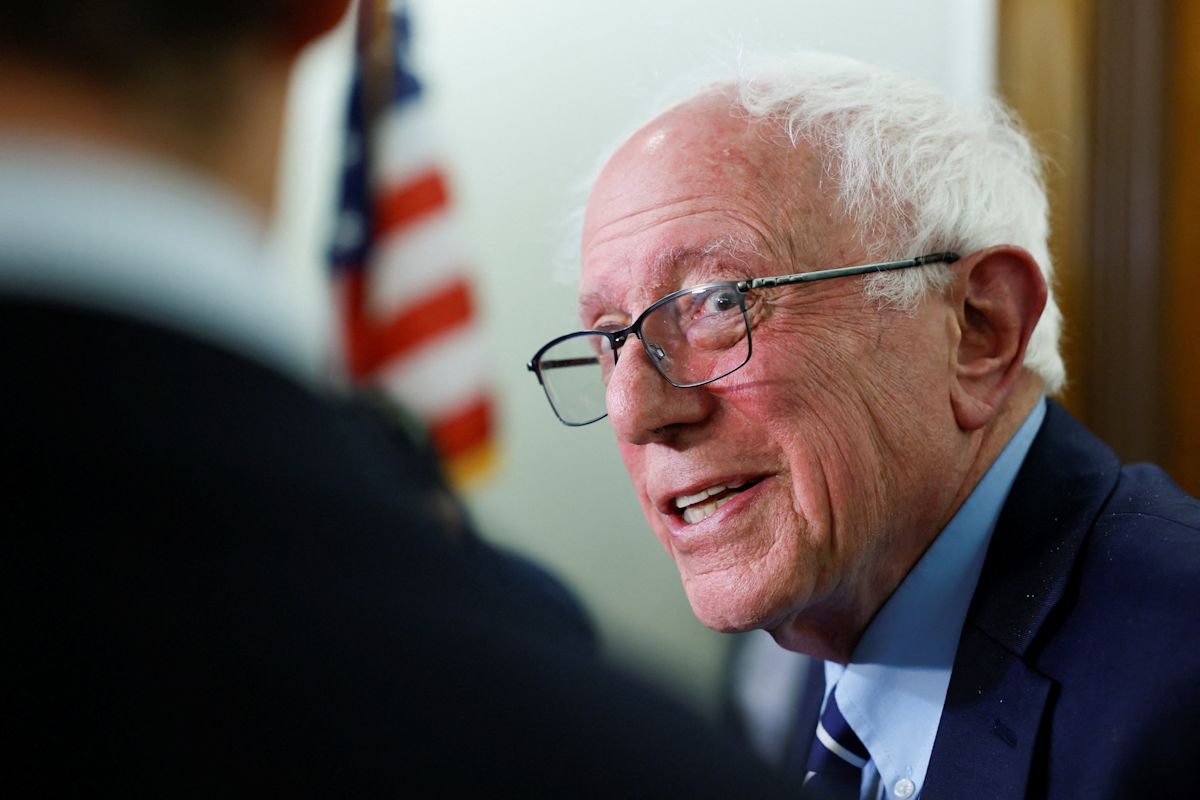
“No question about it, I think what progressives and democratic socialists are talking about are the issues that the American people want discussed and they want action on,” Sen. Bernie Sanders, of Vermont, said in an interview with USA TODAY. Sanders is a self-described democratic socialist and an independent who caucuses with the Democrats.
Hong, a 37-year-old state legislator and professional chef, was poised to score a significant win as a democratic socialist running in a swing state until Milwaukee County Executive David Crowley defied every public survey and galvanized voters nervous about the general election to pull off a half a percentage point win.
In Wisconsin’s gubernatorial race and Michigan’s closely watched Senate primary the final tally was decided by less than 20,000 votes combined. That feat in two critical Upper Midwest swing states demonstrates they are a fast-growing faction, movement leaders say.
Sanders said voters are fed up with what he described as a “rigged economy,” and an Ipsos/Reuters poll released this month shows a slight margin of voters believe Democrats can handle cost of living better than Republicans.
“The status quo is not working for them,” he added. “Progressives, democratic socialists are coming up with an agenda that makes sense to working families. That’s why we’re winning.”
As an organization, the Democratic Socialists of America − of which Hong and recent Democratic primary winners such as New York City Mayor Zohran Mamdani and Colorado congressional candidate Melat Kiros are members − is polling well among Democrats, with 42% viewing the group favorably versus 17% who do not, according to a Marquette Law School poll released in June.
For conventional liberals, however, Crowley’s win is viewed as a blueprint for blocking farther-left candidates while also upholding Democratic values, some strategists say. Centrists say the 40-year-old Milwaukee County executive’s victory is a demonstration of the activist left’s limits outside of deep-blue districts and heavily populated cities.
The same Marquette poll, for example, found DSA holds a 21% favorable versus 48% unfavorable rating among the electorate overall.
Former Chicago Mayor Rahm Emanuel, a rumored 2028 presidential contender, was the party’s chief strategist in reclaiming the U.S. House of Representatives in 2006 as chair of the Democratic Congressional Campaign Committee.
“Since 2018, no progressive has flipped a red district,” he said. “The New Democrats (a centrist House caucus) are more moderate and flipped 50.”
Emanuel said ideological tensions between liberal and progressive factions are a healthy family disagreement, but he castigated the rising influence democratic socialists saying the group’s radical agenda, which calls for abolishing the U.S. Senate, among other dramatic overhauls, is still too far outside the mainstream for swing voters. (Elected officials who belong to the DSA have typically not endorsed, or commented on, the group’s entire platform.)
“If you’re so convinced that people want to do defunding the police, open borders (and) letting prisoners out of prison — I’ll see you in November,” Emanuel told USA TODAY. “You’re a separate party. Run in November, and if you think in a district people want to buy what you’re selling, go for it.”
Why didn’t Sanders endorse Hong?

From left, U.S. Rep. Alexandria Ocasio-Cortez of New York, U.S. Senate candidate Abdul El-Sayed and U.S. Sen. Bernie Sanders of Vermont campaign in Detroit on July, 18, 2026.
Many progressives and political experts cite Sanders, the Senate’s only democratic socialist member, as the forefather of the movement that has toppled several longtime Democratic incumbents across the nation this year.
In 2016, he won Wisconsin and Michigan during his failed presidential primary bid against Hillary Clinton.
The Vermont senator publicly endorsed Abdul El-Sayed, a progressive who is not a socialist, in the Michigan contest against Rep. Haley Stevens. But he and others, such as Rep. Alexandria Ocasio-Cortez, of New York, balked at throwing their support behind Hong, which experts believe was an early warning sign of her flaws.
“Their backing would have given Hong more legitimacy as a candidate and made her platform seem more grounded,” University of Wisconsin-Madison political science professor Barry Burden told the USA TODAY Network.
Hong did receive the backing of Rep. Ilhan Omar, D-Minnesota, a prominent and outspoken progressive and some progressive groups, including the Milwaukee DSA chapter. But she became a lightning rod over her past social media posts that called to abolish police and criticized holidays.
Asked about criticism that his support could have helped Hong close the roughly 4,000-vote gap that she lost by, Sanders pointed out there are other “great” candidates who’ve won without his backing. He emphasized that with a few exceptions most of his political operation’s focus has been on federal elections rather than gubernatorial races.
Sanders highlights that he is backing trade unionists running for Congress, such as Montana’s Sam Forstag, who edged out three other rivals in the state’s June primary.
He said the 2016 campaign called for a “political revolution” and that starts with elbowing more progressives into Congress to achieve a larger federal agenda.
“I know that folks like Rahm Emanuel, Fox (News) and some others will highlight certain statements made by certain people or provisions or whatever it may be, but the overwhelming majority of progressives and democratic socialists are focusing on the needs of working families,” Sanders said.
“That’s why they’re doing so well, and that’s why the establishment, the big money interests, are getting very nervous.”
Electability and Hong’s collapse: How Crowley pulled off a ‘shocking’ win

Milwaukee County Executive David Crowley greets parade goers while walking in the annual 2025 Laborfest parade in Milwaukee on Monday, Sept. 1, 2025.
For Democrats picking up the pieces in Wisconsin, the lessons from the governor’s race largely fall along the same factional lines that have played out in other primaries.
In a crowded primary field that saw contenders drop out and reenter, Hong’s grassroots candidacy benefited from a committed coalition made mostly of younger and college-educated voters. Crowley, who reentered the race amid her implosion, benefited from the support of older, noncollege and Black voters.
Both sides agree that much like in other contests that have animated Democrats this year, Hong’s electability against Republican nominee Rep. Tom Tiffany, a member of the House Freedom Caucus, was at the forefront of primary voter’s minds.
David de la Fuente, a senior analyst at Third Way, a centrist Democratic think tank, said since the 2024 presidential election, winning remains the chief focus for Democratic primary voters.
“The fact that Crowley was able to go from 20 points down to a win, I think shows that primary voters still very much care about electability,” he said.
Crowley, who is Black, pushed back at characterizations that he was the party’s “establishment” candidate, calling the term “a slur.” He noted his upbringing in one of the state’s poorest zip codes, alongside his parent’s struggles with drug addiction and mental health problems.”He’s 100% right in that he kept climbing the ladder of success in life, and that gave him credibility,” de la Fuente said. “A lot of these folks on the left are more into progressive purity and I think that is the key differentiator between all this stuff right now.”
The primary had been quiet for most of the year, experts said, but started to heat up over the summer as the sizable portion of undecided voters in the polls looked for an alternative to emerge. Republican-backed groups also influenced the Democratic primary when they blitzed the state with advertisements that showed excitment about the prospect of facing Hong in the fall.
Then Gov. Tony Evers quickly endorsed Crowley once he reentered the fray, after initially vowing to stay out of the race.
“I think voters paid attention to that,” Burden said. “He was very active on the campaign trail and gave a full-throated endorsement to Crowley. That was meaningful.”
Progressives, DSA seek silver lining ahead of upcoming primaries

Jordan Millett, of the Salem chapter of the Democratic Socialists of America, speaks at the state Capitol in solidarity with the Global Climate Strike.
Democratic Socialists of America leaders dispute that their members are less electable, pointing out mainstream Democrats lost to President Donald Trump in 2016 and 2024.
Ashik Siddique, a national DSA co-chair, noted that even contenders who don’t embrace the socialist label, such as El-Sayed, have endorsed economic populist proposals, such as universal healthcare, which he said inspires new voters.
“This is the way to motivate parts of the voting base that have been feeling really demoralized and down about where the country is going,” he said. “It has expanded the electorate and motivated many people who haven’t voted for either party because they just don’t see real solutions being being advanced in politics.”
Pulling the party in that direction isn’t without growing pains, however, as the Wisconsin governor’s race underscored.
Ocasio-Cortez declined to endorse Hong during an interview on ABC’s “This Week” ahead of the Aug. 11 election. Asked about the Wisconsin legislator’s previously stated views on law enforcement and prisons, Ocasio-Cortez said “Woke 1 was crazy,” referencing progressive demands in response to the 2020-era politics, such as the COVID-19 pandemic and the murder of George Floyd by a Minneapolis police officer.
Beyond concerns about Hong’s old tweets, however, critics have suggested the campaign underperformed with key voting blocs and made questionable decisions, such as dedicating $150,200 to online ads without running a single TV broadcast spot.
But much like El-Sayed overcoming $60 million in outside spending from super PACs backing Stevens, strategists point out Hong barely lost after the party’s establishment, including Evers, a popular Democratic incumbent governor, coalesced around her opponent.
“It showed that there is a kind of populist strain in the electorate that is available to Democratic candidates,” Democratic pollster Fred Hicks said.
There are messaging opportunities around affordability, data centers fueling artificial intelligence and the cost of childcare, he said, which cross a wide political spectrum.
Progressive activists are moving forward, looking ahead to the Aug. 18 Florida primary, in which two congressional races could bear fruit.
Oliver Larkin, a democratic socialist, is looking to upset incumbent Democratic Rep. Jared Moskowitz in Florida’s 20th Congressional District. Meanwhile, Elijah Manely, another democratic socialist, is competing with Rep. Debbie Wasserman Schultz, a former Democratic National Committee chair.

Sen. Bernie Sanders, I-Vermont, speaks with reporters in Washington, DC, on June 3, 2026.
“We want to develop and lift up people with real workplace organizing experience more and more, and that means often people are not going to be so polished and focus-grouped their whole lives to never rock the boat,” Siddique, the DSA co-chair, said.
“That (Hong) came just within a hair’s breadth shows the vitality of what we’re campaigning on, but also how we organize.”
Contributing: Sarah D. Wire
This article originally appeared on USA TODAY: ‘We’re winning:’ Bernie Sanders and DSA see WI, MI results as progress


Leave a Reply