
Security footage of U.S. citizen Robert Gilman in a Russian prison shows the former Marine knock a jailer to the ground with a punch to the face after the guard prodded Gilman’s private parts.
Several guards jumped Gilman from behind in response and beat him, the footage shared with USA TODAY shows. Russian authorities sentenced Gilman to additional years in prison after the incident. He was first detained in Russia on questionable charges ahead of the country’s full-scale invasion of Ukraine in 2022.
Gilman was released Tuesday, Aug. 11, and allowed to return to the U.S. amid a rapid decline in the 32-year-old’s health. President Donald Trump credited Russian President Vladimir Putin for granting Gilman’s release on a “Humanitarian Basis.”

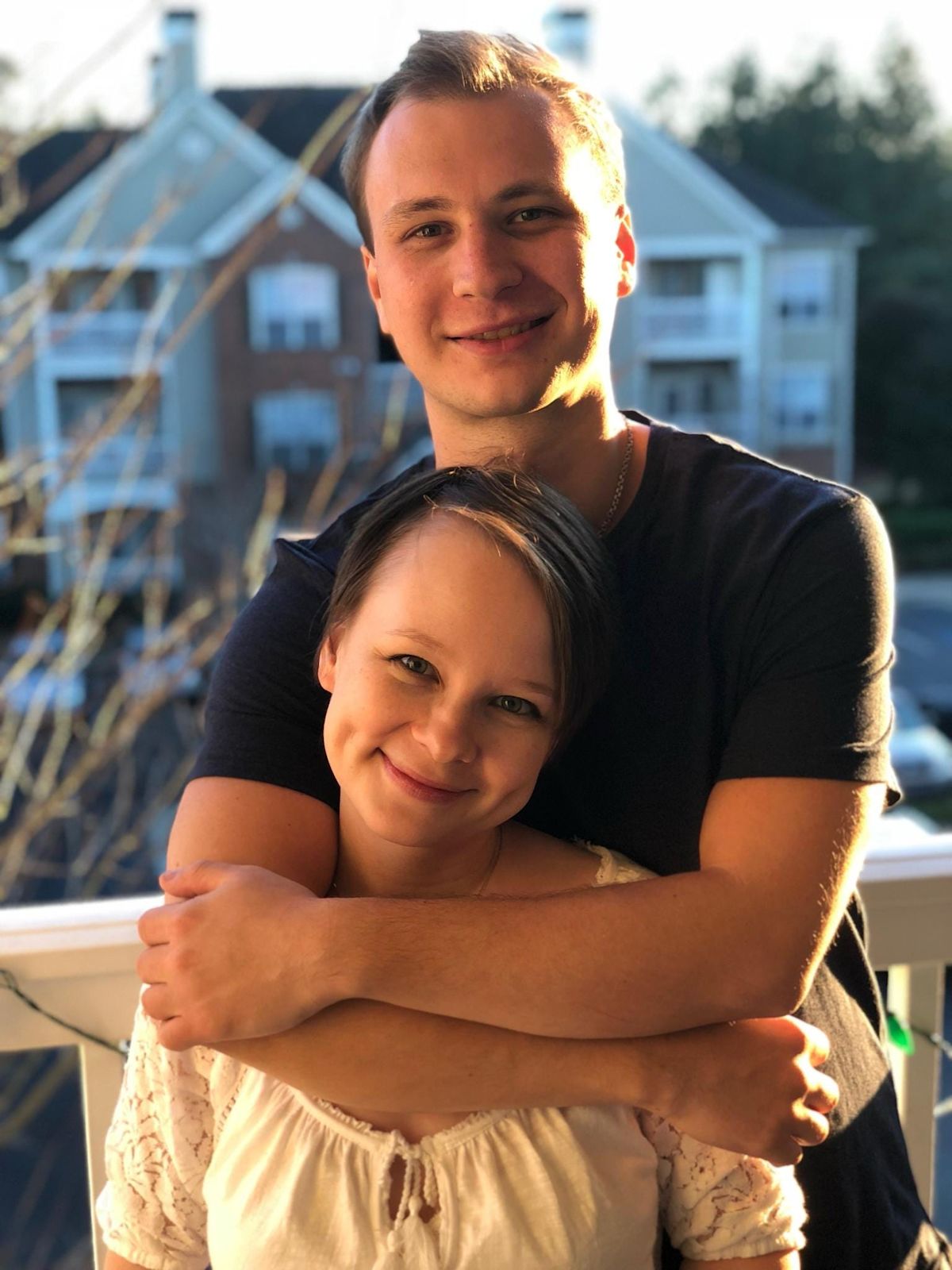
Robert Gilman poses for a photo with his sister Lexi Gilman in a Gilman family photo provided by Global Reach, a nonprofit that helps return Americans wrongfully detained abroad back to the United States. According to family, the siblings were close. Gilman was his sister’s “protector.” Both worked as English teachers.
However, according to those close to Gilman, the Marine-turned-school teacher’s recent dissociative stupor diagnosis was not the result of some new change in prison life.
Instead, Gilman’s “essentially catatonic” state in recent weeks was brought on by moments like those in the video: a cycle of physical and physiological abuse aimed at breaking the former Marine.
“The only reason he was in bad shape is because of what the Russians did to him,” Eric Lebson, a chief strategy officer at Global Reach, told USA TODAY. Global Reach, a nonprofit dedicated to bringing home wrongfully imprisoned Americans, has been working to secure Gilman’s release for more than two years. “They were trying to break him psychologically, and doing it in a way that was worse than to any other American I’ve seen in Russian custody.”
Among other instances of mistreatment in prison, Lebson said, Gilman faced long stretches of solitary confinement, was forced to take mind-numbing drugs, was told lies about his family and put through compulsory exercise for up to 16 hours.
After a stopover in Washington, D.C., on Tuesday evening, he was taken to San Antonio, Texas, for medical treatment.
“What happened in the past four years was really bad,” said Lebson, noting that Gilman will have a long road to physical and psychological recovery. “We just don’t understand why it has to get to the point of death for there to be intervention.”
Imprisoned for having a ‘blue passport’
Gilman was first detained in Russia in early 2022, ahead of the country’s full-scale invasion of Ukraine.
A Russian state news agency reported that Gilman was charged with assaulting a police officer while drunk and was first sentenced to prison in October of that year.
According to Gilman’s family, the former Marine’s arrest came after he accidentally kicked an officer amid a moment where he was violently ill and authorities were attempting to restrain him.

Former Marine Robert Gilman wears fatigues in an undated photo provided by the Gilman family through Global Reach, a nonprofit that helps return Americans wrongfully detained abroad back to the United States.
However, Lebson said in cases of Americans imprisoned in Russia, the charges are beside the point. Americans get detained for who they are.
“They’re being grabbed because they have a blue passport,” Lebson said. “The best lawyer in the world isn’t going to help your case.”
The practice is known as “hostage diplomacy.” Countries will hold Americans to use as political leverage. WNBA star Brittney Griner, for instance, was released in exchange for Viktor Bout, a Russian arms dealer nicknamed the “Merchant of Death.”
In the meantime, behind bars, jailers will provoke prisoners, such as what was captured in the security footage, in order to add further charges, Lebson said. At one point, Gilman had a decade added to his prison sentence, Lebson said.
Other provocations, Lebson said, included guards telling Gilman that Russian agents had gone to Massachusetts to beat his father, leaving him in a wheelchair, and also that Gilman could be free if he fought against Ukraine.
Released on the brink of death
Gilman was released without the kind of prison exchange seen in other such cases because of his rapidly deteriorating medical circumstances.
“We thank Russia for working with Special Envoy Steve Witkoff to release Mr. Gilman and allowing him to receive the necessary medical treatment here in the United States,” Secretary of State Marco Rubio said in a statement.
According to U.S. Sen. Ed Markey, Gilman was diagnosed 50 days before his release with dissociative stupor, a kind of psychological condition brought on by trauma. The Massachusetts Democrat said it left Gilman “essentially catatonic.”
He was unable to eat or go to the bathroom. Lebson said after his release that Gilman was unable to walk and had to use a wheelchair, but that he was “verbal.”

Robert Gilman stands with his mother Nina Gilman in an undated Gilman family photo provided by Global Reach, a nonprofit that helps return Americans wrongfully detained aboard back to the United States. The former Marine holds a U.S. Marine Corps flag.
Gilman’s family and Global Reach only learned how dire the former Marine’s condition was when Gilman’s mother Nina flew to Russia to visit her son in the hospital and guards blocked her from visiting. Family visits are typically allowed and prescribed in dissociative stupor cases.
“She got a Russian court order allowing her to do that,” Lebson said. “But the people guarding Robert wouldn’t let her see him, and that caused really serious concern on our part.”
Marine turned school teacher
Gilman was one of several Americans detained in Russia around the time of the country’s invasion. Others detained then include Texas resident David Barnes and green card holder Olga Jezler. Both remain imprisoned in Russia.
According to Gilman’s family, he was detained in Russia on his way to Moldova for a job.
After leaving the military, the former Marine became a schoolteacher. His postings included schools in Wrocław, Poland, where his teenage students dubbed him “Captain America,” said Lebson, adding that Gilman was “intellectually curious” and interested in mentoring young people.
Terry Clark-Ward, CEO of the Queen’s School of English in Wrocław, described Gilman as “very enthusiastic and energetic as a teacher.” Gilman taught at the school in western Poland in 2018.
“When he taught English at our school he was 24 years old and had an ‘I can take on the world’ kind of attitude,” Clark-Ward told USA TODAY. “Let’s hope he will make a full recovery.”

Robert Gilman poses for a selfie in 2020 provided by the Gilman through Global Reach, a nonprofit help return Americans wrongfully detained abroad back to the United States.
Gilman’s route to his next teaching job in Moldova brought him to the eastern European country by way of Russia. During his stop in Moscow, his passport was tampered with and he was forced to remain longer in the country, family said.
While working to get his passport repaired, Gilman went to visit extended family outside Moscow, which was the leg of his trip that ultimately ended with his arrest and imprisonment in the country.
He was imprisoned and then hospitalized in Voronezh, more than 300 miles south of Moscow and some 200 miles east of the Ukrainian border.
What Gilman’s release means for other Americans
The Gilman that appeared in the photo shared by Trump is a shadow of the Marine seen in photos from his time in the military or from the video footage from a year into his detainment. Gilman, wearing only boxer shorts in the video, appears thin but strong enough to put up a fight.
In the photo after his release, the 32-year-old appears wan. He is seated while supporters around him stand and smile while holding an American flag.
For Lebson, who for around 15 years has been helping families of Americans detained abroad return to the U.S., Gilman’s case is one of the most alarming he has handled.
“What I’m worried about now is that all of our cases are heading in that direction,” said Lebson of the six Americans who remain imprisoned in Russia. “I hope that what has just happened with Robert is a wake-up call to get these cases resolved so U.S. and Russian relations can get back onto a more stable level.”
This article originally appeared on USA TODAY: What to know about Robert Gilman’s life in a Russian prison








Leave a Reply