

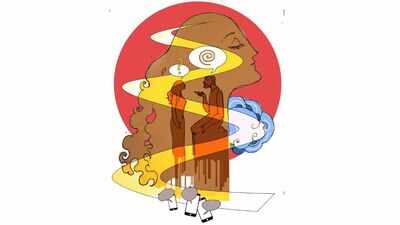
GURUDEVSHRI RAKESHJI, founder of Shrimad Rajchandra Mission Dharampur, recently celebrated his 60th birthday. In a conversation with HEMALI CHHAPIA, Gurudevshri explains that AI can interpret scripture and mimic empathy, but the inward journey requires guidance from an enlightened masterWe increasingly live in a world where artificial intelligence can answer philosophical questions, explain scriptures, and even simulate empathetic conversation. What can a living guru offer that an algorithm never can?Why do we need a sports coach when all the information is available? You need a mentor who charts a customised path for you. AI can’t point out your subtle flaws. AI can offer philosophical information, but an algorithm cannot guide the inner journey. It can help with outer exposure, not inner exploration; for that, you need an enlightened master.What are young people searching for today that their families, schools and conventional institutions are failing to give them?Direction, understanding, love, security, and inner blossoming are crucial needs for everyone, especially young people. Worldly training has led to constant comparison and competition instead of care and cooperation. It pushes one to search for happiness externally, even though true bliss exists within. A master draws attention to that lost direction, bestows right understanding, loves one unconditionally, encourages one to tread that path, stands by the disciple during difficult times, and ensures every seeker blooms in her own way. He thus fills in crucial gaps that these institutions may have missed.People often turn to spirituality after suffering. Can human beings discover the same depth without first being broken?Of course they can, and they should. Spirituality should not be a spare wheel pressed into service during tough times; it should be the driving wheel that steers life’s course. People are ignorant of life’s fundamentals. They fail to ask themselves pivotal questions that can bring an awakening. Shrimad Rajchandraji, at 16 years of age, inquired, ‘Who am I?’ ‘Where did i come from?’ ‘What is my true nature?’ ‘In what bondages am i entangled?’ ‘Should i retain or give them up?’ which are potent enough to shake one out of metaphysical torpor, if pondered upon sincerely.Many people inherit religion rather than discover it. Would you rather see a young person question religion, even reject it, than practise it unquestioningly?Practising something without conviction does not bear the desired result. When an action is backed by clear understanding, it carries a different force. Questioning religion may not necessarily mean blasphemy. If a young mind is wishing to explore religion with an open mind, she is welcome to do so. Religion is a science, and when one approaches it systematically, the resultant discovery is bound to inspire her to pursue it with passion and reap its rich bounty of inner joy.What is the hardest human emotion to transcend?Ego is the hardest to work on. Man is generally keen to become free from ignorance and ready to reduce attachment; with a little introspection, he even finds that emotions such as anger and jealousy harm him, but he zealously guards his ego. The false sense of identity that he has created is most precious to him. Once he overcomes ego, his other shortcomings begin to wilt. To free him from the ego, he needs the Divine. A guru can help dissolve the ego and awaken man to his true Self, which is blissful.Thousands of people come to a spiritual teacher with their anxieties. Where does the spiritual teacher go with his own burdens?Wouldn’t ‘spiritual teacher’ and ‘burden’ be an oxymoron? A spiritual master has transcended feelings that excite or dishearten. He has deep wisdom and profound empathy to help someone work through unhealthy feelings. In doing so, he is not affected by negative emotions himself.













Leave a Reply