While Americans prepare to celebrate the nation’s 250th anniversary, historians say one of the most overlooked chapters of the Revolutionary War is Florida’s role, or more accurately, its decision not to join the fight for independence.
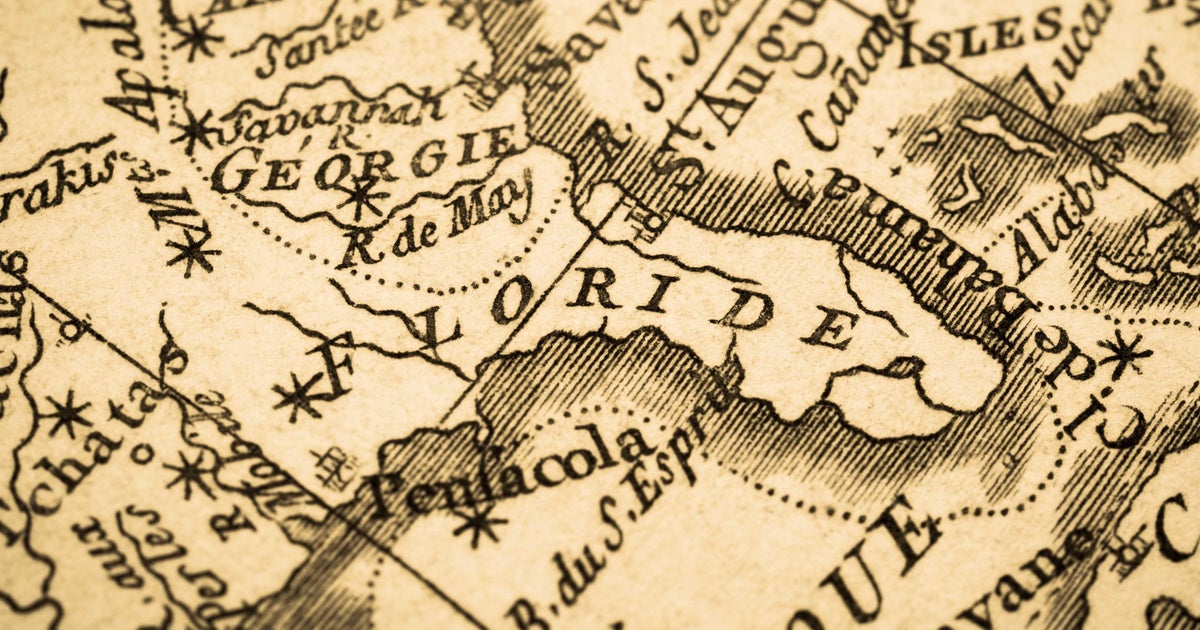
On July 4, 1776, Florida was not a single U.S. territory but two separate British colonies: East Florida, with its capital in St. Augustine, and West Florida, governed from Pensacola. Unlike the 13 colonies that declared independence from Britain, both Florida colonies remained loyal to the British Crown throughout the American Revolution, according to historian and author Mike Bunn.
Britain controlled Florida from 1763 until the territory was returned to Spain at the end of the Revolutionary War in 1783, a period of 20 years.
According to historian, author and lecturer Roger Smith, Florida’s absence from most Revolutionary War lessons stems from one key fact.
“Nobody talks about East and West Florida primarily because even though we were a British Colony throughout the entirety of the American Revolution, we did not rebel,” Smith told CBS News Miami.
Why East and West Florida stayed loyal to Britain
Historians say several factors influenced Florida’s decision to remain loyal to Britain.
Unlike the 13 colonies, East and West Florida were largely unaffected by the British Stamp Act and other taxes that fueled resentment elsewhere because the colonies produced relatively little for the British colonial economy.
The British Army also provided protection from attacks by Native American tribes, giving many settlers little reason to support a rebellion.
Smith said West Florida even declined an invitation to attend the First Continental Congress in 1774.
“West Florida got an invitation to the first Continental Congress in 1774 and they said, ‘We don’t want any part of it,’ and they thought it was the dumbest idea they have ever heard,” Smith said.
At the same time, East Florida’s population was growing as British loyalists fled Georgia and the Carolinas to escape harassment from supporters of independence. Rather than embrace the revolution, many residents openly opposed it.
According to Smith, citizens of East Florida even burned the leaders behind the Declaration of Independence in effigy.
“East Florida never lowered the Union Jack and fended off three invasions into the colonies and remained loyal till the end of the war,” Smith said.
How Florida eventually became part of the United States
Although East and West Florida remained loyal throughout the Revolutionary War, British control did not last.
Following the war, the two colonies were returned to Spanish rule. Spain governed Florida until 1821, when it ceded the territory to the United States under the Adams-Onís Treaty.
From there, Florida’s history followed the path more familiar to Americans, eventually becoming the 27th state in 1845.
For historians like Bunn and Smith, however, the story of East and West Florida serves as a reminder that Florida’s role in America’s founding was far different than many people learned in school.
As the nation marks 250 years since the Declaration of Independence, they hope more people discover the little-known history of Britain’s two loyal Florida colonies.