

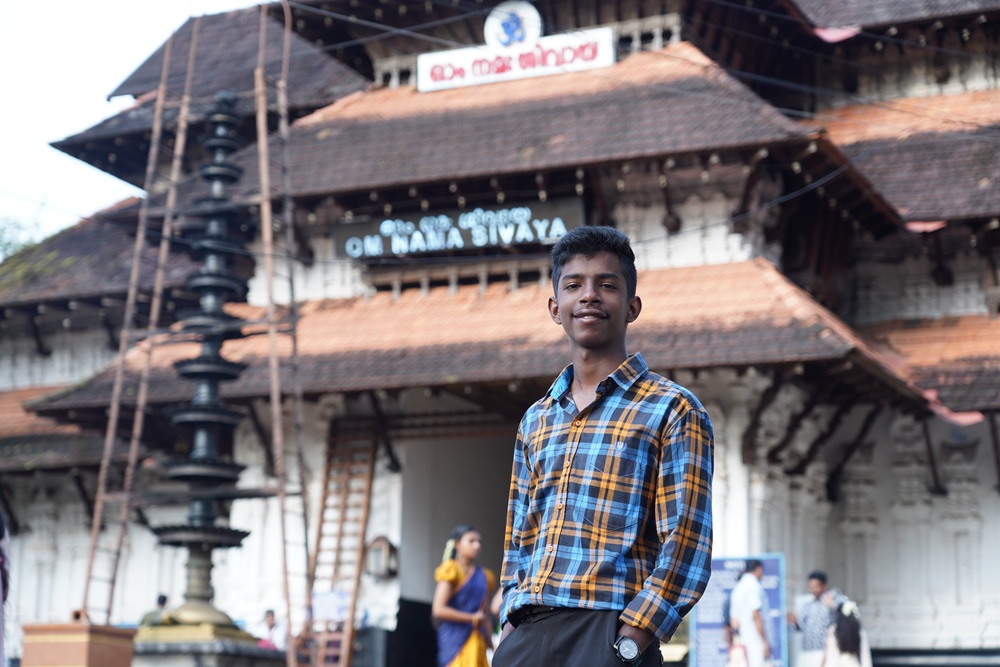
Some memories fade with time. For 17-year-old Novain Shibu, the memory of water rising through Kerala during the devastating floods of 2018 never did.
He was only nine then, but the images of flooding around Chalakudy, a town near his home in Thrissur, stayed with him. Years later, those memories have found an unlikely expression, not in a textbook or a classroom project, but in a working prototype designed to make one of the country’s most complex infrastructure systems smarter.
Novain’s idea, AcoustiNode Systems, has earned him a place among the Top 40 candidates of Samsung Solve for Tomorrow, a CSR programme that is increasingly turning the spotlight towards young innovators whose ideas emerge far beyond India’s traditional technology hubs.
For the teen, the journey began with a simple question: Could technology help prevent the kind of devastation he had witnessed as a child?
“I used to read a lot of stories in the newspaper about floods and dams. I thought I can make a solution that can solve the issues related to large-scale dam management,” he said.
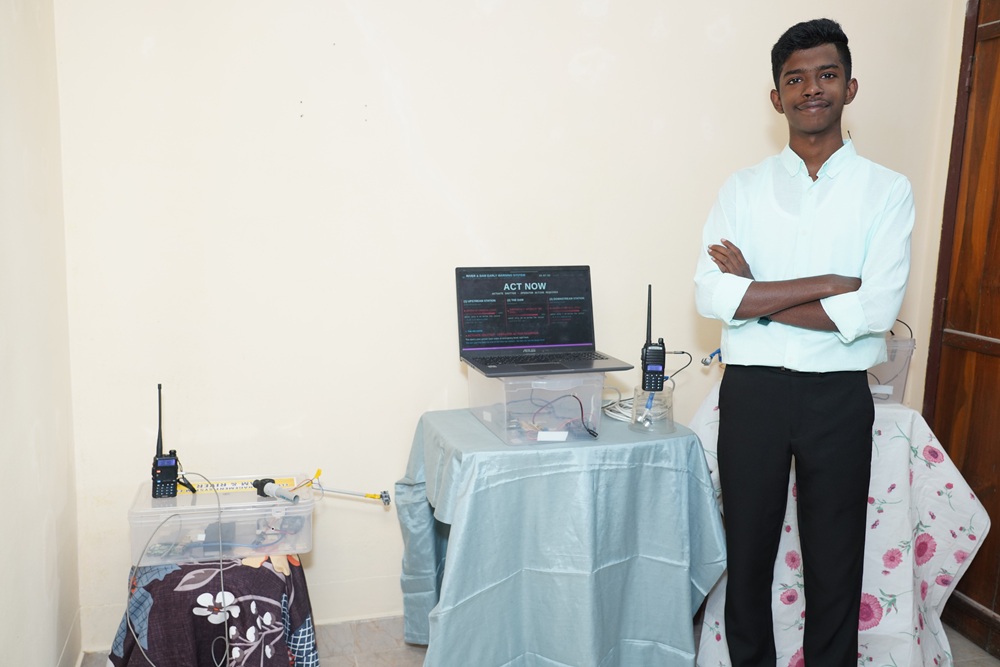
His answer is a proposed AI-powered edge network that uses resilient VHF radio communication to help manage dams even in challenging conditions. The system analyses upstream water surges and tidal reverse-flows to support two critical decisions: when water needs to be released in advance to reduce the risk of catastrophic flooding, and when unnecessary discharge can be prevented to conserve precious water.
The potential impact, Novain believes, goes well beyond the dam itself. Smarter water-release decisions could help protect downstream communities and ecosystems, improve irrigation security, maximise hydroelectric generation and reduce the enormous economic losses associated with floods and inefficient reservoir management.
But behind the technology is a youth who describes himself simply as someone who has always been curious.
“Since I was a child I loved asking questions, and my father loved answering them,” Novain said. “I built this habit from his support, where I could ask questions and have solutions from them.”
That curiosity eventually drew him towards robotics and advanced AI systems. Rather than stopping at an idea on paper, Novain wanted to build something tangible.
“I want to build real models that are workable and efficient,” he said.
The road to a working prototype, however, was anything but smooth. There were failed models, repeated experiments and moments when giving up seemed easier than starting over.
“I have failed so many times on my models and there have been days I didn’t want to work on it again,” he recalls. “But the next day I felt like restarting.”
What brought him back was the thought of the people who could one day benefit from what he was building.
“To be able to help people in distress kept me motivated,” he said.
Novain’s story also captures a larger shift that Samsung Solve for Tomorrow is enabling. Innovation is often associated with metropolitan laboratories, elite institutions and established technology ecosystems.
But ideas capable of solving some of India’s most difficult problems can emerge from much smaller towns and communities, shaped by experiences that are deeply local.
From a nine-year-old watching floodwaters engulf a familiar landscape to a 17-year-old building an AI-enabled dam-management prototype, Novain’s journey is a reminder that innovation does not always begin with access to a sophisticated laboratory. Sometimes, it begins with a question, a memory and the determination to keep trying.
And that is perhaps the most powerful promise of platforms like Solve for Tomorrow: to find these questions wherever they are being asked—and give the young people asking them a chance to make the rest of India listen.











Leave a Reply