

Enterprise AI is entering a more unforgiving phase: proving that one successful AI deployment can become the template for the next—at a lower cost and with greater business impact.
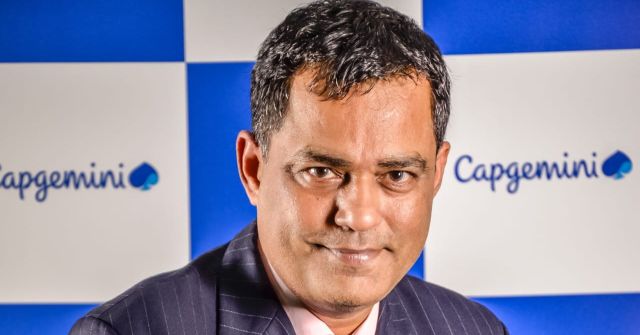
For Nisheeth Srivastava, chief technology and innovation officer, India, at Capgemini, the test of AI maturity is increasingly straightforward: “Scaling requires making the second use case cheaper than the first.”
That, however, is proving counterintuitive for many organisations. Companies running multiple AI pilots often end up building a similar number of custom integrations for each project, meaning every successive deployment can become more expensive instead of cheaper.
“The technology is no longer the constraint,” Srivastava said. What matters more is enterprise-wide AI readiness, including reliable data foundations, clear ownership of outcomes and treating AI as enterprise infrastructure rather than “a string of isolated projects”.
The distinction is important. A successful first use case can demonstrate that AI works. But if the organisation has to rebuild its data pipelines, integrations and governance for every subsequent application, it has not really created an AI capability that can scale.
For Srivastava, therefore, the challenge requires “infrastructure discipline, not an AI discipline.”
From technology steward to business co-architect
The shift also changes the role of the technology chief. As AI gets embedded across business functions, the CTO is increasingly responsible not just for deploying technology but for determining how the enterprise creates, competes and grows with it.
“The CTO’s role is evolving from managing technology to shaping how organizations create, compete and grow with technology,” Srivastava said.
The focus needs to move from deploying technologies to identifying where AI can create meaningful business outcomes—and how the enterprise itself needs to change to capture that value.
That makes modernisation part of the AI agenda rather than a separate technology exercise.
“Every modernization decision should apply one additional criterion: does it make AI deployment easier or harder twelve months from now?” he said.
The risk, he added, is treating modernisation and AI as separate budgets, teams and timelines, forcing enterprises to pay twice. Legacy itself is also more than old technology: it can represent “an old operating model encoded in technology”, including decisions, authorities and data flows.
Agentic AI moves beyond task automation
The next phase of AI could push this transformation further. Srivastava sees the near-term value of agentic AI in reducing what he calls “coordination latency”—the time and effort involved in coordinating decisions across complex processes.
Rather than simply automating individual tasks, agentic systems can orchestrate decisions and actions across end-to-end processes, with human judgement and accountability remaining in the loop.
Trade finance, claims, lending origination and supply chain are among the areas where he sees potential, particularly where delays are driven by handoffs and approvals.
“The bigger opportunity is to redesign the process itself around intelligent, continuous decision-making,” Srivastava said, “rather than simply inserting AI into yesterday’s workflows.”
Over time, he expects this to evolve towards institutional agents that compound organisational knowledge, context and learning. But that will require a context architecture connecting data, processes, policies, decisions and institutional knowledge—something most enterprises have yet to build.
Data, governance and the India opportunity
That makes trusted data and governance central to scaling AI. Organisations need to move beyond simply storing data and make it “trusted, consistent, contextual, and usable across the business”.
Srivastava advocates a model of federated ownership, centralised standards and common platforms, with data ownership moving towards the business domains that generate it.
For India, he sees an opportunity to go beyond consuming global AI platforms. The country’s combination of engineering talent, scale, regulatory complexity and diverse operating environments creates what he describes as three differentiation vectors: scale-native intelligence, regulatory complexity as an exportable capability, and GCCs as innovation origins rather than delivery geographies.
The risk, he said, is India becoming “a consumer of AI platforms rather than an architect of AI-enabled operating models”.
Ultimately, the competitive advantage will come from enterprise context rather than simply access to foundation models.
“The winners will not necessarily be those with the most AI,” Srivastava said, “but those that learn how to combine” human cognition, AI-enabled execution and institutional context most effectively.










Leave a Reply