
Artificial intelligence (AI) is bringing measurable changes to clinical operations in oncology; streamlining tumor board preparation, accelerating treatment planning, and opening new pathways for clinical trial access. Questions around governance, care coordination, and the technical demands of radiation oncology sit at the center of this shift.
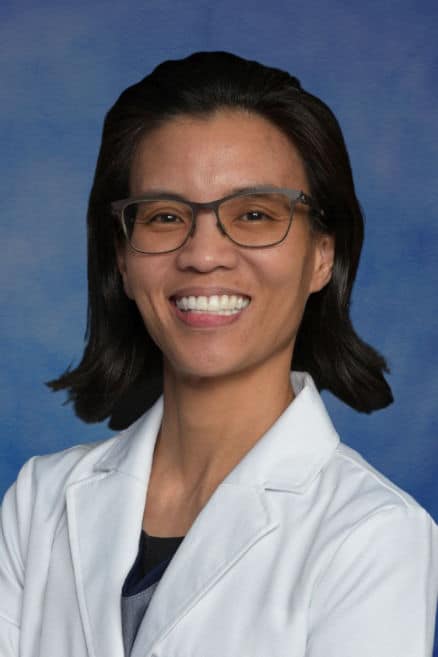
CancerNetwork® spoke with Margarita Racsa, MD, MPH, board-certified radiation oncologist in Daytona Beach, Florida, and co-chair of the American College of Radiation Oncology (ACRO) Artificial Intelligence Subcommittee about how AI can be deployed across tumor board workflows and oncology care coordination, and what the technology means specifically for the specialty of radiation oncology.
Racsa began by outlining a three-phase framework for integrating AI into tumor board discussions; from chart preparation and clinical trial matching before the meeting to documentation and patient-legible summaries afterward. She then identified a unified patient electronic health record and AI-assisted care navigation as the highest-yield use cases across oncology. She described how deep learning is already embedded in radiation oncology’s auto-contouring workflow and outlined the human oversight requirements that must accompany any clinical AI implementation. She closed by identifying AI-accelerated clinical trial enrollment and the unified health record as the most transformative near-term opportunities, and by calling for governance frameworks that keep AI in service of patients.
CancerNetwork: How can AI be effectively leveraged in tumor board discussions?
Racsa: When thinking about AI’s role in tumor boards, it helps to divide it into 3 phases: pre-tumor board, during the tumor board, and after.
In the pre-meeting phase, the most valuable application is chart preparation. One of the most challenging aspects of oncology is gathering the sheer volume of information needed before discussing a case; pathology, imaging, labs, genomic data, and clinical history. The more comprehensive that information is when clinicians arrive, the richer the discussion can be. What often happens today is that some clinicians have access to certain information and others do not; a colleague may be surprised to learn a patient had a particular study done and was operating with only partial knowledge. AI’s advantage here is the ability to compile a comprehensive summary, or to surface verbatim report information directly to each clinician so they can interpret it themselves.
During the tumor board, AI can assist in correlating cases against standard-of-care guidelines, such as NCCN [National Comprehensive Cancer Network] or ASCO [American Society of Clinical Oncology] guidelines, and against relevant RTOG [Radiation Therapy Oncology Group] studies. This is currently being done “manually.” Another area of significant potential is identifying patients’ eligibility for clinical trials, which can fall into either the pre-meeting preparation or the meeting itself.
After the tumor board, a gap that often exists is documentation of findings. AI could generate a summary of each patient discussed and the board’s recommendations, distributed to the relevant treating physicians and added to the medical record after physician review. Taking that a step further, AI could also produce a patient-legible version of those recommendations, something accessible and understandable to the patient, who now has access to their own medical record. Across this entire continuum, there is an incredible range of potential use cases, many of which could be implemented without significant cost.
What are the highest-yield use cases for AI in oncology overall?
Two stand out. The first is a unified patient medical record. Every patient has experienced the fragmentation of our electronic health record system, but in oncology, a specialty that is by nature multidisciplinary, this fragmentation is particularly costly. Asubstantial amount of resources is still devoted to obtaining records before a patient consultation, and it is rarely seamless. Records are still being faxed. A physician may not know another physician already ordered a study, resulting in duplication. A patient with a primary care physician, cardiologist, oncologist, and pulmonologist can easily have different medications, different imaging orders, and different records sitting in different systems. From a safety and quality perspective, this is one of the most pressing issues in our health care system. AI has the potential to help us achieve that unified record.
The second is patient navigation and coordination of care. A single oncology patient typically sees multiple physicians and has appointments at different locations; a hospital, an outpatient radiology center, a different physician’s office, with studies ordered at different sites. Managing all of this is completely overwhelming for a patient, particularly in the context of a new cancer diagnosis. Layer on the very real challenges many cancer patients face with transportation and financial barriers to care, and the burden becomes even greater. These are areas where AI can help coordinate the resources we have so we can deliver the best possible care.
Within radiation oncology specifically, how are AI applications advancing auto-contouring, treatment planning, and toxicity monitoring?
Before discussing any specific application, I want to raise governance, because it is not always the first thing that comes up, but it should be. From a clinical perspective, any AI technology must be evaluated prospectively: not just can we use this, but what are we using it for, how will it benefit the patient, and what impact will it have on outcomes? The pace of AI implementation is, in many sectors, outpacing the development of oversight structures. Governance, both prospective and ongoing maintenance oversight, is lagging implementation, and that is something we must be very conscious of as we move forward.
On auto-contouring specifically: radiation oncology has been using deep learning for this purpose for years. The auto-contouring of normal tissue structures is standard practice. Most radiation oncologists are entirely comfortable with a structure such as the liver being auto-contoured by the program, reviewing it, and if it is accurate, proceeding with treatment planning. For treatment planning, which involves physicists and dosimetrists [specialists in radiation dose calculation and delivery] in an iterative optimization process, AI has the potential to reduce the time needed to evaluate different parameters and optimize for tumor coverage and normal tissue protection.
With either application, what I refer to as the “human in the loop” is essential. There is no replacement for clinical judgment; AI is useful, AI has real applications in this specialty, however, sound clinical judgment is irreplaceable.
With respect to toxicity monitoring, one current gap is connecting a patient’s treatment plan to the actual toxicities they experience, both short- and long-term. AI can make it easier to collect and correlate that information so it can be examined in aggregate, retrospectively, with real potential to improve patient outcomes and reduce toxicity over time.
What emerging AI capabilities will have the most transformative impact on collaborative cancer care over the next 3 to 5 years?
Two areas stand out. The first is AI to accelerate enrollment in clinical trials; (this is) already in early implementation at major oncology centers in the US. The next frontier is extending that access to rural areas and communities outside major metropolitan centers, giving more patients the opportunity to participate in trials they might otherwise not have access to.
The second, and this cannot be emphasized strongly enough, is the unified electronic health record. Far and away, this is the single use case that could yield the highest benefit in patient outcomes, not only in oncology but across all of medicine. AI has the potential to help us achieve it. Whether, as a society, we choose to prioritize it and direct our resources toward it with clear intention; that is the question. If we do, a unified health record is the single innovation that could most benefit both patients and physicians within the next three to five years.
Is there anything else you would like to highlight?
Governance. The importance of governance cannot be overstated. It goes by different names; responsible AI, being a good steward of the technology. The framing I find simplest and most honest is this: using AI in service of humanity. The heart of medicine is serving the patient’s needs and trying to alleviate pain and suffering. Whatever AI we implement, however we implement it; the patient must stay central.








Leave a Reply