
- The Permanent Court of Arbitration ruled India cannot unilaterally suspend the Indus Waters Treaty, which it had placed in “abeyance” over cross-border terrorism concerns; India rejected the ruling, calling the court illegally constituted, leaving the treaty in a deadlock.
- While Pakistan welcomed the verdict, India’s contention has to do with the World Bank’s decision to run two parallel resolution tracks for the same objection, which India says undermines the treaty’s process.
- Experts argue the 1960 treaty needs modernising to reflect realities it wasn’t built for: unaccounted groundwater use, climate-driven river volatility, and population growth that could nearly double demand on both sides by century’s end.
On August 31, the Permanent Court of Arbitration — an intergovernmental body headquartered in The Hague — passed an order that said India could not unilaterally retreat from or cast aside the Indus Waters Treaty, a 66-year-old pact governing water sharing between India and Pakistan. India rejected the court’s decision shortly after, prolonging the deadlock between both countries and throwing the Treaty’s future into a state of flux.
The PCA’s order was issued more than a year after India placed the agreement in “abeyance” following attacks by militants that India said were linked to Pakistan-based groups. “India’s position on the Indus Waters Treaty is consistent. The IWT stands in abeyance in response to Pakistan’s continued sponsorship of cross-border terrorism. Pakistan must credibly and irrevocably abjure its support for cross-border terrorism,” Ministry of External Affairs spokesperson Randhir Jaiswal told the press in July.
The PCA said it contemplated the meaning of India’s decision, since the word “abeyance” finds no recognition in the Treaty. It concluded that none of the grounds publicly cited by India “could justify suspension or termination of the Treaty,” and that it “remains fully in force, and India must observe its obligations.”
Though famously having remained intact through three wars, the ongoing suspension has reinforced the need to modernise the agreement, experts say, so it can account for geopolitical differences, climate impacts, and changing water consumption habits.
“If rights under an agreement cannot be exercised within a period of time without uncertainty, then it means that process isn’t working and needs revisiting,” said Syed Akbaruddin, a former diplomat who served as India’s permanent representative at the United Nations from January 2016 to April 2020. “There is a case for modernising the Indus Waters Treaty so that objections are addressed on an appropriate platform, through an appropriate procedure,” he told Mongabay-India.

Why India rejects the court’s decision
India dismissed the Permanent Court of Arbitration as illegally constituted in its own statement, issued the same day as the order. “This so-called Court was constituted by the World Bank in patent breach of the terms of the Treaty and India categorically rejects its so-called award, just as it has firmly rejected all prior pronouncements by this illegally constituted body,” it said.
India’s rejection has to do with the initiation of parallel procedures to resolve ongoing differences under the Treaty. The World Bank mediated negotiations through the 1950s before the Treaty was finalised, and continues to oversee differences now.
The Treaty divides water between both countries by partitioning the rivers within the Indus Basin. The eastern rivers — the Ravi, Beas and Sutlej rivers — are allocated to India for unrestricted use, while the western rivers — the Indus, Jhelum and Chenab — are allocated to Pakistan. However, all of these rivers originate in India and China. As the upper riparian, India has rights under the Treaty to build infrastructure on these rivers as long as they don’t obstruct or reduce water flow to Pakistan.
The current issue dates back to 2016, when Pakistan objected to design aspects of the Ratle Hydropower Plant — a 850 megawatt run of the river hydropower project planned on the Chenab river in Kishtwar, Jammu and Kashmir. Pakistan alleges the hydropower plant creates more pondage than the treaty allows, and contends it could have implications for water supply to Pakistan. India, on the other hand, maintains that the design and specifications of the dam are consistent with the provisions of the Treaty.
The first step of conflict resolution under the treaty is negotiation between the IWT Commissioners of each country, set up under the bilateral Permanent Indus Commission. The issue is termed a “difference” if it cannot be resolved by the Commissioners, who have the option to approach a Neutral Expert – appointed by the World Bank – for resolution. If the issue falls beyond the scope of the Neutral Expert’s technical expertise, it could be considered a “dispute” which goes for arbitration or inter-governmental negotiations. The Treaty’s annexures list specific categories of technical “differences” covering issues such as spillway design, pondage, and intakes, that fall within the Neutral Expert’s domain.
In the present case, after the Commissioners failed to make progress, the World Bank made appointments for both a Neutral Expert and a chair for the arbitration process in 2022, hardening India’s discontent over the process, said Akbaruddin. “Establishing two parallel expert procedures could result in two different solutions, which undermines the process laid out in the treaty,” he said.

Modernising the treaty
Since the Treaty was first signed in 1960, circumstances — both physical and geopolitical — have changed drastically. Asit K. Biswas, a leading hydrologist and distinguished visiting professor at the University of Glasgow, says the assumption that the Indus carries enough water for both countries no longer holds true. “With an exploding water demand, bad water management that hasn’t changed for almost a century, and the impacts of climate change resulting in fluctuations in the rivers, there’s no way the Indus can provide enough water for both countries,” he said.
The Treaty allocates 135 million-acre feet of flows to Pakistan, and 33 million-acre feet to India. But these allocations were based on surface water flows only, even though groundwater baseflows contribute 10-60% of water to the river system.
Today, the Indus Basin aquifer is the second-most overstressed basin in the world, supporting a population of approximately 300 million. Irrigated areas in the Indus River System increased by 13% between 2000 and 2010, with the highest increase observed in Indus (31%) and Chenab (23%). Populations living in the basin are projected to increase by 103% by the end of the century in India and by 144% in Pakistan, according to an analysis of the Treaty’s performance by researchers from Pennsylvania State University.
Besides groundwater extraction and changing land use patterns, some of these rivers are particularly vulnerable to impacts from climate change. Projections suggest that by the end of the century, precipitation over the upper Indus basin could increase, but decrease over the lower basin, altering rainfall patterns over the region. The Indus is at risk of becoming flood prone, while the Sutlej and Jhelum are at risk of drought, the Penn State analysis shows.
“The river flow in the Indus is going to be more erratic going forward. So there will be years of severe floods, and years, or even decades, of serious droughts,” said Biswas, adding, “This is why the focus of the treaty needs to shift to water management, and more crucially, reducing water consumption within the basin.”
Unsustainable groundwater extraction for agriculture is the leading cause of overextraction in the basin, driven by poor governance, outdated laws, and poor quality water data, research shows.
Apart from changes in the climate, the preamble’s assumption that the treaty will work “in a spirit of goodwill and friendship,” has tested its limit, says Akbaruddin. India first signalled its intent to suspend the IWT in 2016, when the Prime Minister famously said “blood and water can’t flow together at the same time,” in the aftermath of the Uri attack that killed 17 Indian soldiers.
“If the spirit of friendship and goodwill mentioned in the preamble is not being met, then how do we continue with the treaty? That is the question,” said Akbaruddin.

In a press statement, the Pakistan government reportedly welcomed the PCA’s decision and said it “will now be giving careful consideration to the detail of the award and decision, pending their publication, and how these may best assist in finding a pathway back to the parties’ engagement under the treaty.”
If the ongoing suspension isn’t utilised for timely modernisation, “these challenges would exacerbate in the future, and have cascading impacts on the people and ecosystems” the Pennsylvania State University analysis warns. A more modern, flexible treaty could consider provisions on disaster management, water quality as well as quantity, and clear terms and conditions for geopolitical tensions, the analysis says.
Where the treaty stands now
Apart from concluding that India could not suspend the IWT, the PCA also decided to “impose measures prohibiting India from concreting the Ratle Hydroelectric Project dam wall and power intake structure above certain levels until 90 days after the Neutral Expert’s final decision.”
The Neutral Expert’s proceedings, meanwhile, are projected to conclude by July 2027. To resolve the ongoing dispute about the Ratle project, the Expert has proposed carrying out a modelling exercise to determine the project’s impact on sediment transport conditions and flow patterns.
With India refusing to participate in the Treaty or its dispute resolution processes, the Union Environment Ministry extended environmental clearance to the Ratle Hydropower project in January till 2030, extendable by up to two years. According to the status update, 26% of the dam’s construction is already complete.
“There is really no legal solution to this problem until the countries try to improve their water management,” said Biswas, adding, “Unless and until the two countries really seriously look into the future and see how much water the Indus can deliver on a realistic basis, and then divide the water accordingly, it’s going to be a tough job to find a solution.”
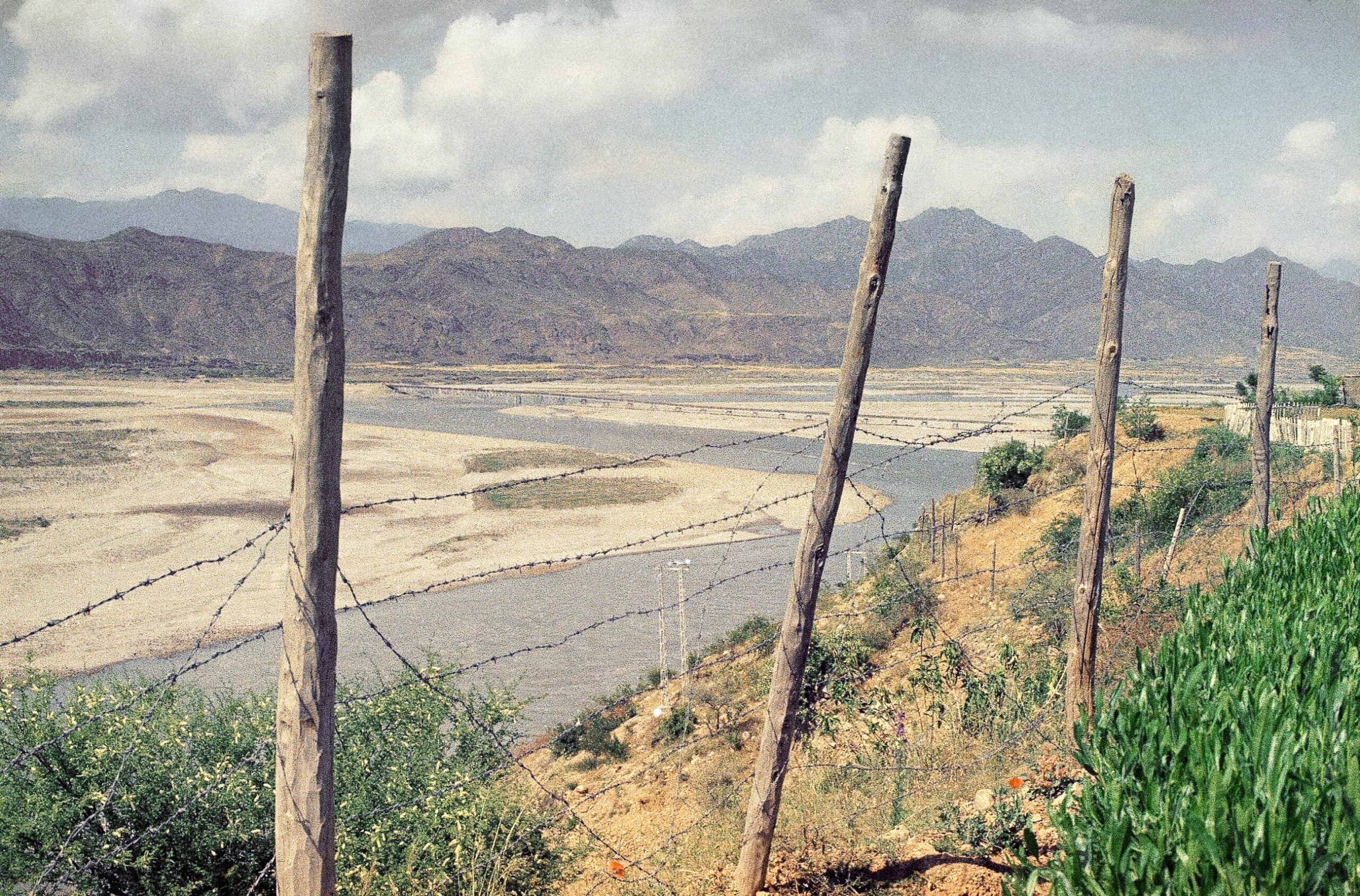
Banner image: A view of the Himalayas and Indus river in Pakistan, April 1968. The Indus Waters Treaty was signed in 1960. (AP Photo/JMG)











Leave a Reply