

For much of one day international cricket’s history, chasing a target was considered as a test of temperament as much as batting ability.
Teams needed to balance scoring rates with wickets in hand, negotiate periods of pressure and accelerate towards the end. Virat Kohli’s career has demonstrated as to how effectively one batter can manage those competing demands.
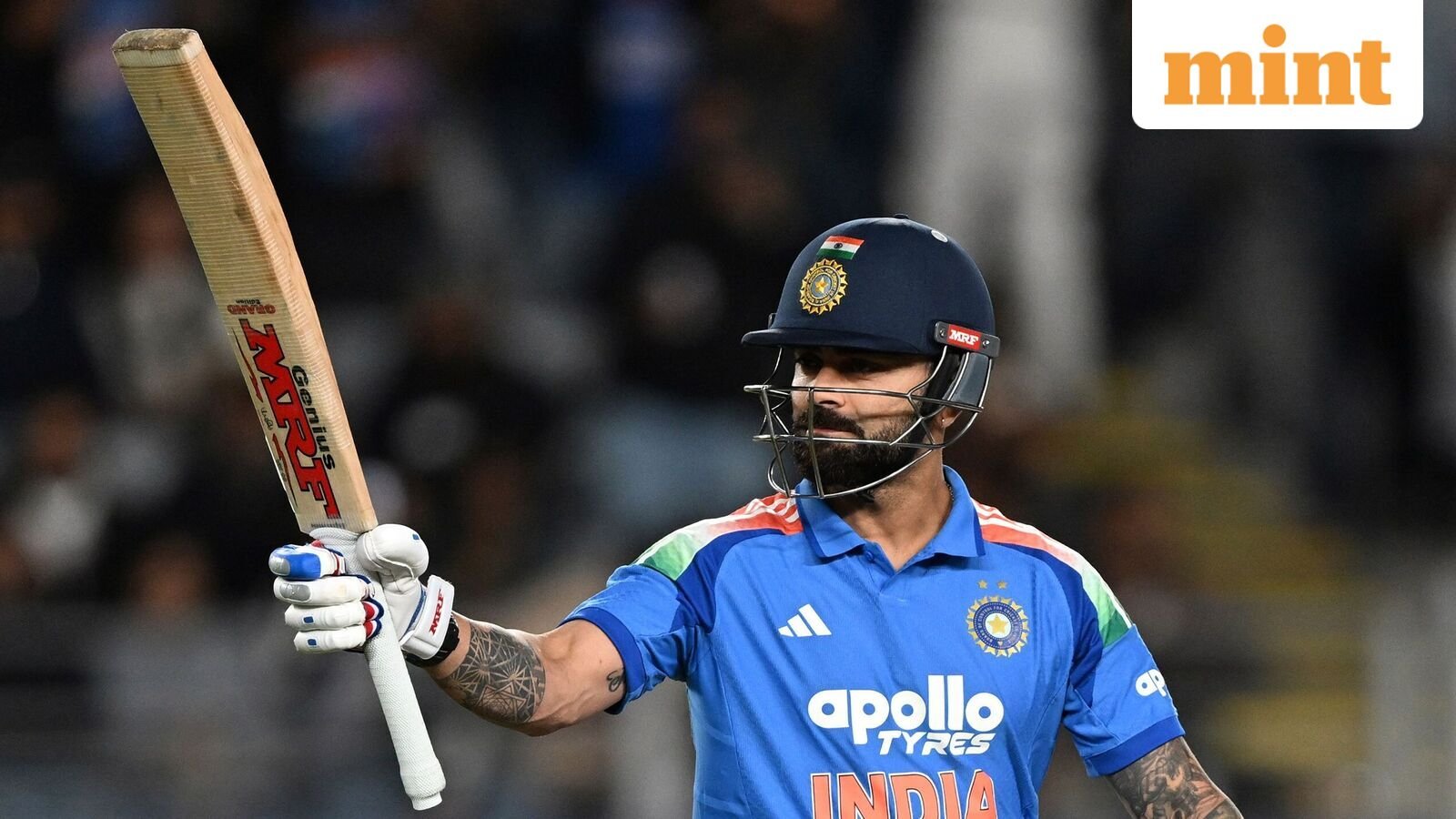
For a substantial part of his career, Kohli has built his ODI legacy in the second innings, helping India chase down high-pressure totals from the verge of defeat. The latest example of this came during the first ODI against New Zealand in Auckland, when he scored 74 runs from 51 deliveries, hitting 13 fours and one six.
Kohli walked out to bat at No 3 after the dismissal of Rohit Sharma in the first over. He and India skipper Shubman Gill (37) forged a 113-run partnership for the second wicket to set the platform for India’s win after they were initially set a target of 186. India eventually chased down a target of 143 in 22.4 overs.
What the numbers say
According to Cricinfo, no player has accumulated more runs while chasing in ODIs than Kohli. The Delhi batter has slammed 8748 runs from 170 innings at an average of 65.77 while batting in the second innings. This is more than Sachin Tendulkar, who had scored 8720 runs from 232 innings while chasing.
Kohli’s approach to chasing was evident early in his international career. His unbeaten 133 off 86 balls against Sri Lanka in Hobart in February 2012 remains one of the defining innings in ODI history.
India needed to chase 321 within 40 overs to remain in contention for the tri-series final. Kohli’s innings helped India reach the target in 36.4 overs, with 18 balls to spare. It was an early demonstration of his ability to combine calculated aggression with an understanding of the required scoring rate.
A year later, he showcased another dimension of his batting during India’s chase of Australia’s 360 in Jaipur. After Rohit Sharma and Shikhar Dhawan provided a strong opening partnership, Kohli scored an unbeaten 100 off 52 deliveries. India completed the chase in 43.3 overs, winning by nine wickets.
The innings illustrated how Kohli could switch from accumulation to sustained boundary-hitting when the match situation demanded it.
These performances also showcase that he doesn’t approach every chase with the same tempo: His batting is shaped by the target, bowling combination, wickets available and conditions.
The art of balancing aggression with control
Strike rotation has been central to that method. Rather than relying exclusively on boundaries, Kohli regularly uses singles and twos to prevent bowlers from building pressure through consecutive dot balls.
His running between the wickets also allows him to maintain momentum during periods when boundaries are difficult to find.
His innings against Australia in the 2025 Champions Trophy semi-final offered a more recent illustration. Chasing 265 in Dubai, India were reduced to 43-2 inside eight overs.
Kohli responded with 84 off 98 deliveries, hitting just five boundaries. He concentrated on building partnerships and rotating the strike, eventually helping India secure a four wicket win.
Adapting to the demands of modern ODI cricket
The evolution of Kohli’s chasing method is particularly relevant to the changing demands of ODI cricket. With the scoring rate increasing and teams regularly targeting totals pf 300 and more, batters are required to maintain pressure throughout the innings.
Kohli’s method thus offers a framework for doing so: establish control, minimise unnecessary risks, keep the scoreboard moving and identify opportunities to accelerate.









Leave a Reply