
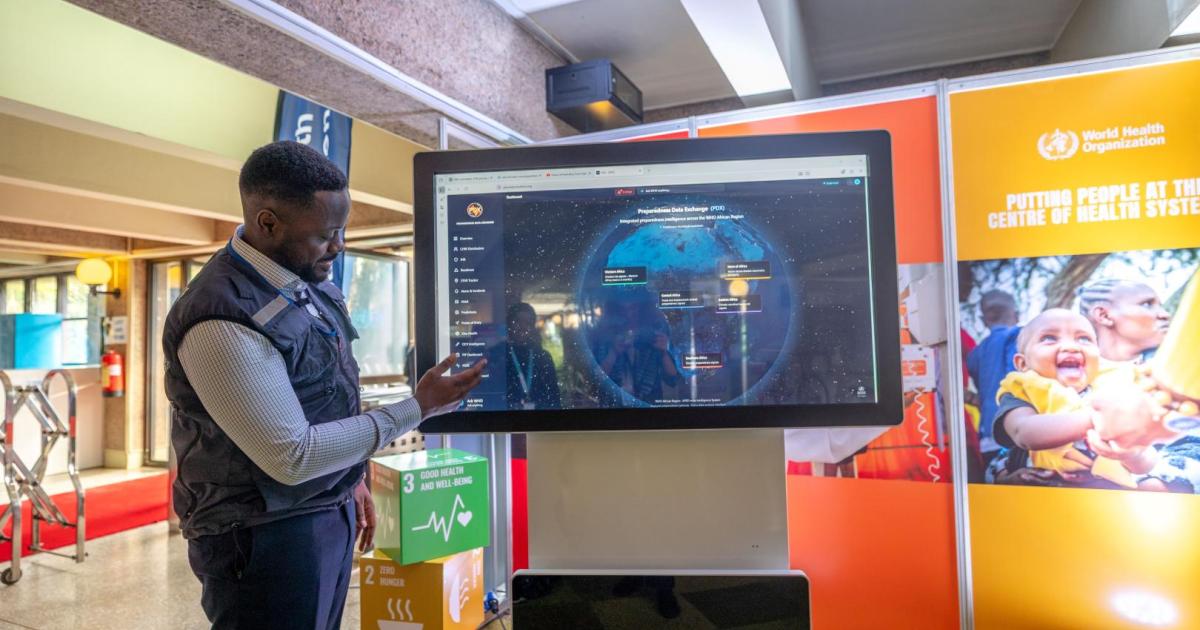
New York—African leaders, health ministers, regional institutions and global health partners have adopted the New York Call to Action on Cross-Border Preparedness Intelligence in Africa, calling for stronger cross-border collaboration and the responsible use of artificial intelligence (AI) to strengthen preparedness for infectious diseases that can cause public health emergencies .
The call to action was adopted during the Presidential Dialogue on High-Threat Pathogens: From Cross-Border Collaboration to AI-Assisted Preparedness Intelligence in Africa, held on the margins of the United Nations General Assembly in New York on 25 September 2026.
Convened by World Health Organization in the African Region, Dure Technologies and President of the Central African Republic, the dialogue brought together heads of state, ministers, UN agencies, regional economic communities, development partners, technology companies, academia, civil society and philanthropic organizations.
“Cross-border collaboration is not an option. It is a necessity and an imperative for health security,” said His Excellency Faustin-Archange Touadéra, President of the Central African Republic. “Our collective capacity to detect threats earlier, share information more rapidly and act together more effectively is essential to the African region’s health security.”
The discussions highlighted the need for preparedness systems that enable countries to anticipate risks, share information and coordinate action across borders. Participants at the dialogue emphasized the importance of strengthening existing public health systems and expertise, while using AI responsibly to enhance early warning, analysis and informed decision-making.
WHO Africa’s Preparedness Data Exchange (PDX) was highlighted as an emerging platform which supports this approach. Launched in March 2026, PDX integrates preparedness and risk information to support early, evidence-based decisions across the region. Its AI-enabled capabilities are designed to help health officials identify emerging risks, analyse information and enhance readiness.
“WHO will support Member States as they turn the New York Call to Action into national policies, sustained financing and practical arrangements for cooperation across borders,” said Dr Mohamed Janabi, WHO Regional Director for Africa. “Let us use the political support secured here today to build preparedness systems that are continuous, connected and ready before the next emergency begins.”
Participating governments and partners also called for strengthened use of Voyage Sante+, a digital health-screening platform developed in partnership with Dure Technologies as part of the PDX initiative. Voyage Sante+ will support health screening and information-sharing at points of entry and advance cross-border preparedness commitments. These efforts build on existing regional commitments, including the Bangui Communiqué, which calls for strengthened cross-border surveillance, harmonized alert mechanisms, timely information-sharing and coordinated preparedness.
The dialogue advanced a vision of strengthened flow of information to support countries to anticipate, prepare for and respond to health threats. The proposed model will allow countries to retain control over their data while enabling the generation and sharing of intelligence needed for collective preparedness and response.
The call to action reinforces ongoing efforts to strengthen cross-border preparedness in the region, including the Cross-Border Collaboration Memorandum of Understanding (MOU) signed in August 2026 by Ministers of Health from 10 African countries during a high-level side event at the 76th session of the WHO Regional Committee for Africa. The MoU supports information-sharing, early detection, joint preparedness and coordinated action before, during and after public health emergencies.










Leave a Reply