
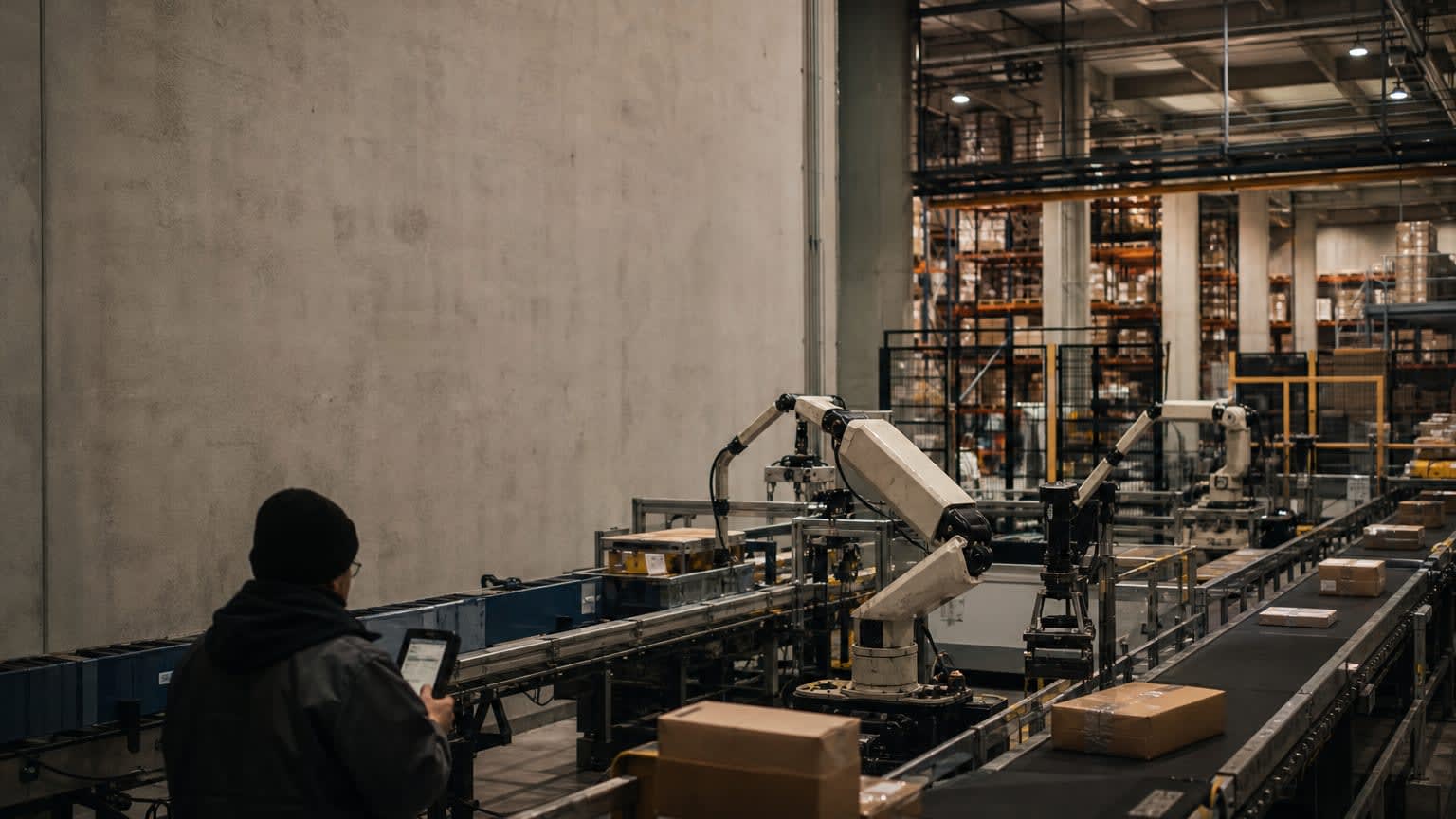
Artificial intelligence is rapidly transforming retail operations, impacting areas from supply chain compliance to last-mile delivery. These AI tools are transitioning from pilot projects to full-scale production in 2026, posing challenges for e-commerce teams who may not yet be prepared for such changes.
Retail operators who have been treating AI as a future-state investment are running out of runway. Across apparel, grocery, furniture, and social commerce, major brands deployed AI into live operational workflows in 2026, driven less by ambition than by regulatory pressure, delivery economics, and platform competition. The common thread: AI is now doing work that operations teams previously handled manually, and the gap between adopters and holdouts is widening.
Supply chain compliance is now the fastest AI adoption driver in apparel
Retailers including Target, Gap, and H&M are deploying AI to meet new supply chain transparency requirements tightening on both sides of the Atlantic, according to Business Insider. The regulations demand granular documentation of sourcing, labor conditions, and material provenance that spreadsheet-based tracking simply cannot produce at scale or speed.
For procurement and compliance teams, this is a hard deadline problem, not a pilot program. Brands that cannot demonstrate supply chain traceability face both regulatory exposure and reputational risk in markets where sustainability disclosure is becoming mandatory rather than voluntary. AI tools that can ingest supplier data, flag anomalies, and generate audit-ready reports are moving from nice-to-have to operational requirement.
Supply chain AI is no longer a competitive differentiator in apparel; it is fast becoming the price of regulatory admission in the US and Europe.
The convergence of US and European compliance timelines means brands with global supplier networks face the most acute pressure. Operators evaluating AI vendors for supply chain visibility should prioritize platforms that can map to both regulatory frameworks simultaneously, not solutions built for one jurisdiction.
Last-mile and fulfillment AI moves from pilot to production
Beyond compliance, AI is landing in the physical logistics layer. Sundays, a direct-to-consumer furniture brand, is using Cartage AI’s platform, which includes an AI agent called Wilson, to manage delivery logistics and customer service coordination, as reported by Business Insider. Furniture delivery is one of retail’s most operationally complex categories, with high failure rates, long lead times, and elevated customer-service costs when deliveries go wrong.
The Sundays deployment illustrates a broader pattern: AI agents are being applied specifically to the workflows where human error or coordination lag creates the most cost. For operations leaders evaluating last-mile technology, the Cartage AI model, which embeds AI into dispatch and customer communication rather than just routing, represents a distinct approach from traditional transportation management systems.
Walmart‘s experience with its Spark delivery app update offers a counterpoint worth noting. Business Insider reported that an item-mapping feature intended to help delivery workers navigate stores has instead slowed some workers down and, in their accounts, reduced their effective hourly earnings. It is a reminder that AI-assisted workflow changes require ground-level testing before full rollout, particularly when the people affected are gig workers whose income depends on throughput.
Social commerce platforms are restructuring how brands operate their storefronts
TikTok Shop is testing a managed-services model in the US that would have TikTok itself handle creator hiring and ad production on behalf of e-commerce partners, according to Business Insider reporting on an exclusive. The pilot represents a significant shift in the operating model for brands on the platform. Rather than brands managing their own creator relationships and content pipelines, TikTok would take over those functions as a service.
For enterprise brands already running TikTok Shop campaigns, this pilot raises immediate operational questions: does outsourcing content production to the platform reduce costs, or does it erode brand control? Brands in regulated categories, including health, finance, or apparel subject to disclosure rules, would need to evaluate how managed creative production interacts with their compliance requirements.
Separately, Business Insider reported that TikTok Shop brands are increasingly replacing human creator content with AI-generated synthetic characters and AI product visualizations to test concepts and cut production costs. The practice is already reshaping the creator economy on the platform, and for brands managing TikTok Shop at scale, it changes the vendor and workflow mix for content operations.
Distribution reach without DTC infrastructure: the Sam’s Club model
Sam’s Club is actively bringing regional and niche brands onto its platform and into its stores, using its national member network to give smaller suppliers distribution reach they could not achieve independently, according to Business Insider. For procurement teams at regional brands, this represents an alternative path to scale that does not require building direct-to-consumer infrastructure or competing head-to-head with marketplace giants.
The e-commerce context matters here. According to Forbes Advisor, the share of retail conducted online continues to grow, putting pressure on brands that lack digital distribution to find platform partners rather than build standalone channels. Sam’s Club’s curation model, which emphasizes member relevance and quality over sheer assortment breadth, offers a different calculus than a pure marketplace listing.
Target, meanwhile, addressed an operational problem of its own making. Business Insider reported the retailer deployed a tech fix to eliminate a daily friction point for drive-up fulfillment workers, a problem created when stores were originally renovated for drive-up capability. The fix is small in isolation, but it points to a pattern: as retailers layer new fulfillment modalities onto existing store footprints, operational debt accumulates and must eventually be cleared through targeted technology deployments.
The retailers moving fastest on AI are not running moonshot programs; they are closing specific operational gaps in compliance, delivery, and fulfillment one workflow at a time.








Leave a Reply