

AI’s Productivity Gains in Science Tempered by Time Spent Validating Outputs
Artificial intelligence is saving scientists substantial amounts of time, but researchers are giving some of those gains back by checking the technology’s work, according to a new study involving Google, Google DeepMind, and MIT. The findings add a scientific-workflow dimension to a much broader debate over unreliable, misaligned, and increasingly autonomous AI systems — without establishing that the more dramatic forms of AI misbehavior are occurring in scientific research.
Rather than the current, raging debate about “rogue AI” systems deliberately escaping control, deceiving scientists, or sabotaging experiments, the researchers are documenting something more immediate: AI output that requires auditing and verification, concerns about growing quantities of low-quality research, and a research pipeline in which faster hypothesis generation can run ahead of human and physical capacity to validate the results. The paper cites worries that AI-generated content, hallucinations, and what prior researchers have called illusions of understanding could strain peer review and validation.
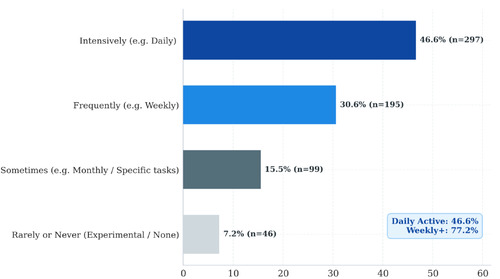
The September paper, AI in Science: Early Insights, combines three main empirical sources: approximately 15 million anonymized Gemini interactions, an inventory of 2,690 specialized scientific AI models, and a survey of 637 active scientists in the United States and United Kingdom. Nearly half of the surveyed scientists reported using some form of AI every day, and researchers who reported net time savings averaged just under seven hours a week.
Google separately highlighted the findings in its Sept. 15 AI & Economy ATLAS update. The company emphasized both the productivity gains and the counterweight: Scientists were spending significant time validating AI output, accumulating hypotheses that still needed testing, and encountering bottlenecks in physical experimentation and clinical validation. Google said those constraints mean faster individual tasks may not immediately translate into more discoveries.
A Verification Tax on AI’s Time Savings
Productivity findings are substantial. Around three-quarters of surveyed researchers reported saving time through AI, and the average reported net saving was almost seven hours per week. Researchers said much of that time went back into research. The paper also reports that about 68% perceived greater access to insights from other disciplines, while roughly 65% said AI had increased the breadth of their research agendas.
But the authors found that checking AI output consumes a meaningful share of those gains. Among scientists who reported saving time, about 89% said more than 10% of the saved time went into verifying, debugging, or fact-checking AI output. About 46% said more than one-quarter of their saved time went to that work. The authors describe this as a verification tax associated with the high value science places on reliable and correct results.











Leave a Reply