
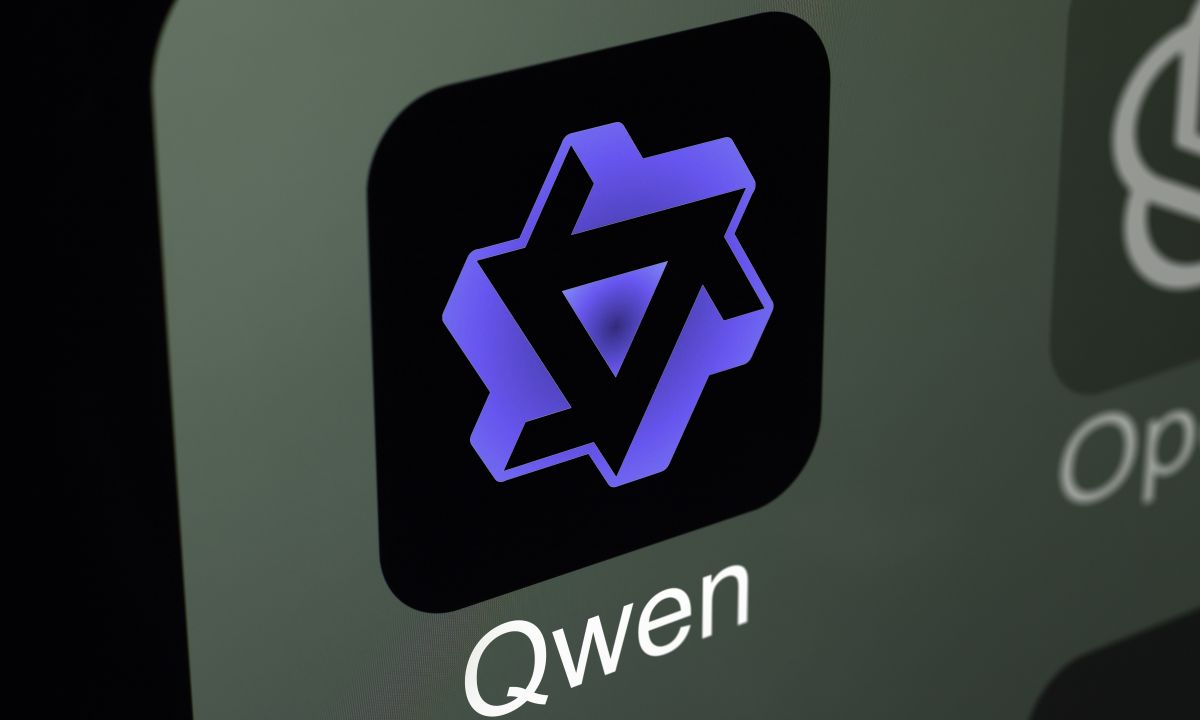
Open-weight models from China’s Alibaba have reportedly become the world’s top artificial intelligence offerings.
The company’s models have seen more than 3 billion downloads worldwide over the last six months, surpassing those of Meta, Google and Alibaba’s Chinese competitors like DeepSeek, Bloomberg News reported Saturday (Aug. 15).
Alibaba told Bloomberg in a statement that Qwen, its family of AI models, has open-sourced upwards of 460 models and its ecosystem has issued 300,000-plus derivatives. The report also cited findings from open-source AI hub Hugging Face which show that Google had 418 million downloads for the year, with 227 million for Meta.
As Bloomberg noted, open-source AI models can be used to create new AI products, making adoption a measure of which technologies are popular with developers.
That has made download and derivate-model numbers a way to gauge influence in the competition between Chinese and American AI companies, the report added. The popularity of Qwen indicates that strategy is enjoying traction outside China, Bloomberg wrote.
Alibaba’s download data for Qwen makes it “one of the largest foundations of the open AI ecosystem,” the Hugging Face report said. “Qwen has become part of the default workflow for developers deciding what models to fine-tune and deploy.”
The Bloomberg report added that American tech giants have responded, with Meta and Nvidia both recently releasing new open artificial intelligence models.
PYMNTS wrote last week about the way the AI industry had begun dividing over the debate surrounding open-source and closed-source AI models.
This came after Nvidia and a host of other tech companies debuted an AI safety coalition, while also asking governments and businesses to bolster AI defenses by investing in “shared open infrastructure.” The effort was in response to a cybersecurity incident in which OpenAI models targeted Hugging Face, according to a Nvidia blog post.
“For CFOs of middle market firms, however, the contest is less ideological than financial. The relevant question is not whether open-weight AI will defeat proprietary AI,” that report said.
“It is whether the savings, flexibility and control offered by open models are sufficient to justify assuming more responsibility for the infrastructure beneath them. That tradeoff will become more important as AI moves beyond isolated chatbots and begins operating across finance, procurement, treasury, compliance and enterprise software.”
For all PYMNTS AI coverage, subscribe to the daily AI Newsletter.










Leave a Reply