

(Power Play is taking Friday off. Have a happy Thanksgiving. We’ll be back next week.)
Featuring: JD Chesloff, Ryan Durkin, Cory Munchbach, Lisa Puleo, Cole Swain, Meg Mainzer-Cohen, Craig Billings, Jensen Huang, Cynthia Clark, Joanna Geraghty, Rich Davey, Kerry Kennedy, Hannah Leahy, Scamper, and more.
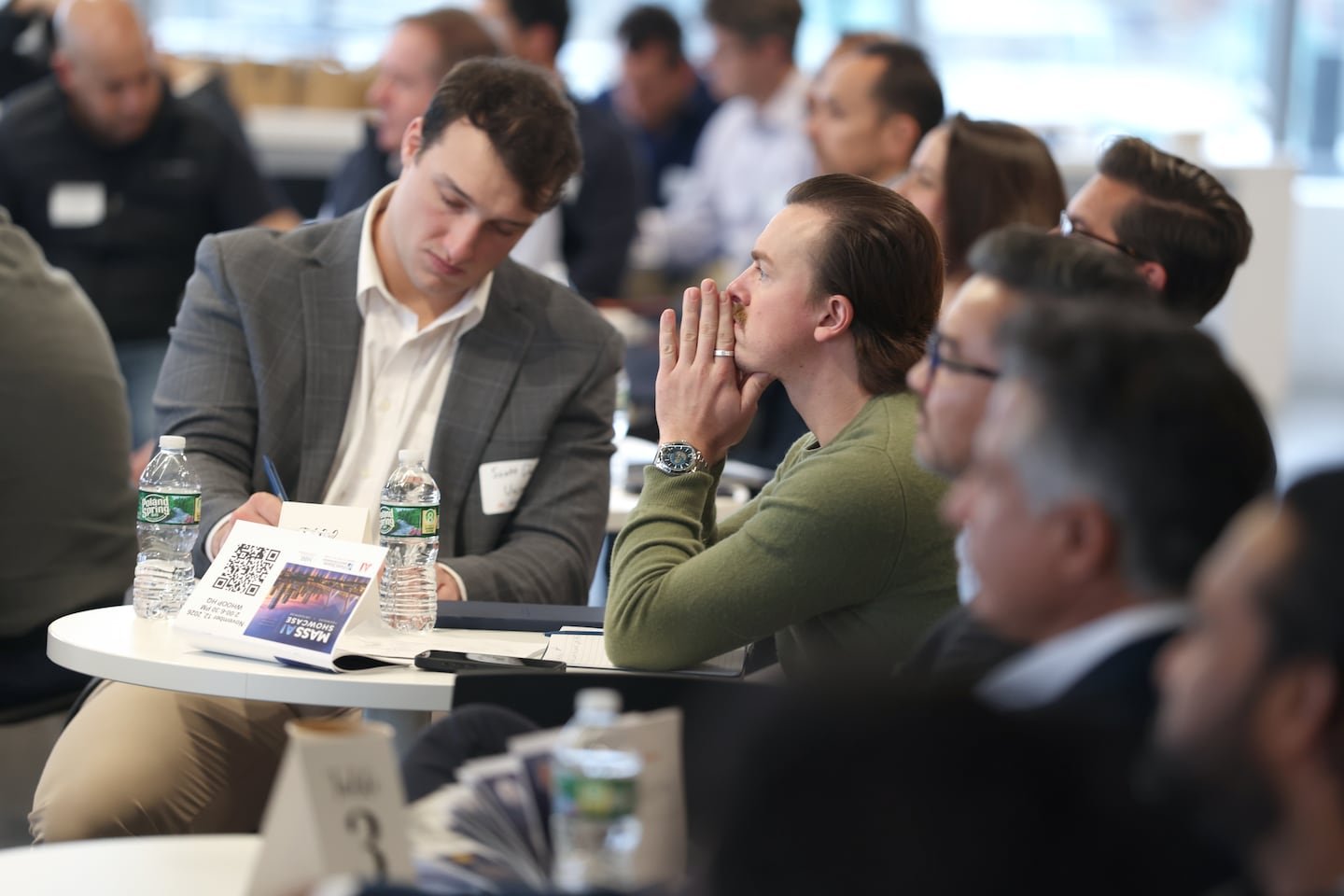
This wasn’t the typical venue for a speed-dating session: the top floor of wearable-tech firm Whoop’s Kenmore Square headquarters, with views of the Boston and Cambridge skylines.
But then this wasn’t a typical speed-dating session, either. Instead of a love connection, the prospective partners hopping from table to table were hunting for a business deal or two.
The Nov. 12 event marked the unofficial start of a marriage between Greater Boston’s startup and big-business scenes, one that could prove crucial to the success of the region’s tech ecosystem.
If women are from Venus and men are from Mars, then startups and big corporate enterprises are from different solar systems. They often don’t share the same concerns, markets, or investors. And they typically don’t move in the same circles.
Boston business leaders have talked about addressing this issue for years. Maybe now the Massachusetts AI Coalition and the Massachusetts Business Roundtable, two organizers behind the speed-dating event, have found a way to bridge the divide.
Much like regular speed dating, the startup founders and corporate executives met for 10-minute intervals at Whoop HQ. They traded get-to-know-you questions, and tried to make a good impression. This went on for nearly two hours. AI entrepreneurs sat across from executives at some of the biggest names in town: Akamai Technologies, New Balance, Mass General Brigham, to name just a few.
One important goal: to give startups connections to potential clients, and to give the big employers ideas about incorporating AI into their own systems. Big IT buyers are often hesitant to take a chance on an unproven startup but become more receptive once they see others doing it.
So who came up with this speed-dating idea? Both the AI Coalition and the Roundtable were separately working on similar concepts when they connected. The AI Coalition brought the startups, and the Roundtable brought the big businesses.
From the Roundtable’s perspective, president JD Chesloff says, member Boston Consulting Group had identified two key gaps in Boston’s AI ecosystem: inadequate workforce skills training, and the need for more incentives for startups to stick around after they spin out of local universities. One way to prevent those departures is to help founders meet with the large employers that could become early customers, or even investors. (Yes, the Roundtable is trying to address the skills issue, too.)

Meanwhile, Whoop executive Ryan Durkin was busy getting the AI Coalition going. It’s not a business group per se (i.e. a trade association with annual dues and an executive staff). It’s more like a loose-knit confederacy, joined together in one giant Slack chat group. Durkin and like-minded techies launched it nearly a year ago to foster a thriving startup economy here while giving Boston’s hottest AI prospects good reason to put down roots rather than packing their bags for Silicon Valley. One of the coalition’s many stated missions: cracking open the gates to Corporate Boston’s seemingly impenetrable fortresses.
Chesloff connected with Durkin and coalition cofounder Cory Munchbach through Mayor Michelle Wu’s occasional innovation summits and the Civic Action Project fellowship program for local civic leaders. (Chesloff and Munchbach attended CAP sessions together.) Another key matchmaker: Lisa Puleo, managing director at Silicon Valley Bank, now First Citizens.
More connections will take shape under Munchbach’s new role as head of the Massachusetts Technology Leadership Council. She started in that role last week, and hopes to draw the council’s software-firm members into this matchmaking fray.

At one of Wu’s recent innovation summits, Tomorrow.io executive Cole Swain spoke about how his weather-prediction startup built its business in Boston in part because JetBlue was its first major customer. Chesloff made a mental note: We need to encourage many more Tomorrow.ios.
Step one: events like the one at Whoop, and future sessions for specific industries like robotics, climate-tech, and cybersecurity. Next up: follow-up calls, emails, texts — and inevitably some ghosting as well. Dating isn’t always easy. But hopefully more than a few long-term relationships will blossom as a result.
What’s your take? Join the conversation in the comments here.
Clarification: In last week’s essay on the Barr Foundation, we referred to the federal law that limits 501(c)(3) nonprofits to only insubstantial amounts of lobbying. But two of our astute readers pointed out the 501(h) election, which allows nonprofits leeway if they keep under specific thresholds for lobbying spending.
The Back Bay is edging closer to getting its own business improvement district. Back Bay Association president Meg Mainzer-Cohen tells us her group is on track to collect enough signatures from commercial property owners willing to pay an extra assessment to fund neighborhood improvements. Under state law, a BID must gain the support of 60 percent of individual parcel owners in the designated area and owners who represent 51 percent of the assessed commercial value. Mainzer-Cohen said the district will meet those thresholds by year end – even without the backing of the Back Bay’s biggest landlord, BXP, the office giant formerly known as Boston Properties and owner of the Prudential Center. “We have a very strong path without them, but we still hope to gain their support,” Mainzer-Cohen said. The measure would still need to be approved by the City Council and Mayor Michelle Wu.

Good thing that’s over with. The latest report from the Massachusetts Gaming Commission showed Wynn Resorts’ Encore Boston Harbor casino continued to suffer in October amid a strike by more than 1,300 workers with UNITE HERE Local 26 and the Teamsters Local 25. In October, gross gaming revenue fell 12 percent at the Everett casino from October 2025, following a 20 percent dip in September, as many gamblers went elsewhere. It wasn’t just the gamblers: The New England Council moved its annual meeting to avoid the fracas (though presumably the council’s big night didn’t affect the gambling data all that much). The two-month strike was wrapped up just in time for Wynn chief executive Craig Billings to announce a framework for a deal on Wynn’s third quarter earnings call on Nov. 5. Maybe we should have bet on Wynn’s shares: They have since risen 5 percent.

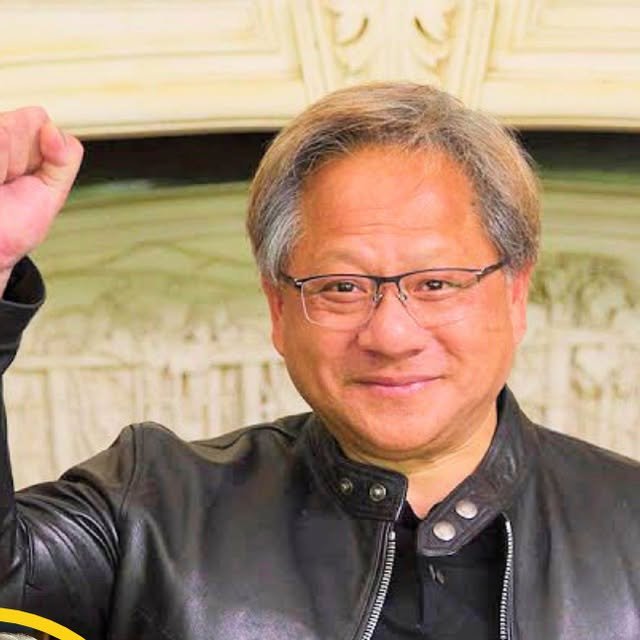
We still can’t believe Jensen Huang is back as Nvidia CEO. The board, under pressure from Donald Trump, re-installed Huang on Monday. He resigned two weeks ago after violating the company’s code of conduct by allegedly having extramarital affairs with a direct report and a customer who might be a Chinese spy. Wall Street cheered the board’s about-face, sending Nvidia’s stock up more than 30 percent. Cynthia Clark, professor of governance at Bentley University, summed up the moment this way: “This has set back governance and ethics half a century.” Read more of Shirley’s column here.
Shares in JetBlue Airways have soared by roughly 50 percent since late October, when chief executive Joanna Geraghty reassured investors and the media that the company is still on a path to operating profitability in 2027. (Even with that bump, though, its market cap is still under $1.5 billion.) Her words apparently eased concerns that the company could be considering filing for bankruptcy. High fuel prices in particular had threatened to throw Geraghty’s turnaround plan off course.
Massport chief executive Rich Davey is watching closely, and not just because JetBlue is one of Logan Airport’s primary airlines. JetBlue and Vantage Group are working on a redevelopment of Logan’s Terminal C, a $1 billion project that could be jeopardized if JetBlue hits too much financial turbulence. While Massport is still negotiating the project’s financial structure, Davey says officials there aren’t worried. “I don’t have deep concerns,” Davey told us. “There’s no indication that they’re not going to go through with the redesign of Terminal C.”

Congratulations to Hannah Leahy, who was quick to answer our Friday trivia question. Yes, it was Kerry Kennedy’s white poodle Scamper who jumped onto her lap during a conversation with Globe Washington Bureau Chief Jackie Kucinich at Globe Summit. Kennedy was discussing her new biography she wrote about her mother, Ethel Kennedy, when Scamper nearly stole the show roaming the stage of the House of Blues.
THANKS FOR READING POWER PLAY.
This newsletter was written by Jon Chesto and Shirley Leung, edited by Aaron Pressman, and produced by Asia Alexander.
Have a question for the team? Email us at powerplay@globe.com.
Power Play is taking Friday off. We’ll be back next week on Tuesday and Friday.
Jon Chesto can be reached at jon.chesto@globe.com. Follow him @jonchesto. Shirley Leung is a Business columnist. She can be reached at shirley.leung@globe.com.
Start Selling Online with ShopOpen24
Are you a small business owner or entrepreneur? Discover seller opportunities and connect with customers through ShopOpen24.
Explore ShopOpen24 →ShopOpen24 | Local Products. Global Reach.




Leave a Reply