

The BRICS is emerging as a significant force in development and governance of artificial intelligence globally, experts say, highlighting its crucial role in championing the Global South’s interests and bridging the digital divide.
BRICS has evolved into a crucial mechanism for Global South nations to pursue shared development. With the rise of AI, the bloc has elevated technology governance as a key pillar of its agenda.
BRICS members and the broader Global South regard AI as both an unprecedented opportunity and a strategic imperative. Jiang Tianjiao, a research fellow at the Center for Global AI Innovative Governance in Shanghai, said that these countries see developing AI as a way of increasing productivity, improving public services and narrowing the digital divide, but also as an essential path to reduce dependence on developed countries for technology, computing power and rules.
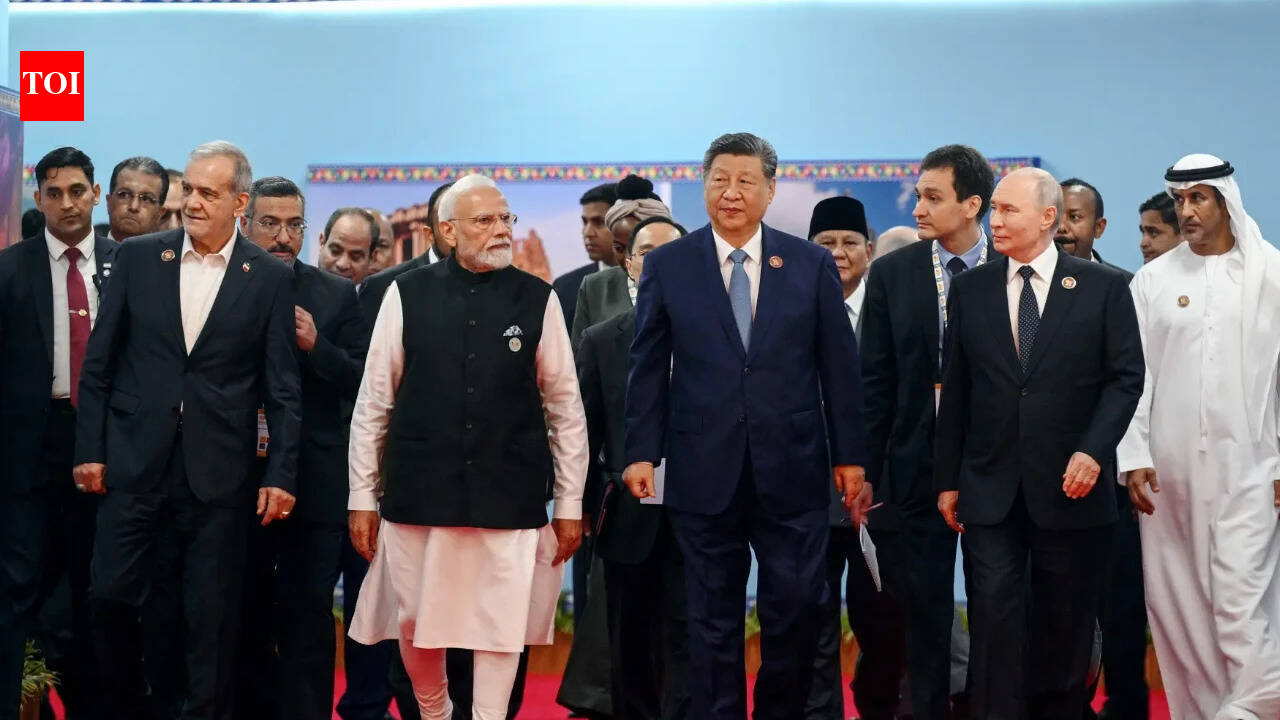
A landmark move came at last year’s BRICS Summit in Rio de Janeiro, Brazil, where the bloc issued its first leadership-level consensus document on global AI governance, The BRICS Leaders’ Statement on the Global Governance of Artificial Intelligence. It underscored digital sovereignty and the right to development as central to global AI governance.
The BRICS consensus serves as a crucial corrective to the global AI governance system, experts said.
Jiang Qingquan, deputy director of the BRICS Economic Research Center at Xiamen University of Technology, said global AI governance discussions have often fixated on security risks, overlooking the more fundamental issue of the development gap.
“By enshrining the right to development as a governance principle, the BRICS statement compels the international community to address the crucial question: how to ensure all countries can access and use AI before discussing its regulation.
“BRICS places the right to development at the core of AI governance. Giving priority to capacity building for developing countries better aligns with the practical needs of Global South nations.”
He depicted the grouping’s role as a “collective spokesperson for Global South AI governance”.
Despite varying strengths in AI technology, computing infrastructure and energy support, experts see these differences as a unique advantage for BRICS multilateral AI collaboration, potentially playing a significant role in bridging the global digital divide.
Jiang Tianjiao underscored the complementary strengths among BRICS members in creating a “resources-technology-scenario energy” synergy. “China has a complete AI industrial chain and open-source model capabilities; Russia and India excel in algorithms and talent; Brazil, Indonesia and South Africa have abundant application scenarios in different sectors; and countries such as China and Brazil offer clean energy for high-energy-consuming computing power.”
This complementarity is translating into concrete mechanisms. In Bengaluru, India, in July, BRICS member nations signed an agreement on collaboration in standardization, the bloc’s first collective foray into setting international AI standards.
This initiative enables BRICS members to jointly shape international norms within standard-setting bodies, thereby amplifying the voice of emerging economies in frontier technologies governance, Jiang Qingquan said.
BRICS is translating consensus into actionable cooperation mechanisms, with China playing a key role in driving this practical implementation, experts said.
Addressing the 16th BRICS Summit in Kazan, Russia, in 2024, President Xi Jinping announced the establishment of the China-BRICS Artificial Intelligence Development and Cooperation Center, expressing China’s readiness to deepen collaboration on innovation with all BRICS countries to unleash the dividends of AI development.
“The center’s establishment is about converting this vision into implementable cooperation mechanisms, ensuring BRICS countries become cocreators of innovation in the AI era,” said Xu Shan, an expert at the China-BRICS Artificial Intelligence Development and Cooperation Center.
The center has facilitated 55 supply-demand matching events for AI companies, promoting plans for international collaboration, she said. Its training programs have reached 105 senior officials in 58 countries, extending the benefits of BRICS collaboration to the wider Global South, she said.
For the public at large, Xu said, AI cooperation can translate into tangible improvements: farmers in remote areas using AI-powered pest detection, grassroots hospitals drawing on AI-assisted diagnoses to help alleviate doctor shortages, and speakers of minority languages accessing intelligent services in their native tongues.
“The ultimate test of AI collaboration is whether people in BRICS and Global South countries can genuinely benefit from this technological revolution,” Xu said. “That is the fundamental purpose of everything the center does.”












Leave a Reply