

I’ve been an HR analyst and consultant for 30 years and there’s always a story that HR is “useless” or “a waste of time” or “going away.” And this will always continue, because most managers really do believe they are already experts at this domain.
And at this month’s SHRM conference, according to Bloomberg, the CEO clearly stated that “the field of HR faces extinction,” pushing HR professionals to adapt.
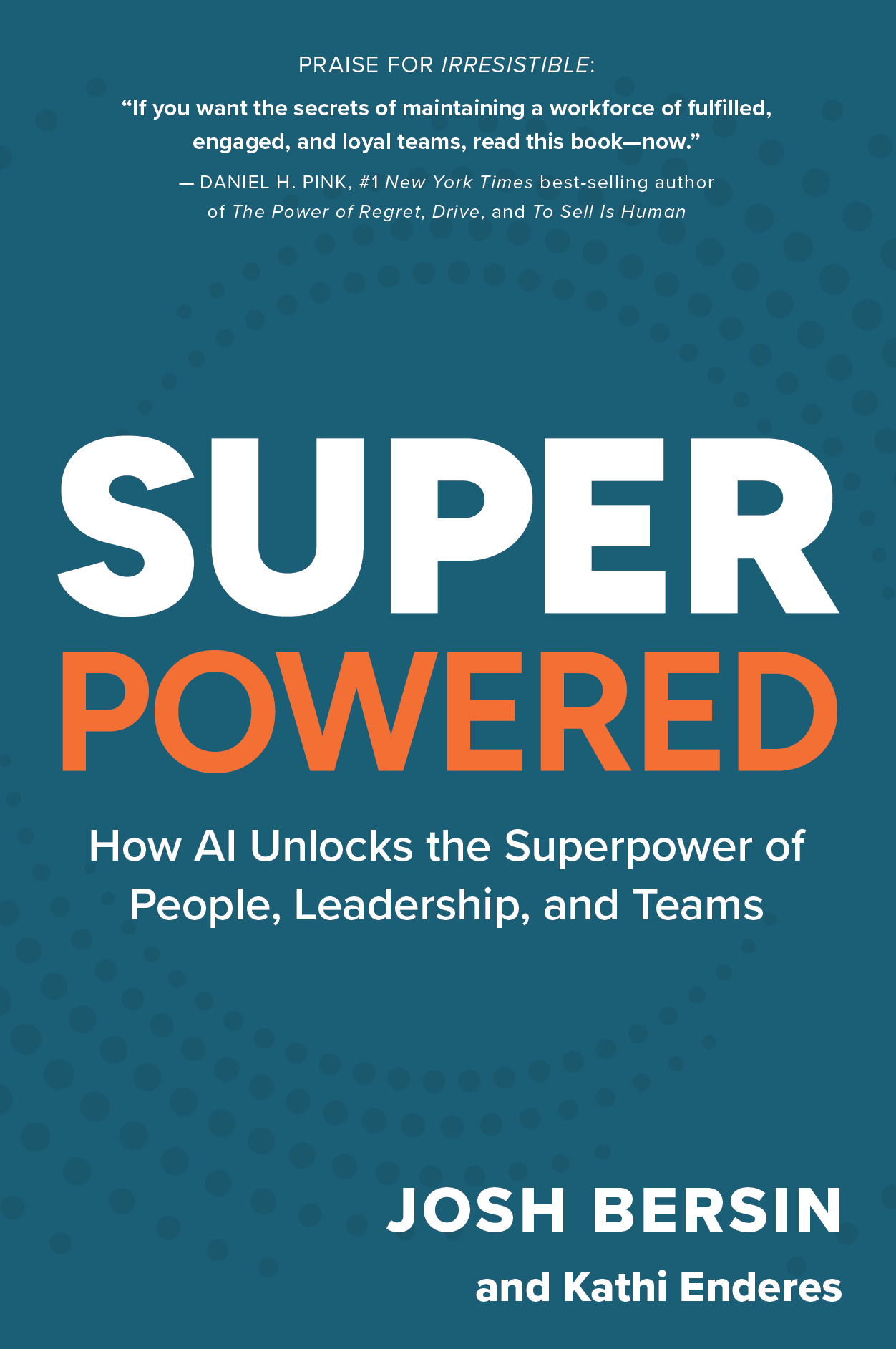
Well as our HR 2030 AI research shows, HR is definitely changing … but actually becoming even more important. And as our new book Superpowered points out, (coming in October), HR jobs are also growing in demand.
(Podcast explains this in detail.)
Here’s the real data.
If you go through Lightcast job posting data and look at all HR-related jobs, including recruiters, training teams, HR tech, and other HR professionals, the postings data looks like this.

What you see is that over this 20 year period, if you look a the numbers one year at a time, the compound annual growth of HR job postings is around 1.2% per year.
And right now, if you only look at the last 24 months (when AI was the most active, albeit far from mature), the growth rate in HR jobs is even larger: 6%!
Now this number alone isn’t that interesting unless we compare it to the growth in the US workforce itself.
Well surprise: HR jobs are growing faster than total employment.
Let’s do a comparison:

If you want a visual view, here it is:

What in the world is going on?
So despite SHRM’s commentary, the actual number of HR jobs per worker has been going up. And not only that, the salaries are as well!
Salaries are up 82% (3.1% per year compounded) while US inflation has been 66% or 2.1% per year. So HR salaries are growing faster than inflation, which is not true in most professions.

So HR, as a profession, is becoming more important, more valued, and expanding in population in our companies.
How could this be? Isn’t HR one of the most administrative, bureaucratic, seemingly “automatable” professions on the planet?
Here’s The Explanation: The HR Role Is Transforming
Well if you look at the real work HR professionals do, the “jobs” or roles that are going away are titles like “HR administrator” or “HR assistant” or “Recruiting coordinator” or “Training administrator.”
These types of jobs, which every company has, are industrial age positions for people to “administer the process” of hiring, pay, train, and support employees. That percentage of HR jobs today is around 30-40% (we know this from our detailed analysis of HR positions in HR2030 and Galileo).

These jobs are NOT GOING AWAY: they’re being replaced with even more important positions. And in almost every case HR professionals are getting up from their desks, leaving their offices, and working more closely “in the business” to solve problems.
HR service center agents and HR business partners, for example, are now being asked to deal with bigger issues. At companies like Walmart and Standard Chartered, HR administrators who answer common onboarding or benefits questions can now work on more complex cases, spending in-depth time on valuable employee performance or family needs.
L&D managers and instructional designers are now “Superworkers” building simulations and real-time support tools, rather than authoring long courses. Rather than spend 3 months building new courses at companies like Travelers or Polestar, these companies are generating useful videos or contents that sales, support, and engineering teams can use immediately.
Talent acquisition teams are moving coordinators and schedulers into real-time interviewing roles, also analyzing data to better isolate top candidates and give job seekers a better experience. Recruiting jobs are in high demand and many of our clients tell us they’re shifting toward more in-person interviews to eliminate candidate fraud and find higher quality talent. (And AI interviewers are not working out as hoped.)
Internal analytics, pay analysis, and employee engagement teams are spending less time on survey design or benchmark analysis and now looking at more real-time data from their own companies, no longer expecting third parties to figure out why people are leaving or seem disengaged.
HR Business Partners at companies like Panasonic and Accenture are being topgraded into senior consultant roles while tools like Galileo are being used to replace administrative support for leaders, managers, and employees who search for policies or advice.
The list goes on and on. As I’ve written about before, AI is not eliminating jobs – it’s empowering people to do more.
Let’s not count HR out at all – we are the experts at change, development, and work redesign.
Read more in our detailed book coming this Fall.
Additional Information
Why AI Harm To Jobs and Humanity are Vastly Over-Hyped
Get Galileo, The AI Agent Designed Exclusively for HR and Leadership
The Josh Bersin Institute: Global HR Excellence Certification – Available Now!












Leave a Reply