
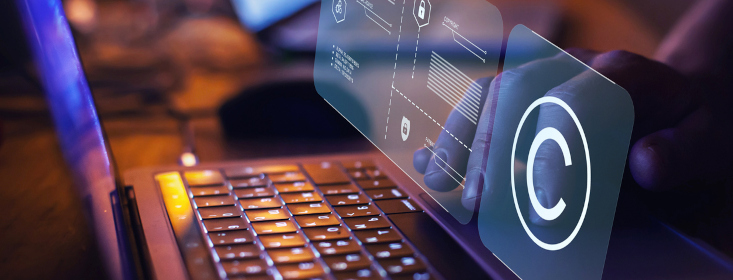
Brussels is pondering whether the EU’s existing copyright framework needs beefing up to deal with generative AI, even as work continues on making current protections workable.
The European Commission has opened the door to further changes to EU copyright rules in response to generative artificial intelligence, asking rights holders and AI companies whether the existing framework provides sufficient protection as technology increasingly depends on access to copyright-protected material.
Launching a targeted consultation yesterday (29 September), the Commission said that, while the EU already has a “robust copyright framework”, technological and market developments had raised the question of whether it should be reinforced through “potential additional measures”.
The timing of this launch will be of especial interest to copyright lawyers: the EU already has a statutory framework governing text and data mining (TDM), while the AI Act imposes copyright-compliance obligations on providers of general-purpose AI models. But Brussels is still wrestling with the practical mechanisms through which rights holders can tell AI developers that their works are off limits for mining.
The new consultation will therefore consider whether existing mechanisms can adequately accommodate generative AI, or whether further copyright measures are needed.
The existing framework
Articles 3 and 4 of the 2019 Directive on Copyright in the Digital Single Market (DSM Directive) sit at the hub of the debate.
Article 3 provides a mandatory TDM exception for research organisations and cultural heritage institutions conducting scientific research. Article 4 goes further, permitting reproductions and extractions of lawfully accessible works for TDM more generally, including commercial purposes.
Crucially, however, rights holders can opt out of the Article 4 exception by expressly reserving their rights. For material publicly available online, the directive envisages that reservation being made in a machine-readable form. So, the provision can allow an AI developer to make copies of protected material for computational analysis without obtaining individual licences, provided the statutory conditions are met and the rights holder has not validly reserved its rights.
However, even though the current framework is only a few years old, those few years have witnessed an unprecedented explosion in the use and potency of AI, prompting the question confronting lawyers, rights holders and technology companies today: how an opt-out designed before today’s generative models became ubiquitous should operate when developers hoover up unimaginably large quantities of data.
Making the opt-out work
The AI Act provides the muscle behind the directive’s protections by placing obligations directly on the AI companies. They must have a policy for complying with EU copyright law and identify and respect rights holders’ Article 4 opt-outs, using appropriate technology to detect them. They must also publish a sufficiently detailed summary of the material used to train their models.
But, while the theory is all well and good, there is still no settled, practical method for rights holders to tell AI developers that their works are off limits, or for developers to identify those opt-outs reliably. With that in mind, the Commission is already consulting rights holders and AI providers on generally agreed machine-readable methods for signalling an opt-out. Rights holders will not be compelled to use only the protocols ultimately agreed, but the resulting list will help the AI Office assess whether model providers are complying with their obligations.
In July, the Commission also published a feasibility study into an EU-level TDM opt-out registry. It concluded that a central registry could complement existing methods by making it easier for rights holders to opt out and for AI developers to identify those opt outs.
Beyond AI
Generative AI is only one of four copyright issues now under consideration.
The Commission is also seeking views on online piracy, particularly involving live content; the remuneration rights applying to music performers and producers; and copyright questions surrounding scientific research, building on its call for evidence earlier this year together with previous studies and assessments.
There is no proposal for new legislation at this stage and the Commission may ultimately decide that the existing regime is sufficient, but the timing is telling. The DSM Directive was agreed before the rapid growth of generative AI, while the AI Act is only now putting new copyright obligations on providers into practice. The consultation gives rights holders and AI companies a chance to make the case for whether that balance still works, and what, if anything, should change.
The consultation closes on 3 November.







Leave a Reply