
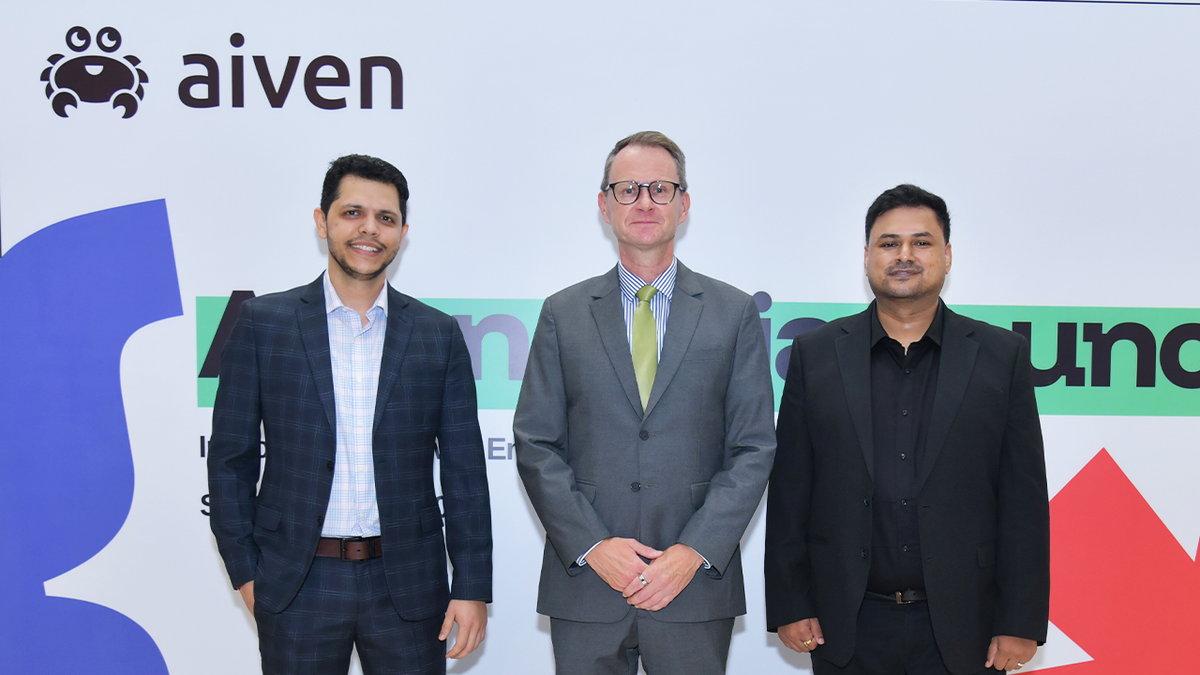
Finland-headquartered cloud data infrastructure company Aiven has launched its India operations as it looks to tap enterprise demand for AI-ready, cloud-agnostic and open-source data platforms.
The company has set up its first India office in Bengaluru, which will also serve as a base for its broader Asia Pacific operations.
Aiven marked its India launch at an event in Delhi in association with the Finnish Embassy. The company currently has around 15 employees in India and plans to expand the team as its operations grow. Hiring will focus on sales, partnerships, customer success, solutions engineering and other functions.
Aiven is positioning India as both a sales market and part of its Asia Pacific growth strategy, with enterprises adopting cloud infrastructure, artificial intelligence, real-time analytics and modern application architectures.
The company offers managed open-source technologies including Apache Kafka, PostgreSQL, MySQL, ClickHouse, OpenSearch, Valkey and DataHub. Its platform allows enterprises to run data workloads across major cloud environments while reducing the operational work required from internal engineering teams.
Aiven expects AI and real-time applications to drive demand for data infrastructure as enterprises require systems that can process, store and stream data at scale.
The company is also taking a partner-first approach in India, targeting partnerships with cloud providers, technology companies, consultants and systems integrators. It plans to engage with developer and open-source communities through events, knowledge-sharing programmes and other initiatives.
Aiven describes its platform as an open data platform for production AI. It provides managed Kafka, PostgreSQL, ClickHouse, Valkey, OpenSearch and DataHub through a single control plane across AWS, Google Cloud, Microsoft Azure and other cloud environments. The platform is aimed at helping data and platform teams deploy AI applications while reducing infrastructure overhead and dependence on a single cloud provider.












Leave a Reply