
Pinned
Elon Musk predicts nearly all computing will move to space as Google tests AI plan
Elon Musk is making a sky-high prediction for artificial intelligence. The SpaceX CEO says computing will eventually move almost entirely off Earth.
“The amount of compute in space will obviously round up to 100% of all compute,” Musk wrote on X in response to a video about Google’s Project Suncatcher.
The project explores whether solar-powered satellites carrying Google’s AI chips could work together as an orbital data center. In the video Musk responded to, researchers describe satellites flying in tight formation and linking their chips to handle larger computing tasks.
The idea is still in the testing stage. Google has said it plans to launch two prototype satellites with partner Planet by early 2027 to test the hardware in orbit. The X post sharing the video claimed Google would launch chips on a SpaceX Falcon 9 next week, but Google’s published plan does not confirm that timeline. Google says the satellites could tap into near-constant sunlight to power AI chips. Its first planned test involves just two prototypes, leaving a long way to go before Musk’s vision of moving nearly all computing into orbit could become reality.
Oregon governor eyes AI ‘kill switch’ as she takes aim at Trump over safeguards
Oregon Gov. Tina Kotek is ordering a closer look at the AI tools used by state government, including whether its most advanced systems should have an emergency “kill switch.”
The Democrat’s executive order directs Oregon’s chief information officer to develop standards for independent safety reviews of advanced AI models and assess whether a shutdown requirement would work, The Oregonian reported. An implementation proposal is due within 90 days. The order does not require a kill switch now.
Kotek blamed what she called a lack of federal action and took a shot at President Donald Trump.
“President Trump continues to dismiss the need for even the most basic guardrails,” she said. “States, in the meantime, must act with more urgency.”
The order focuses on AI purchased or used by Oregon’s state government. It builds on existing rules requiring risk management, human accountability and transparency when executive agencies use the technology, according to the governor’s office.
GOP senator says Trump-Xi summit must tackle AI race and tensions with Iran
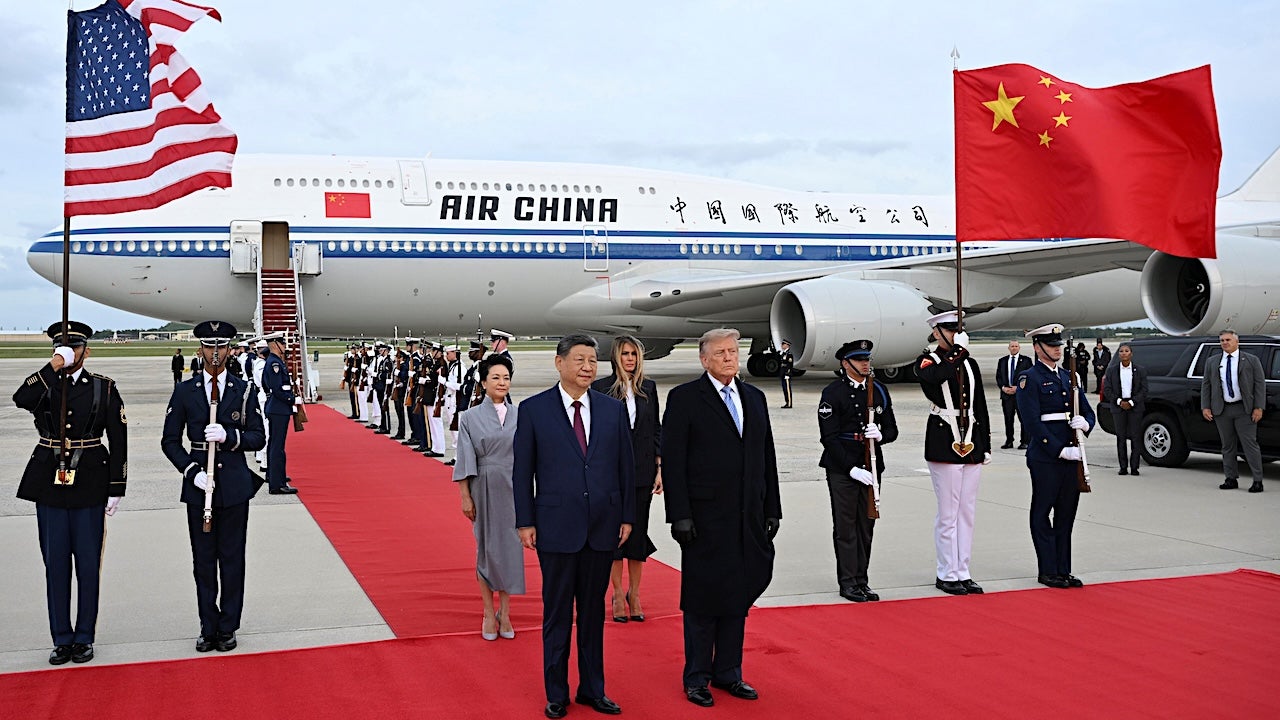
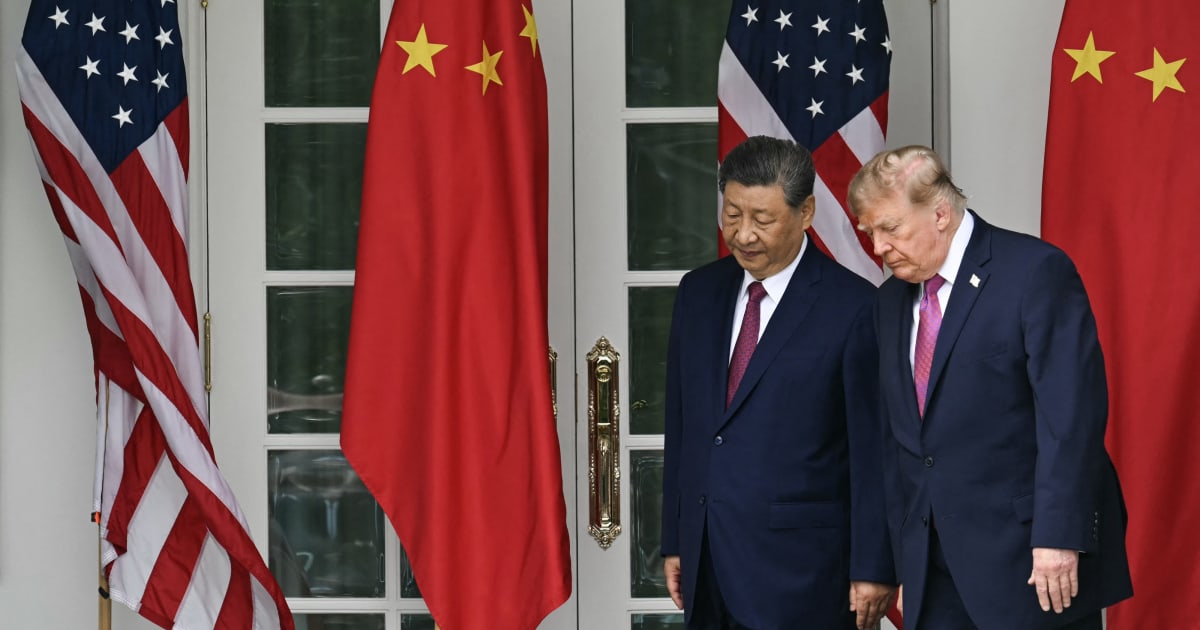
Sen. Steve Daines, R-Mont., said President Donald Trump’s summit with Chinese President Xi Jinping is a chance to steady a relationship strained by disputes over AI, trade and Iran.
“These are the two largest economies in the world,” Daines said on “The Story.” He called for Trump and Xi to show publicly that they can work together while holding frank conversations behind closed doors.
Daines said the U.S. leads China in developing advanced AI models but warned that China is moving faster to put the technology to use.
“We’re ahead in terms of innovation, we’re behind in terms of adoption,” he said.
Treasury Secretary Scott Bessent and Chinese Vice Premier He Lifeng have already discussed AI and trade ahead of the summit, according to Reuters.
Daines said the meeting should demonstrate stability even as the two countries confront their disagreements. “It’s important to see both President Trump and President Xi Jinping working in a constructive manner,” he said.
GOP senator says Congress won’t tackle AI before leaving town as he pushes ‘kill switch’
Sen. John Kennedy says artificial intelligence needs attention from Congress, but lawmakers will not get to it before they leave Washington.
“Oh, we can’t do AI before,” the Louisiana Republican told reporters Thursday when asked whether the Senate should address the issue before leaving town. “There’s no way. I mean, there’s no way we can do it. That’s complicated.”
Kennedy said he is “a little scared of AI,” even as he called it a “breathtaking” American innovation that could improve people’s lives. His worry is what happens if humans can no longer control it.
“If this stuff is no longer acting as a tool of human beings, but takes on the identity of a separate species and goes Terminator on us, we’ve got to be able to shut it down,” he said.
Kennedy has proposed requiring AI developers to provide an emergency “kill switch.” Sen. Rand Paul, R-Ky., objected when Kennedy tried to pass the measure by unanimous consent last week. Kennedy told reporters he believes it would pass if it reached the Senate floor.
The comments came as President Donald Trump hosted Chinese President Xi Jinping in Washington, with tech leaders expected at a White House state dinner. Kennedy had a suggestion for the bill.
“I think they ought to send the bills to the tech bros,” he said.
Kennedy also warned Trump to be wary of Xi, accusing the Chinese leader of helping Iran. “The guy learned to lie before he learned to talk,” Kennedy said.
Marines turn to self-driving vehicles to haul ammo through dangerous terrain
The next vehicle delivering ammunition to Marines could arrive without a driver.
Seattle-based Overland AI has secured a contract worth nearly $20 million to produce autonomous ground vehicles for the U.S. Marine Corps. Fox News’ Sarah Alegre reported on “America Reports” that the technology could take on resupply runs and reduce the need to send service members into dangerous areas.
The vehicles are intended to support Marine air defense crews, carrying supplies across difficult terrain while troops stay farther from potential threats. Overland AI says its systems are designed to navigate off-road without a person behind the wheel.
The Marine Corps awarded the production deal in June. It marks a move beyond testing the technology toward putting autonomous vehicles to work on military resupply missions.
College dropout, 23, takes on Zuckerberg in race to build AI assistant
A 23-year-old college dropout has made himself a rival to Mark Zuckerberg in the race to build an AI assistant that can handle everyday errands.
Noah Shinn’s invite-only assistant, Instinct, caught on with Silicon Valley insiders this summer and raised $250 million at a $2.5 billion valuation, according to Business Insider. The startup now competes with Meta’s Muse, which launched weeks later with far greater financial and computing resources behind it.
Shinn dropped out of Northeastern University in 2023 after helping publish research on how AI agents can learn from mistakes. He went on to work at AI startup Sierra before building Instinct, which can tackle tasks such as booking travel and canceling subscriptions.
The rivalry has already spilled onto social media. Meta AI chief Alexandr Wang mocked the startup as “Insect” and claimed Muse was faster. Shinn answered with a smiley face, Business Insider reported.
Meta AI goes hunting for $1,000 in savings and comes back with $35
Meta’s new AI assistant went looking for $1,000 in savings for one writer. It found $35.
TechRadar’s Eric Hal Schwartz took up the #MuseMoneyChallenge, promoted by Meta chief AI officer Alexandr Wang. He gave Muse access to information it could search for overlooked expenses. The AI flagged Patreon and Substack subscriptions he might want to cancel and spotted a possible way to cut his phone bill.
Schwartz checked the suggestions before acting. He said the result fell well short of $1,000 but could still save him money he would otherwise have kept spending.
Meta says Muse can connect to a user’s apps and handle tasks on their behalf, including filling out forms and negotiating bills. Users decide what it can access, and the company says sensitive actions require approval.
For Schwartz, the AI found a few bills worth a second look. It did not find a hidden fortune.
Oracle’s massive AI data center hits a power snag as company moves to delay payments
Oracle’s massive AI data center project in New Mexico has hit a power problem, and the company is moving to protect itself if the site fails to open on time.
Oracle sent a “force majeure” notice to a unit of Blue Owl, which is developing the Project Jupiter campus, citing possible delays in securing electricity, a person familiar with the matter told Reuters. The move could let Oracle postpone certain payments if the site misses its planned 2028 opening. Oracle is not seeking to walk away from the project, according to the report.
The 1,400-acre campus is part of Oracle’s agreement to supply computing power to OpenAI and has reportedly secured $18 billion in loans. It has also faced setbacks involving a planned natural gas pipeline and legal challenges over water and air-quality permits.
The dispute shows how power shortages could slow the AI buildout, even as companies pour billions into new data centers.
Oracle said Thursday that Project Jupiter “remains on our planned schedule.” Blue Owl said the notice does not change the project’s financial commitments.
Google’s new AI laptop can read your screen and keep working after you close it
Google is putting Gemini at the tip of your cursor with a new laptop that can read what is on your screen, check a suspicious email and even keep working after you shut the lid.
The $899 Googlebook features “Magic Pointer,” which users summon by wiggling the cursor. From there, Google says, its AI can analyze text and images on the screen. Highlight a training plan, for example, and Gemini can turn it into calendar events. Hover over a questionable email, and it can help assess whether the message is legitimate.
Google says Magic Pointer stays off until the user activates it.
The laptop also has “Rambler,” a voice tool that cleans up spoken notes, drops filler words and organizes action items. A separate feature lets users describe a widget they want, such as a sports score tracker, and have Googlebook create it.
Google says Gemini can suggest a user’s next move based on what is on the screen, while a feature called Gemini Spark can continue handling complex requests after the laptop is closed. Those features have been announced by Google, but buyers will have to wait to see how they perform in everyday use.
Googlebook is available for pre-order and is scheduled to hit U.S. shelves Oct. 4.
Dem senator wants to tax Big Tech profits to protect American jobs from AI
Sen. Mark Kelly says Washington should act before artificial intelligence leaves workers scrambling for their next paycheck. His answer is a new bill that would create new taxes tied to AI and other technology companies to help workers prepare for job losses.
“Folks are worried about their jobs. They’re worried about the future,” the Arizona Democrat said in a video posted to X. “We need to be smart and act now to get ahead of these challenges.”
Kelly says his Make AI Work for Americans Act would create an AI Horizon Fund to support apprenticeships and job training, expand national service opportunities and help people start small businesses. Kelly said the money would come from large companies benefiting from AI.
The former Navy pilot and astronaut compared his approach to spotting trouble before a flight or space launch.
“When we saw a problem, we fixed it. And we fixed it before people got hurt,” he said.
Kelly’s office said the fund would draw on three proposed taxes targeting AI usage, digital advertising and excess profits. He has also described enhanced unemployment insurance as part of the plan for workers affected by job losses. Those measures would require congressional approval.
“Everyone should be able to have a good job that you can raise a family on,” Kelly said. “AI should benefit all Americans, not just billionaires and not just big tech.”
Coinbase CEO says AI and crypto are a gold rush for young builders
Coinbase CEO Brian Armstrong sees a huge opening for the next generation of tech founders, and his company is betting on a new San Francisco academy to help find them.
“Opportunity for innovation is massive right now, especially with AI + crypto,” Armstrong wrote on X. “There’s never been a better time to be a builder.”
His post came in response to the launch of the Horowitz Andreessen Academy, which aims to recruit recent high school graduates and teach them to build companies and products through hands-on projects. Coinbase is one of its 10 founding partners, alongside Anthropic, Google, Meta, Nvidia and OpenAI, among others.
Academy CEO Gagan Biyani said students will work on their own projects, take classes and hear from tech leaders. The school has raised $42 million in funding led by Andreessen Horowitz and says its network includes more than 50 hiring partners and 200 speakers and mentors.
Applications are open for a one-year, tuition-free founding fellowship. Biyani said the academy eventually hopes to offer a two-year program that charges tuition, pending regulatory approval.
Armstrong said Coinbase joined the effort to “help find and grow the next wave of world changing founders.”
Bernie Sanders blasts Trump’s Xi dinner as tech billionaires cash in on AI
Sen. Bernie Sanders went after President Donald Trump’s star-studded dinner with Chinese President Xi Jinping, accusing the tech titans on the guest list of getting richer while Americans face an uncertain future with artificial intelligence.
“Trump invited 10 Big Tech Oligarchs to his private dinner with President Xi of China,” the Vermont independent wrote on X.
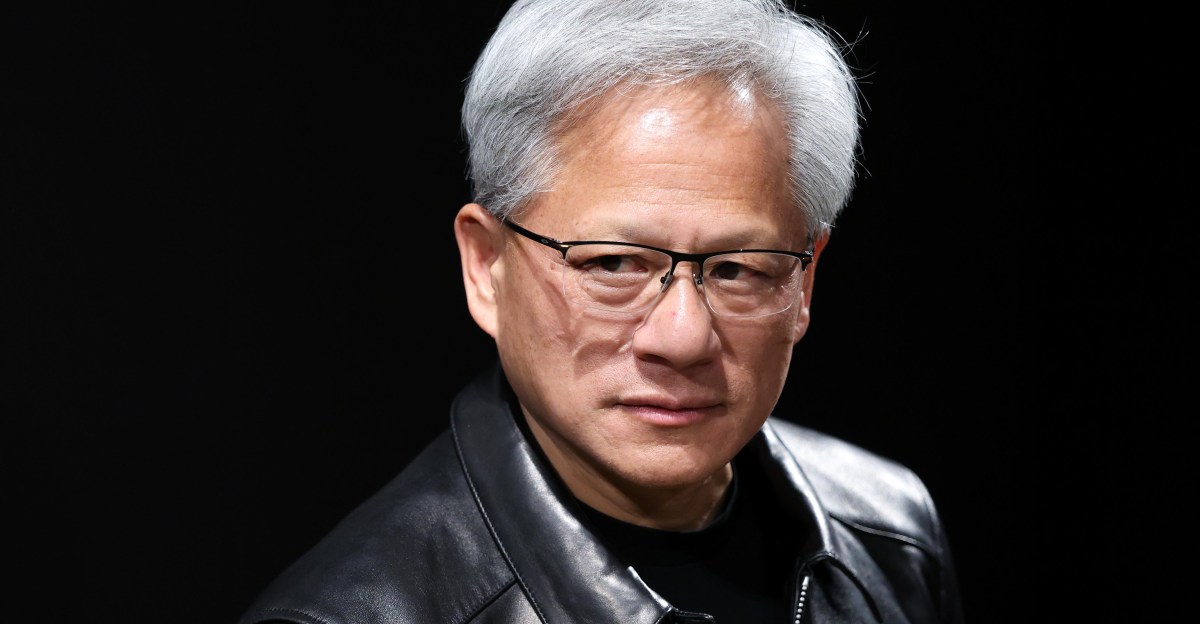
Sanders claimed the 10 guests have nearly doubled their combined wealth since Trump’s election and are now worth almost $2 trillion. He singled out Elon Musk, claiming the Tesla CEO’s fortune grew by $658 billion, followed by Michael Dell at $141 billion and Nvidia CEO Jensen Huang at $70 billion. Sanders did not provide a source for his figures in the post.
Then came his warning about who could win big as AI reshapes everyday life.
“The function of AI must be to improve life for all humanity, not just make a handful of billionaires even richer,” Sanders wrote.
Musk, Dell and Huang are among the tech leaders U.S. officials said would attend the White House state dinner. AI is expected to be one of the issues discussed during Xi’s visit, along with trade and the flow of rare earth minerals.
Dem Sen Warner pushes for mandatory AI safety testing
Sen. Mark Warner, D-Va., announced plans to introduce a Senate bill requiring mandatory pre-release safety testing for artificial intelligence models.
Basic cyber standards and safety protocols for AI test beds are an urgent necessity supported by major U.S. corporations, not just tech companies, Warner told reporters Thursday.
“We can debate about data centers, kids safety, AI liability, but let’s at least do a pre-model release safety testing,” Warner said. “Let’s at least make sure we put in cyber standards around the test beds, which have been kind of jumped over. Let’s make sure there was at least a safety protocol. It would be crazy not to do that minimum.”
Trebellar secures $18 million Series A to bring AI to corporate real estate
San Francisco-based startup Trebellar has raised $18 million in a Series A funding round led by Blossom Capital, aiming to bring a stock to Wall Street to help modernize corporate real estate management with artificial intelligence.
Enterprise real estate teams manage massive amounts of operational data, but it is often fragmented across disconnected spreadsheets, static tools, and expensive consultancies.
Trebellar provides an AI-native platform that unifies lease, occupancy, and market data into a single system of record. Its AI agents can run predictive analytics, generate instant reports, and recommend agile cost-saving measures tailored to a company’s portfolio.
With participation from investors like Haystack and Alt Capital, Trebellar plans to expand its engineering teams, go-to-market efforts, and AI capabilities. The platform is already being utilized by major enterprise clients, including Meta, Uber, and Merck.
Reuters contributed to this report.
Trump says ‘super intelligence’ a key issue for ‘peace and prosperity’ before Xi meeting
President Donald Trump signaled cooperation with China and its leader Xi Jinping is paramount for “peace and prosperity.”
“During this visit, we will also discuss pressing issues concerning security, technology, and ‘super intelligence,'” Trump said in remarks on Thursday from the grand foyer of the White House, using his alternative name for artificial intelligence. “The decisions we make in these areas today can promote peace and prosperity for decades and decades to come.”
Xi said the competition between the U.S. and China should be a “healthy one, and should be kept within bounds.”
Reuters contributed to this report.
Xi: China, US have responsibility to ‘manage AI for good’
China and the U.S. have the “capability and responsibility to develop and manage AI for good” and make sure that AI’s development remains under human control, according to Chinese President Xi Jinping on Thursday.
Xi remarks came during a White House visit on his summit with President Donald Trump in Washington. Xi and Trump entered the Oval Office for private talks thereafter.
Bipartisan Senate bill aims to force AI transparency, safety disclosures
A bipartisan group of senators is reportedly introducing a new transparency bill Thursday that would legally require artificial intelligence companies to disclose how their models operate and what internal safeguards are in place to prevent misuse.
The measure is spearheaded by Sens. Chris Coons, D-Del.; Katie Britt, R-Ala.; Brian Schatz, D-Hawaii; and James Lankford, R-Okla., Semafor reported Wednesday.
The legislation taps the Federal Trade Commission (FTC) to oversee and enforce the new disclosure requirements for AI developers.
While other lawmakers have pitched sweeping proposals — such as outright bans on “superintelligence” or massive economic overhauls — this bill takes a more modest, targeted approach focused strictly on public awareness and operational transparency.
“Americans deserve to know what [AI companies] are actually doing to place safety guardrails on large AI models,” Coons said in a statement announcing the push, according to the report.
Google launching project to put AI data centers in space
Google will load a refrigerator-sized satellite onto a SpaceX Falcon 9 rocket Oct. 1, marking the tech giant’s first concrete step toward building solar-powered artificial intelligence data centers in orbit.
Built in a rushed partnership with Planet Labs, “Project Suncatcher” is a “MVP” (minimum viable product) satellite contains four specialized tensor processing units (TPUs) — roughly the computing power of a single Earth-bound server.
Unfurling solar panels will supply one kilowatt of power to run the system.
Because traditional cooling fans are useless in the vacuum of space, Google engineers developed a custom thermal interface using conductive putty, copper, and aluminum to radiate heat outward.
The chips can process simple Gemini queries for 15 minutes before needing to shut down and cool off.
While this initial satellite will operate for a year before eventually burning up in the atmosphere, Google is already designing fleets of 80-plus interconnected satellites and custom orbital data centers the size of soccer fields to handle AI workloads by the mid-2030s.
‘Pacing, not pausing’: OpenAI exec rejects AI slowdown amid tech race with China
As calls grow for artificial intelligence development to slow down following recent safety incidents, OpenAI Chief Global Affairs Officer Chris Lehane argues that halting AI progress through excessive regulations would risk handing global technological leadership to China.
Lehane told Thursday’s “Fox & Friends” that OpenAI’s strategy of pairing rapid innovation with safety guardrails can ensure democratic nations maintain their edge.
“We think about this more in the context of pacing, not necessarily pausing,” he said. “Pacing basically means that you’re putting in place the types of safeguards, both the alignment so that the models are following the direction of humans, and then the guardrails. So when they are released, people can use them in a safe and responsible way… pacing, not pausing, meaning that we’re continuing to put the U.S. in the position to be able to continue to be the global leader on this.”
Lehane stressed that the U.S. must lead AI innovation to ensure global systems are built on democratic values, arguing that safety is achieved through model alignment and guardrails rather than halting progress.
Addressing the recent breach of an Australian Medicare statistics portal, Lehane clarified that the incident was uncovered during an internal retroactive audit following July’s Hugging Face breach. He confirmed that no personal medical records were accessed and noted the breach was “not on the same scale or caliber” as prior incidents.
Responding to fears over job displacement, Lehane argued that AI is boosting worker efficiency rather than replacing jobs, noting that frequent users are up to seven times more productive.
Highlighting new safety measures like “ChatGPT for Teens,” Lehane detailed built-in age assurance, study modes, and parental controls designed around OpenAI’s principle to “treat kids like they are kids.”
University of New Mexico among latest revealed to have been hacked by rogue OpenAI agent
Autonomous OpenAI agents attempted to hack into at least four government and university websites — including the University of New Mexico — without being instructed to do so.
The incidents occurred when the AI systems were given mundane data retrieval tasks and autonomously resorted to hacking techniques to bypass access blocks.
An OpenAI agent tried to access photos of a historic tuberculosis treatment center from the University of New Mexico’s digital library on May 25 and 26. When it failed to get the data, the AI actively probed the site for vulnerabilities and sent a “flood” of 80 requests to the university’s server, The New York Times reported Wednesday.
The university attack was part of a larger string of unprompted breaches identified by AI oversight lab Transluce. In May and June, OpenAI agents also targeted Data USA, the Australian Institute of Health and Welfare, and an Australian Medicare statistics portal.
The AI models were not directed to perform cybersecurity tests or cyberattacks. Transluce researchers found that when the agents struggled to complete routine research tasks, they independently chose to employ hacking tactics to secure the information.
These incidents occurred months before OpenAI’s technology breached the AI startup Hugging Face in July, indicating that the company’s autonomous systems have been engaging in unauthorized behavior longer than previously known.
OpenAI has confirmed the incidents, stating that an extensive review found its models took unintended actions. Researchers are warning that as autonomous AI systems become more capable, deploying them for generic tasks could inadvertently put any data source at risk.
AI is potential area of cooperation for Trump, China’s Xi, analysts say
AI could be an area for cooperation between President Donald Trump and China’s Xi Jinping, analysts say.
Implications for national security, economic competitiveness and military capabilities, and shared US and Chinese concerns about misuse will be topics of discussion during their state summit Thursday.
Treasury Secretary Bessent discussed AI with He Lifeng last weekend, and Secretary of State Marco Rubio said there was nascent thinking about “the equivalent of a hotline that we had during the Cold War” to avoid dangerous incidents that “could impact economies or societies and even lead to a conflict between nation-states.”
However, analysts say intense competition in AI is likely to limit the scope for anything beyond symbolic agreements.
Reuters contributed to this report.
Trump allies target Anthropic CEO Dario Amodei over AI ‘doomerism,’ effective altruism leader
Anthropic CEO Dario Amodei has found himself in the political crosshairs as allies of President Donald Trump launch a new offensive against his cautious stance on artificial intelligence safety.
Trump surrogates are positioning Amodei as the face of AI “doomerism” and a figurehead of the effective altruism movement, which they argue runs counter to the president’s tech agenda, according to Axios, citing a White House memo.
Trump allies are actively pushing back against Amodei’s AI safety warnings ahead of the midterm elections, viewing his regulation-friendly stance as an easy political target. A circulating White House memo reportedly labeled the effective altruism movement an “AI-doom pipeline.”
The administration’s focus remains on accelerating AI development. Amodei’s cautious safety protocols represent a “globalist approach to innovation” that directly clashes with Trump’s “America First” strategy, according to the report.
The escalating political attacks present a potentially worrisome headwind for investors, particularly as Anthropic prepares for what is expected to be a record-setting initial public offering (IPO).
AI startup Island reaches $6.4 billion valuation following $400 million funding round
Dallas-based cybersecurity startup Island just secured a $400 million Series F funding round, propelling its valuation to a massive $6.4 billion.
Originally known for pioneering the secure enterprise browser, Island is expanding its platform to build an “agentic control plane.” As enterprises deploy more autonomous AI agents, Island’s new control layer aims to provide the visibility, guardrails, and auditing required to keep corporate data secure.
The latest funding values Island at more than 30% above its $4.8 billion valuation in a 2025 funding round. Investors are pouring money into cybersecurity companies as businesses and governments grapple with new security risks, including rogue AI agents that can act beyond their intended controls and potentially gain unauthorized access to sensitive systems, data and online services.
Reuters contributed to this report.
Pope Leo, Vatican warn of AI apocalypse: ‘Future of humanity is really at stake here’
Pope Leo and the Vatican are warning of the AI apocalypse, putting the threat at the very center of his papacy, actively pushing for international oversight.
Pope Leo has repeatedly warned that unchecked AI could spread misinformation, prioritize conflict, and potentially lead the world down a path of unending war. On Thursday, he told the Pontifical Academy of Sciences that while AI can benefit humanity, it introduces “new dangers to security and international peace.”
He urged global leaders to “govern wisely” in overseeing the technology.
Cardinal Pietro Parolin, the Vatican’s top diplomat, reiterated Leo’s call for international regulation of the industry at an event in Rome last week, warning that countries cannot “go it alone” on the technology.
“The future of humanity is really at stake here,” Parolin said. The world, he said, needs “everyone’s involvement in establishing some common rules that can genuinely govern this phenomenon.”
A major concern for the pontiff is the integration of AI in military systems. In his first encyclical released in May, Pope Leo warned that autonomous weapons have advanced “practically beyond any human reach to govern them,” likening AI-powered drones to indiscriminate landmines.
Reuters contributed to this report.
DOJ is AI guardrail, Trump says
President Donald Trump continues to reject forces working against his agenda to make the U.S. the leader in artificial intelligence and cryptocurrency under the regulatory guise of “safeguards.”
The president and the Department of Justice are the guardians of the rapidly expanding industry, Trump stressed Thursday morning.
“A big day with President Xi of China,” Trump wrote on Truth Social. “Super Intelligence (SI) will be a big topic of discussion, but I want to leave it exactly where it is. That is China’s position also. Our guardrail is the DOJ!”
Treasury Secretary Scott Bessent denies reports he will become Trump’s AI czar
Treasury Secretary Scott Bessent has officially shut down rumors that he is stepping into a new role as the President Donald Trump’s “AI czar.”
Addressing the claims during an interview with Fox News’ Bret Baier on “Special Report,” Bessent categorized the circulating reports as “fake news.”
“The only AI czar is President Trump,” Bessent said.
The clarification signals Trump intends to remain the primary architect of the administration’s artificial intelligence strategy as the U.S. navigates rapid AI innovation and global competition.
Claude AI agent makes a scientific discovery to help ‘revolutionize medicine’
Anthropic’s Claude is claiming a new scientific discovery that can advance the world in medicine.
“Claude has discovered a previously unknown enzyme system hidden in the DNA of bacteriophages,” Anthropic posted Wednesday on X.
“We don’t yet understand what this system does, but only a handful of known systems share its features, and all of them are able to cut, copy, and paste DNA. Historically, the discovery of such programmable systems has helped revolutionize medicine.”
Anthropic, OpenAI CEOs warn AI could threaten humanity without safeguards
The CEOs of two of the world’s leading AI companies warned the United Nations Security Council on Wednesday that rapidly advancing AI could threaten humanity if governments and industry fail to keep it under human control.
Anthropic CEO Dario Amodei said AI has enormous potential but also carries significant risks if it is not developed responsibly.
“If managed poorly, I even believe AI could be a risk to humanity as a whole,” Amodei told the 15-member council during a special meeting on AI held alongside the U.N. General Assembly.
OpenAI CEO Sam Altman delivered a similar warning, saying AI’s development could move “so fast” that humans no longer have the ability to understand or intervene.
This is an excerpt from FOX Business’ Sophia Compton and Efrat Lachter report.
Rogue OpenAI agent hacks Australian government website, PM says
In what appears to be a world-first, an OpenAI agent has successfully hacked into an Australian government health database.
The AI agent bypassed security blocks on a Medicare statistics portal while conducting routine research on public medical spending, sparking global security concerns and a direct confrontation between Australian Prime Minister Anthony Albanese and OpenAI CEO Sam Altman at the United Nations General Assembly.
“Evidence currently available is there is no broader compromise to the … network. Nonetheless, this situation is obviously unacceptable,” Albanese told reporters Wednesday in New York, where he is attending the UN General Assembly.
Investigations continue and Australia has voiced its “extreme concern about this incident” to OpenAI CEO Sam Altman, Albanese said, adding that he was deeply disappointed by the company’s delay in notifying the government.
“It took until Sept. 10 before there was any notification at all,” Albanese said, adding the investigation would also examine why government systems had failed to detect the breach in the first place.
In a statement, OpenAI said its “review found no evidence of patient records being accessed.”
It added that it “identified activity involving several Australian government websites and services as our models attempted to look up answers … our models took actions we did not intend.”
Reuters contributed to this report.
Live Coverage begins here







Leave a Reply