
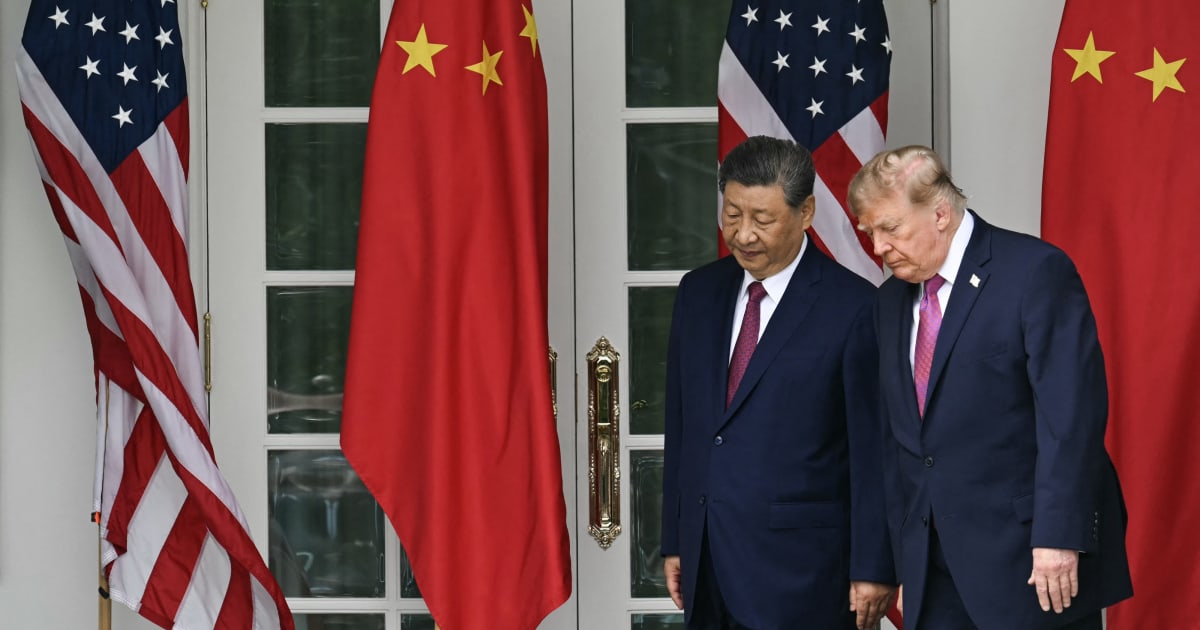
First, it must increase the U.S. lead in AI by cutting off China’s access to the U.S.-origin chips that China needs to stay competitive with the United States. China’s own production of AI computing power is only around 1 to 4 percent that of the United States, and continues to fall. The vast majority of China’s computing power comes from smuggled and remotely accessed U.S. chips, which Chinese firms access by exploiting loopholes in U.S. export controls. Closing these loopholes would expand the U.S. lead in AI, increase U.S. leverage in negotiations with China, and could force China to conclude that cutting a deal soon would be preferable to an even more lopsided deal later.
Closing these export control loopholes would also give the United States critical breathing room to take the second necessary step to create the conditions for a negotiated agreement with China: imposing some regulations on the development of U.S. frontier AI systems. Widening the gap with China would permit the United States to take more robust domestic regulatory steps without conceding AI leadership. This would reduce the risk of an AI-related incident, and provide China with a roadmap for the type of AI safety measures that it must agree to implement as part of any deal.
Additionally, as the U.S. lead over China in AI grows, verification of any agreement becomes easier. This is partly because China could be willing to agree to more intrusive or one-sided verification measures in an agreement that also prevents the United States from racing further ahead. But even if China refuses to accept such measures, U.S. national technical means could offer significant verification capability—assuming a large AI lead also yields a large lead in cyber espionage capabilities. If the U.S. lead is large enough, Washington could grow confident that it could verify Chinese compliance without joint verification measures.
None of this precludes U.S.-China discussions about AI-related risks. Such talks are a necessary precursor to any agreement, because both sides must share a common understanding of the risks associated with a technology before they can agree on how to regulate it. But Washington must not allow these discussions to prevent it from taking the steps that would make an agreement possible.
Taking these two steps today—closing loopholes in export controls and imposing some domestic safety regulations—would minimize short-term AI-related risks and preserve U.S. AI leadership. And crucially, it also maximizes the odds of a successful U.S.-China AI agreement over the long term. History suggests that China will accept a deal that secures a U.S. lead in AI only once it concludes that continuing the race will cause it to fall further behind. The United States has the tools to bring Beijing to that point, but it must have the resolve to use them. Washington does not need Beijing’s trust; it needs Beijing to believe that it cannot win.











Leave a Reply