
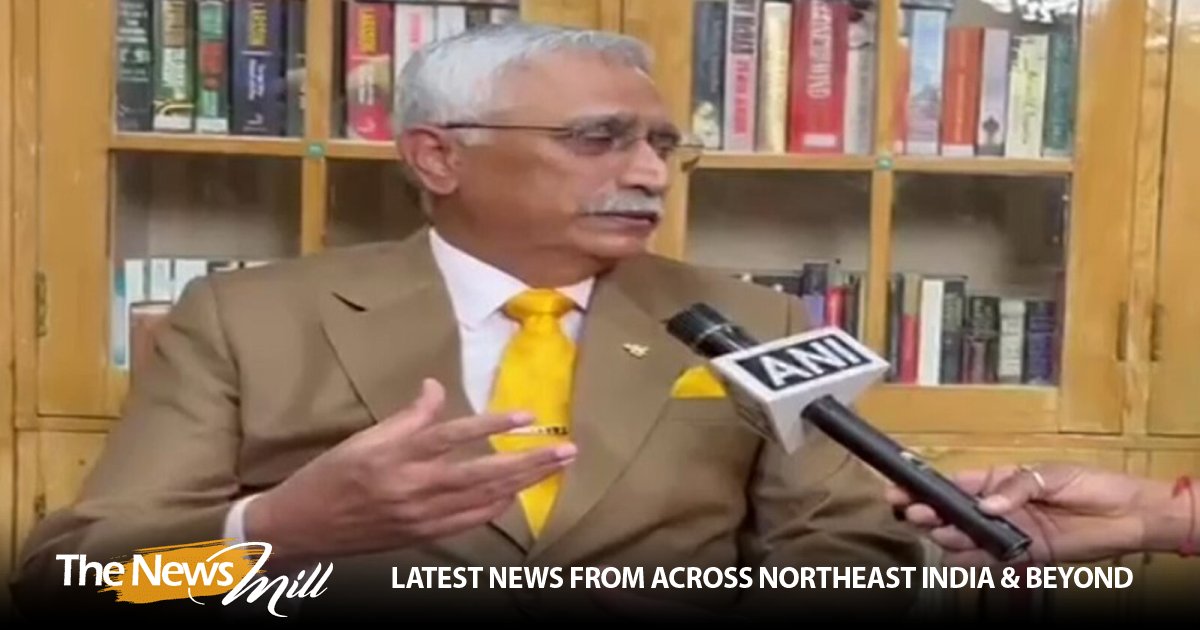
Former Indian Army Chief General Manoj Mukund Naravane stated that the use of artificial intelligence (AI) in weaponry, weapon systems, and platforms is expanding rapidly, emphasising the need for cautious consideration regarding the degree of adoption and autonomy granted to AI technologies.
Speaking on the sidelines of the 15th Khushwant Singh Literary Festival in Kasauli, Himachal Pradesh, Naravane remarked, “The use of AI in weaponry, weapon systems, and platforms is growing rapidly. We must carefully consider the extent to which we should adopt these technologies and how much autonomy should be granted to AI.”
Stay connected
Make The News Mill your preferred source
See more TNM stories when you search for news on Google.
Addressing the festival’s theme, “The Art of Disagreement: Conversations Across Divides,” he advised that disagreement should not result in personal attacks. “The theme of this fest was The Art of Disagreement. There is, indeed, an art to expressing disagreement. It does not mean that you should start attacking the person you are speaking with,” he said. He underlined the importance of focusing on issues rather than individuals when disagreeing, adding, “When you disagree, focus on the issue, not the individual.”
The 15th Khushwant Singh Literary Festival commenced on Friday at the historic Kasauli Club, set against the tranquil hills. The event explored diverse themes including history, literature, politics, women’s rights, food, and faith.
At the event, Naravane launched ‘Forever Young KSLF,’ an advisory initiative for emerging writers. He encouraged young authors to maintain discipline, comparing writing to military discipline: “A soldier writes his diary every day; a writer must write every day.” He also urged them to address serious issues without malice, advising, “Write fearlessly, but write responsibly. The pen, like the sword, must be wielded with honour.”
The festival opened with Sarbpreet Singh’s presentation titled “A Melodious Preface: Khwabgah: The House of Dreams – From Longing to Annihilation,” followed by a welcome address from Rahul Singh, son of the late Khushwant Singh and Festival Director. He described his father as a disciplined man and a master of humour, who wrote daily for nearly 70 years and was fearless on issues.
Veteran journalist and author Bachi Karkaria recalled her longstanding association with Khushwant Singh.
Throughout the festival, various sessions addressed important social and political topics. Lawyer and author Mihira Sood, speaking with journalist Anna M Vetticad in “Girls Just Wanna Have Fun-damental Rights,” discussed why legal reforms alone cannot ensure gender equality.
In “Mizoram: From Battlefield to Ballot Box,” author and journalist Sanjoy Hazarika, in conversation with literary agent Preeti Gill, examined Mizoram’s transition from insurgency to democratic governance, its political history, the Mizo National Front’s role, and the 1986 Mizo Peace Accord. The discussion also covered Mizoram’s humanitarian response to the displacement from ethnic violence in Manipur since May 2023.
Chef, restaurateur and author Rahul Akerkar detailed his journey from biochemical engineering to the culinary field in conversation with Parvana Noorani, highlighting authenticity, simplicity and experimentation in cooking, as well as mentoring young chefs.
Molecular biologist and science writer Upasana Sarraju, speaking with Berty Ashley, demonstrated how curiosity and unconventional thinking prompt insights, drawing from her book Unruly.
Authors Roopinder Singh and Kamla Kapur, conversing with Radhika Sharma, discussed Sikh faith and worship, focusing on values such as sewa and langar, and the significance of the Guru Granth Sahib.
Psychologist-author Nishtha Lamba and journalist-author Narayani Ganesh explored themes of trauma, anger and emotional well-being during the session “Angry Young Nation,” moderated by clinical psychotherapist Sonali Gupta.
Alexander Kopelman led an interactive workshop, “Finding My Inner Compass,” with Saumya Sharma, engaging students and teachers from Himachal Pradesh, Punjab and surrounding areas on self-discovery and individuality.
At the session “Transcending Loss and Grief,” Veena Naravane and Bahar Dutt examined emotional healing after losing a loved one. Veena Naravane stressed that children who lose a parent should be encouraged to express their emotions rather than be burdened with adult responsibilities.





Leave a Reply