
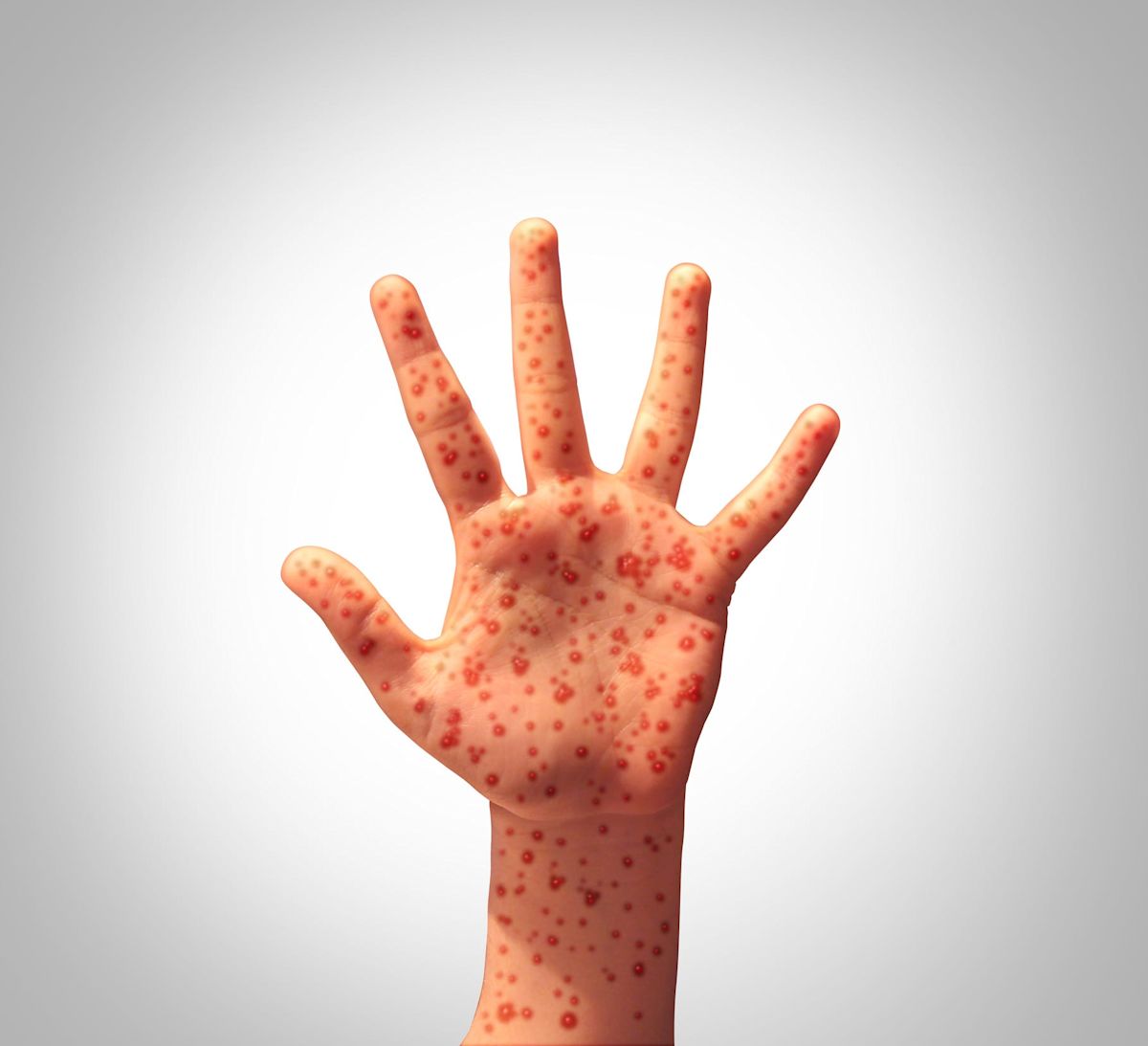
Another person has died amid a Pennsylvania measles outbreak that has already been linked to three other fatalities, according to state health officials.
The Pennsylvania Department of Health said on Tuesday, Sept. 15, that it had confirmed two more measles-associated deaths since Aug. 25, when it announced its first two measles-associated deaths in 35 years. The latest update did not include identifying information about the two victims, who resided in Jefferson and Mifflin counties, but did say they were both unvaccinated.
Jefferson County’s coroner’s office previously identified one of the victims as a 40-year-old woman who died “from complications associated with measles” in an announcement on Sept. 13. The second death was an 18-year-old who suffered from acute disseminated encephalomyelitis, a rare but known complication of measles, the Mifflin County coroner said in a Sept. 15 statement.
“My thoughts are with the two families who lost loved ones to this highly contagious virus, as Pennsylvania faces the worst measles outbreak in more than three decades,” Pennsylvania Secretary of Health Dr. Debra Bogen said in a statement. “We remain committed to working with our partners across Pennsylvania to stem this outbreak and prevent more deaths. That means ensuring people have the facts about measles and access to the MMR vaccine – which kept measles outbreaks at bay for decades.”
This follows an earlier announcement by the Lancaster County coroner on Sept. 9, confirming that the state’s two measles-related deaths in August both involved infants. Neither was old enough to be vaccinated, as the first dose is typically administered around 12 to 15 months of age.
The four deaths represent the highest number of measles-related fatalities in the United States since 1991.
RFK Jr., Pennsylvania spar over measles deaths
Despite the four deaths being determined as “measles-associated,” they have not shown up in the Centers for Disease Control and Prevention’s (CDC) official count thanks to changes in reporting made by President Donald Trump‘s administration.
The guidelines to use the term “measles-associated” are established by the Council of State and Territorial Epidemiologists and, according to the Pennsylvania Department of Health, are used for a death “that occurs within 30 days of symptom onset in an individual with clinical evidence of a measles infection and a positive laboratory test and that is not due to unrelated causes.” Additional information, such as whether an individual was exposed to measles before their death or supporting medical records, is also considered.
Last month, HHS Secretary Robert F. Kennedy Jr., a known vaccine skeptic, asked for two measles-related deaths reported by Pennsylvania’s health department to be removed from the CDC’s national tally of measles, questioning whether the virus was the cause, Reuters reported. CDC staffers had already accepted the state’s characterization of the deaths as linked to measles before Kennedy’s request.
The CDC also announced in a Sept. 4 notice on its website that it would change the source of the data it uses to track measles, a move experts called “puzzling” and an “extraordinary political interference.”
Measles cases hit three-decade high
U.S. measles cases have hit their highest level in more than three decades under the Trump administration, which has attempted to change the childhood vaccine schedule and promoted the idea that vaccines, including the combined measles, mumps and rubella shot, are more dangerous than the diseases they prevent, despite decades of scientific evidence saying otherwise.
The measles virus is one of the most contagious infectious diseases; so contagious, in fact, that 90% of unvaccinated people who are exposed end up contracting it. Additionally, 1 in 5 of those people end up hospitalized, according to the CDC. It is especially dangerous for young children.
The MMR vaccine (measles, mumps and rubella), which protects against measles with 97% efficacy, is typically administered to children as part of the regular vaccine course at ages 12 to 15 months for the first dose and ages 4 to 6 years for the second. MMR vaccination uptake has declined in recent years, resulting in a growing number of states no longer reporting rates consistent with herd immunity.
As of Sept. 10, the CDC reported 3,294 confirmed cases in 45 states plus Washington, D.C., well surpassing last year’s total with three months still left in the year.
Cases previously reached a 30-year high in 2025, with 2,289 confirmed infections across 43 states plus Washington, D.C., for the entire year. Nearly 90% of cases were directly linked to 48 known outbreaks, and 93% of infections were contracted by unvaccinated people or those with unknown vaccination statuses. Three people, including two children, died as a result of the outbreaks, marking the first pediatric death from measles in a decade.
Plummeting vaccination rates and the resulting resurgence in cases have put the United States at risk of losing its measles elimination status. Defined by the World Health Organization (WHO) as freedom from the continuous spread of a disease for at least a year, reaching elimination status has been called a “historic public health achievement” by the CDC.
The Pan American Health Organization, a part of the WHO that tracks infectious diseases in the Americas, is set to review the U.S. and Mexico’s measles elimination status in November (pushed from the originally planned April).
This article originally appeared on USA TODAY: Fourth measles-associated death reported in Pennsylvania outbreak









Leave a Reply