


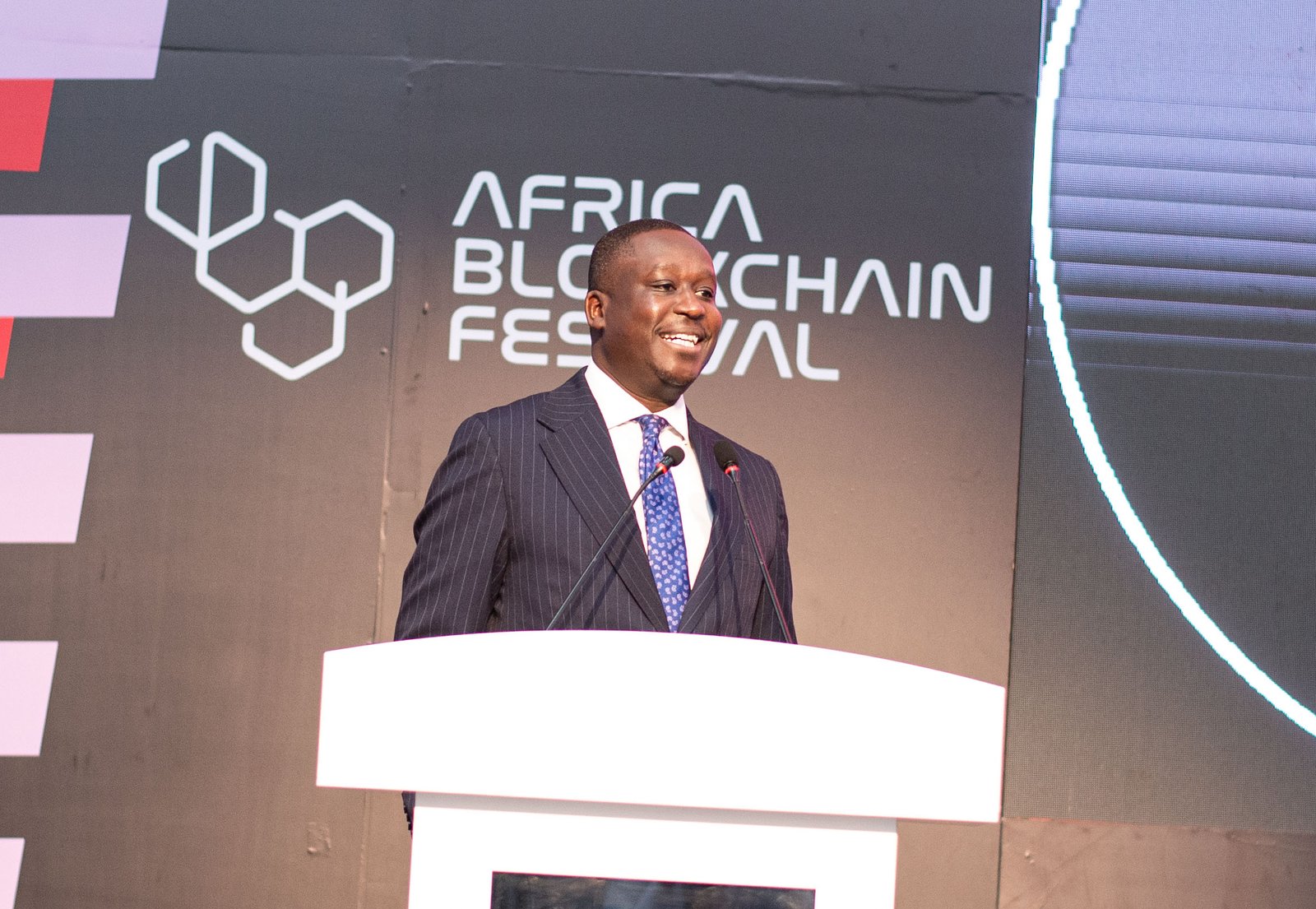
The Managing Director of Wema Bank, Moruf Oseni, and former President/Co-Chief Executive Officer of OPay Nigeria, Olu Akanmu, have called for increased investment in innovation, inclusive technology and digital solutions to unlock Nigeria’s economic potential and address its development challenges.
The two industry leaders, who spoke at the grand finale of Wema Bank’s Hackaholics 7.0 innovation programme in Lagos, said Nigeria must strengthen the connection between innovative ideas, access to funding and the development of technology solutions capable of addressing economic and social problems.
Oseni specifically said the country had no shortage of creative minds and entrepreneurial ideas but continued to face challenges in providing the financial resources, technical support, mentorship and enabling environment required to transform promising innovations into sustainable businesses.
He urged financial institutions, investors, corporate organisations and other stakeholders to move beyond celebrating innovation and commit resources to supporting young entrepreneurs and technology developers capable of delivering practical solutions to the country’s challenges.
According to him, the gap between innovation and access to funding remains one of the major obstacles to building a sustainable technology and startup ecosystem in Nigeria.
He maintained that the difference between an idea that remains at the conceptual stage and one that develops into a commercially viable solution capable of reaching millions of people often depends on access to capital, mentorship, strategic partnerships and the right business networks.
Oseni said Nigeria could not build a competitive innovation-driven economy by merely recognising the creativity of young people without investing in the infrastructure, financial support and opportunities required to translate their ideas into successful businesses.
He therefore challenged investors and business leaders to take a more active interest in emerging innovations by engaging with young entrepreneurs, examining their solutions and providing the funding and strategic support needed to commercialise them.
The Wema Bank chief executive explained that Hackaholics was established to provide a platform for young Nigerians to develop their ideas, build practical solutions and compete in an increasingly technology-driven global economy.
He said the initiative was designed to identify emerging talents, encourage entrepreneurship and provide undergraduates and other young people with opportunities to move from conceptualising ideas to building sustainable businesses.
Providing an overview of this year’s competition, Oseni disclosed that Hackaholics 7.0 attracted 5,329 participants who submitted 1,632 ideas, reflecting growing interest among young Nigerians in developing technology-driven solutions to economic and societal challenges.
The competition featured four categories: Startup Idea, Corporate, Social Impact Technology and Women-Led.
He explained that the Startup Idea category focused on supporting participants developing business concepts with the potential to become viable enterprises, while the Corporate category targeted innovative solutions to organisational and business challenges.
Oseni disclosed that 59 participants progressed through the competition’s selection process, with 11 teams eventually emerging as finalists.
Congratulating the finalists, he urged them to remain committed to developing their ideas, irrespective of the competition’s outcome, stressing that winning an award should not be regarded as the ultimate measure of entrepreneurial success.
He said perseverance, continuous learning and the ability to improve innovative solutions in response to market realities would be more important to their long-term business journeys.
Oseni also identified care and courage as essential principles for building sustainable technology businesses.
He explained that care required technology developers to prioritise the security of users’ funds and personal information, while demonstrating accountability whenever their products or systems failed.
According to him, the success of technology businesses depends not only on the quality of their applications and digital products but also on the confidence customers have in their ability to protect their interests.
He illustrated the importance of trust with the example of a trader who depends on digital financial services to receive and transfer money, noting that behind every electronic transaction could be school fees, emergency medical expenses or working capital for a small business.
He said developers must therefore recognise the responsibility associated with handling people’s money and personal information, adding that reliability, security and accountability should remain central to the development of financial technology solutions.
Oseni urged young innovators to challenge conventional thinking, believe in their capabilities and remain determined despite discouragement or perceptions that certain ideas could not succeed in Nigeria.
He, however, cautioned that courage without responsibility could lead to recklessness, maintaining that sustainable innovation required a balance between ambition, accountability and the protection of users’ interests.
The former OPay Nigeria chief executive, Akanmu, also stressed the importance of inclusive technology solutions, saying digital innovation must be deliberately deployed to address economic and social inequalities and expand access to essential services.
He argued that Nigeria’s technology development strategy must recognise that the country extends beyond Lagos and other major commercial centres, noting that solutions capable of achieving meaningful impact must address the needs of people in rural and underserved communities.
According to him, technology should create opportunities for everyone, irrespective of their geographical location, economic circumstances or background, to fulfil their potential and contribute to national development.
Akanmu said digital technology could significantly reduce transaction costs, improve market efficiency and expand access to services across financial services, healthcare, agriculture and education.
He explained that technology transforms businesses and industries by making information more accessible, improving the connection between buyers and sellers, facilitating negotiations and enabling transactions to be completed more efficiently and at scale.
He identified information search, matching buyers and sellers, facilitating bargaining and transaction fulfilment as four fundamental ways through which digital technology could improve economic activities and create opportunities for innovation.
Akanmu also highlighted the growing relevance of artificial intelligence (AI), saying it could extend access to knowledge and problem-solving capabilities beyond universities and conventional technology institutions.
Using automobile repair workshops as an illustration, he noted that young technicians increasingly rely on digital platforms such as YouTube to research modern vehicle technologies, diagnose faults and improve their technical capabilities.
He said AI could further expand these opportunities by providing artisans, technicians and other informal sector operators with access to technical information and tools to solve practical problems.
On financial inclusion, Akanmu said Nigeria had recorded progress in expanding access to financial accounts, but access to credit remained a significant challenge that required urgent attention.
He argued that access to credit was particularly important because it could help individuals escape poverty, support small businesses and create opportunities for economic advancement.
Citing figures from his presentation, he said Nigeria’s financial inclusion rate stood at approximately 73 per cent, while access to credit remained around 10 per cent.
He contrasted this with Kenya, where financial inclusion was estimated at 85 per cent, with approximately three out of every four banked citizens having access to credit.
In comparison, he said only about one in seven Nigerians with bank accounts had access to credit, highlighting the need for technology-driven solutions capable of connecting lenders with potential borrowers and expanding access to financing.
Akanmu urged financial institutions and technology developers to leverage AI and digital platforms to improve information access, address lending challenges and extend credit to underserved segments of the population.
He maintained that financial inclusion should not be measured solely by the number of people with bank accounts but also by their ability to access credit and other financial services that can improve their economic circumstances.
The former OPay executive further called for the application of lessons from financial technology to healthcare delivery, noting that financial exclusion and healthcare inequalities often affect similar population groups.
He observed that communities with limited access to financial services, particularly in parts of Northern Nigeria, also experience significant healthcare access challenges.
Similarly, he said women, who face barriers to financial inclusion, often encounter inequalities in accessing quality healthcare.
According to him, digital platforms could help address these challenges by improving information sharing and coordination among doctors, laboratories, hospitals and other healthcare providers.
He encouraged technology entrepreneurs to examine successful financial technology models and explore how similar approaches could be adapted to improve healthcare access and service delivery.
Akanmu also identified education as another critical sector where inclusive technology solutions could help address longstanding inequalities.
He said digital platforms should be designed to reach people in underserved and remote communities who lack access to quality education, irrespective of their geographical location or financial circumstances.
He stressed that technology-driven educational solutions should remove geographical and economic barriers to learning while providing more Nigerians with opportunities to acquire relevant knowledge and skills.
Both speakers also emphasised the need for stronger collaboration among financial institutions, investors, technology companies, entrepreneurs and other stakeholders to build an innovation ecosystem capable of delivering sustainable economic and social benefits.
They maintained that innovation should ultimately be measured by its capacity to solve real-life problems, improve livelihoods, create employment opportunities and expand access to essential services.
Start Selling Online with ShopOpen24
Are you a small business owner or entrepreneur? Discover seller opportunities and connect with customers through ShopOpen24.
Explore ShopOpen24 →ShopOpen24 | Local Products. Global Reach.













Leave a Reply