
Our guest author this week is Patrick DeRochie, Senior Manager at Shift: Action for Pension Wealth and Planet Health. This post originally appeared as a Shift Quarterly Update.
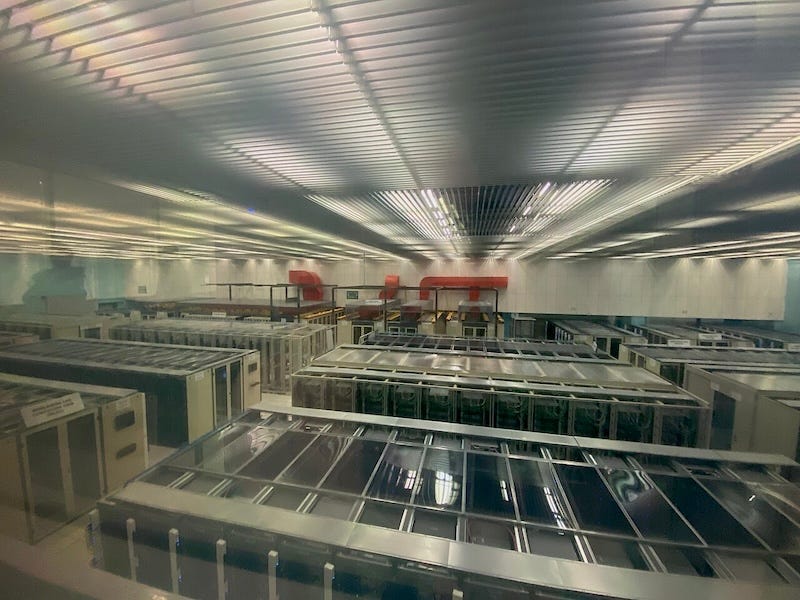
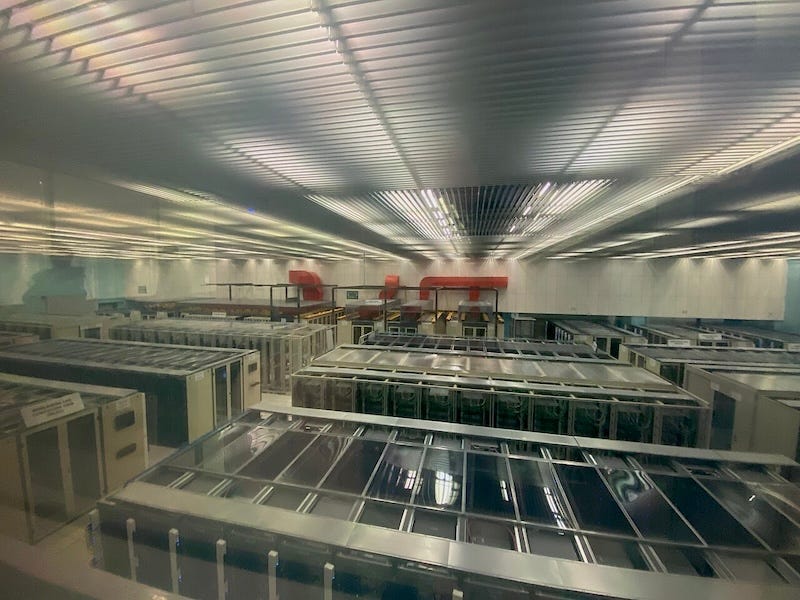
The Canada Pension Plan Investment Board (CPPIB) is making a risky bet on gas to power the buildout of data centres for artificial intelligence (AI).
By supplying the insatiable demand for energy associated with AI via gas-powered data centres, CPPIB is contradicting its own Climate Change Principles, crowding out renewable energy, and locking in carbon pollution that increases climate risks to the Canada Pension Plan (CPP) and its members.
CPPIB is the pension manager for the $864-billion CPP, mandated to invest in the best interests of 22 million Canadians. A CPPIB executive recently told Canadians that climate change is “the single biggest source of risk for the fund.” The pension manager says it aims to “invest for a whole-economy transition required by climate change.”

But CPPIB’s strategy for data centres contradicts its stated climate approach. CPPIB executives have repeatedly said that they plan to capitalize on AI’s skyrocketing demand for energy by investing in data centres, power transmission, and generation—regardless of the source of power. CPPIB’s CEO has repeatedly said the fund would continue investing in oil and gas.
CPPIB’s commitment to continued fossil fuel investment ignores the blaring warnings from scientists that fossil fuels must be rapidly phased out to avoid dangerous climate tipping points. Gas-powered AI is part of the problem: a recent peer-reviewed study concludes that without climate-aligned policy steering, the AI buildout will increase the carbon intensity of the global economy and reinforce fossil fuel incumbency.
CPPIB’s AI investment strategy also ignores warnings from American gas investors that project cancellations, construction challenges, regulatory delays, and political opposition are constraining the buildout of data centres and gas demand growth.
CPPIB’s AI investment strategy is playing out in a series of recent moves to develop data centres and power them with gas.
In 2025, CPPIB invested $416 million to help finance a massive data centre complex for Elon Musk’s xAI (now SpaceX) in Tennessee and Mississippi. The company is facing intense backlash and accusations of environmental racism for installing dozens of unpermitted gas turbines to power its data centres. The U.S. National Association for the Advancement of Colored Peoples and the Southern Environmental Law Centre are suing xAI over the harmful gas-powered infrastructure, with xAI saying that if the lawsuit is successful, shutting down the gas turbines would “inflict catastrophic harms” on the company’s AI services.
Last fall, CPPIB announced a $1.4-billion investment to take a minority stake in AlphaGen, a major American fossil fuel power producer that says it’s “well positioned to benefit from AI and electrification-related power demand growth.”
In Wyoming, CPPIB-owned Tallgrass Energy is partnering with Big Tech companies to build a giant data centre campus to be powered by new gas plants and supplied by Tallgrass’ pipeline network. Tallgrass is also hoping to use its pipeline network to supply gas to Kevin O’Leary’s controversial proposed data centre in drought-stricken Utah.
Another CPPIB-backed company, VoltaGrid, is planning to deploy more than 7.5 gigawatts of gas-fired turbines to power data centres, falsely claiming that they are “environmentally responsible.” The company’s gas-powered data centres are facing political opposition, regulatory delays and court challenges in Georgia, Texas, and New Brunswick, while VoltaGrid’s data centre development plans in Washington were recently cancelled due to public opposition.
CPPIB’s investment strategy is also playing out in Alberta, where the provincial government is making it virtually impossible to power data centres with renewable energy. In February, CPPIB signed a Memorandum of Understanding with TransAlta and Brookfield to advance a data centre that would be powered by gas.
Don’t expect CPPIB’s board to rein in CPPIB’s strategy to finance gas-powered data centres. CPPIB director Barry Perry simultaneously serves as the chair of Capital Power, which is executing a strategy to weaken Canada’s clean electricity regulation so it can power data centres with its gas plants. Another CPPIB director, Elizabeth Cannon, serves on the board of Canadian Natural Resources Ltd., Canada’s second largest gas producer.
These dual roles can lead to competing obligations between maximizing returns for gas company shareholders and acting in the best long-term interests of CPP members, creating potential conflicts of interest and raising questions about whether CPPIB directors are independently assessing climate-related financial risks.
There are also examples of CPPIB investing in AI infrastructure and companies that have climate targets. This summer, CPPIB formed a $1-billion strategic partnership with CtrlS Datacentres Ltd., a data centre operator in India committed to using 100% renewable energy by 2030 and achieving net-zero by 2040. Last week, CPPIB invested $1.8 billion to take a 51% stake in atNorth, boasting about the company’s “100% renewable energy integration” and its target to “drive decarbonization of global operations by 2040.”
CPPIB’s Climate Change Principles seem to matter for some data centre investments, and not for others. A CPPIB executive said in May that the pension manager conducts due diligence to ensure data centre developers have “a responsible plan for power supply and water rights” and that its AI investment decisions “are based on the practices established” in the World Economic Forum (WEF)’s Responsible AI Playbook for Investors.
But gas-powered CPPIB data centre investments contradict this statement. The WEF playbook itself is silent on the AI industry’s approach to energy and water use, and barely mentions climate change. Similarly, the federal government’s new Responsible Data Centre Development Principles suggest that “priority should be given” to “sustainable, low-impact technologies” and “low-emissions energy sources” without describing what that means.
The AI boom will have dramatic social, environmental, and economic consequences for Canadians. CPPIB must disclose a responsible AI policy that ensures its investments in AI technology, infrastructure, and companies are aligned with the long-term interests of CPP members.
Considering its inadequate approach to managing climate risks, CPPIB’s AI investment strategy is troubling. The pension manager’s investment decisions could either accelerate the buildout of renewable energy—or prolong the use of gas, lock in carbon pollution for decades, and contribute to dangerous global heating that harms ecosystems and communities, stunts economic growth, and destabilizes the financial system.
CPPIB has no disclosed climate action plan, no net-zero emissions commitment, no targets to reduce portfolio emissions, no goals to invest more in profitable climate solutions, and no exclusions on financing the primary drivers of climate change—oil, gas, and coal. The investment manager is facing a lawsuit brought by young Canadians, who allege that CPPIB is failing to adequately manage climate risks while investing billions in the expansion of fossil fuels.
Millions of Canadians are already feeling the impacts of climate-fuelled wildfires, heatwaves, floods, and storms. Yet CPPIB is using our retirement savings to make the climate crisis even worse. With a mandate to protect Canadians’ financial security decades into the future, CPPIB’s gamble to power the AI boom with gas is reckless, imprudent, and irresponsible.

RIP SMRs: Is It the End of the Line for Small Modular Nuclear Reactors?
Alberta Rural Municipality Hosting Massive Data Centre Defers Conflict of Interest Bylaw
Seniors Arrested, Charged With Trespassing During Climate Protest on Parliament Hill
As Climate Risks Grow, Experts Redefine the Scope of Adaptation
Federal Court Rejects Ottawa’s Bid to Quash Climate Case
El Niño-Driven Heat Could Cause Nearly Half a Million More Deaths, Group Says
Building Clean Abroad: Using Climate Finance to Diversify Canada’s Trade
COP31 Host Türkiye, Co-President Australia Falling Short on Clean Energy, Electrification Pledge
Role-Playing the ‘Oil EndGame’ Shows Looming Disorder Without Clear Transition Planning

District of Squamish rejects $142M Woodfibre LNG tax deal (Canadian Broadcasting Corporation)
How sea level rise poses an ‘existential threat’ to humans, heritage and nature (Carbon Brief)
Nepal’s Gen Z Is Taking on the World’s Polluters Over Climate Disasters (New York Times)
There might be no economic case for expanding the Port of Churchill, but that may not be the point (Canadian Broadcasting Corporation)
‘Planetary boundaries’ necessary for flourishing of life have been massively breached, scientists warn (The Guardian)
EU ministers to discuss taxing windfall profits of energy companies as oil prices surge (Reuters)
Trump’s EPA must reinstate $7 billion grant program for solar panels, judge rules (Washington Post)
China’s clean tech exports avoided more CO2 than UK emitted last year (Reuters)
Tea shortage warning as climate crisis sees production plummet and prices soar (The Independent)
‘Post-Disaster Gentrification’ Proliferates in Florida Towns as Costs Soar Following Hurricanes (Inside Climate News)
California’s Largest Hotel and Convention Center Plans Combined Heat and Power Microgrid (Microgrid Knowledge)
Afforestation and reforestation support coupled gains in soil life and carbon storage worldwide (Nature Ecology & Evolution)














Leave a Reply