
Sept. 9, 2026Updated Sept. 10, 2026, 8:03 a.m. ET
WASHINGTON – President George W. Bush had been seated in front of a classroom of Florida second graders for just five minutes when White House Chief of Staff Andy Card rushed over and whispered an urgent message in his ear: “America is under attack.”
In an instant, the world – and Bush’s nascent presidency – had changed.
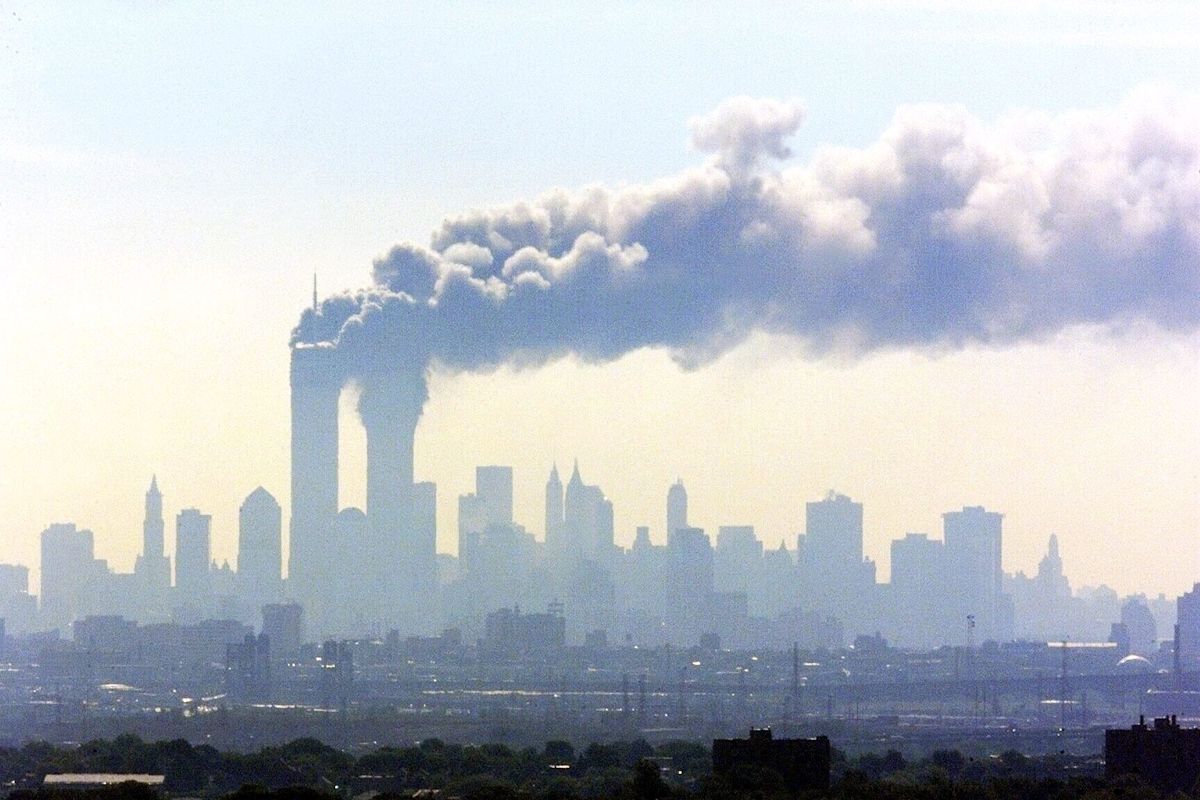
The assault on the World Trade Center and the Pentagon on the clear-blue morning of Sept. 11, 2001, along with the crash of a hijacked plane in Pennsylvania that day, killed nearly 3,000 people and shattered Americans’ sense of safety in the worst terrorist attack on U.S. soil.

For Bush, who had been in office just eight months, the attacks would be the defining moment of his presidency.
“There was no doubt in my mind that this was not a law-enforcement event. This was a war,” Bush said at an event at his presidential center in Dallas on Sept. 9 to commemorate the 25th anniversary of the attacks.
Bush “didn’t sign up to become a wartime president, but you became one,” Dan Caine, chairman of the Joint Chiefs of Staff, said at the Dallas event. “Leadership starts at the top.”
The events of 9/11 altered the trajectory of Bush’s legacy.
In his first few months in office, Bush had been focused mostly on domestic concerns, such as education reform. After 9/11, he abruptly shifted to soothing a traumatized nation and keeping Americans safe – a priority that would lead to two wars, changes in the government’s domestic security operations, and a sweeping antiterrorism campaign that continues to this day.
His former staffers recalled, in an oral history project by the University of Virginia’s Miller Center, how the 9/11 attacks and their aftermath influenced their work for the remainder of Bush’s presidency.
“So many people we spoke to said, ‘You have to understand that for us, both in terms of policy and how the presidency changed overnight with that first plane hitting the World Trade Center, every day for us was like 9/12,'” said Barbara Perry, cochair of the Miller Center’s Presidential Oral History Program.
Bush entered the White House after winning an election so close that it triggered a 36-day recount in Florida, halted only by a divided Supreme Court. But in the days following 9/11, his popularity soared as Americans rallied around their new leader. A week after the attacks, his approval rating jumped to 90% in a Gallup poll, the highest ever recorded.

Some of the most unforgettable images of Bush’s eight years in office were captured on 9/11 and the days and weeks after. One of the most famous is the moment Card interrupted his appearance at a classroom in Sarasota, Florida, as a child read a book out loud. A look of bewilderment washed over Bush’s face.
“I didn’t have much time to process that,” Bush recalled in Dallas, “but it was pretty clear to me that if we were under attack, then my job was to defend the child that was reading to me and her family and her country.”
Another indelible moment came three days later when Bush stood atop a crumpled firetruck amid the rubble of the twin towers in New York and used a bullhorn to address first responders digging through the debris. When someone yelled they couldn’t hear him, Bush replied with a message that was part rallying cry and part warning to the perpetrators of the attacks.
“I can hear you,” he said. “The rest of the world hears you. And the people who knocked these buildings down will hear all of us soon.”
To reassure a shaken nation, Bush said he took on the role of “comforter-in-chief because I had a sense that there was a lot of trauma. I didn’t want us to lose our soul.”
Three weeks after Bush’s bullhorn moment, the United States and its allies launched a military campaign against Afghanistan and its ruling Taliban regime. The goal was to destroy the al-Qaida terrorist network responsible for the attacks and to track down its leader, Osama bin Laden, who was hiding in caves in the country’s mountainous terrain. Bin Laden, however, would remain elusive until 2011, when a U.S. Navy SEAL Team killed him during a raid on his Pakistan compound.

Meanwhile, Bush convinced Congress to pass the USA Patriot Act, which gave law enforcement and intelligence agencies greater surveillance and investigative powers, including the use of roving wiretaps to track communications across multiple devices. The law also made it easier for law enforcement to monitor domestic and international phone calls and email.
In addition, Bush created a new Cabinet position, the Department of Homeland Security, which merged nearly two dozen federal departments and agencies into one organization. Before, the different groups often failed to share information, creating dangerous gaps in the nation’s security apparatus.
Some of Bush’s actions were controversial, including a secretive executive order he signed that allowed the National Security Agency to intercept phone calls and emails of U.S. citizens without a warrant. Critics argued the order was an illegal overreach of executive power and violated civil liberties.
Bush’s most controversial decision, though, was invading Iraq in 2003. His administration linked Iraq and its leader, Saddam Hussein, to al-Qaida and the 9/11 attacks, even though U.S. intelligence agencies concluded Iraq had nothing to do with either. Hussein had used chemical weapons in the past, and the Bush administration argued he had stockpiled weapons of mass destruction that could be used against the United States and its allies.
No such weapons were ever found. Bush’s popularity tanked. Public opinion turned against the war, which would not end until late 2011 – nearly three years after he left office.
In the years since, the American public has begun to reassess Bush’s legacy, said Perry of the University of Virginia’s Presidential Oral History Program.
“By comparison and contrast to Donald Trump, who doesn’t always seem like the best representative of the United States in the world, I think people will give Bush credit for not allowing another attack on the homeland,” Perry said.
But Bush’s record on national security must be balanced against leading the nation into two wars in which more than 7,000 American service members were killed and thousands of others were wounded, she said.
The Taliban’s return to power in 2021 in Afghanistan, following the collapse of the U.S.-backed government, “does not help Bush’s long-term legacy, nor does the Iraq war that I think most people think was unnecessary,” Perry said.
In Dallas, Bush said 9/11 had been “a clarifying moment” for him and others in his administration because they realized “we were vulnerable to attack based on what we believe.”
“I felt like bringing al-Qaida to justice was honoring the families of the fallen,” he said.
Michael Collins writes about the intersection of politics and culture. A veteran reporter, he has covered the White House and Congress. Follow him on X: @mcollinsNEWS
Miles J. Herszenhorn covers the Pentagon and world affairs. Follow him on X: @mherszenhorn





Leave a Reply