
Artificial intelligence (AI) is transforming economies around the world, but much of the discussion about it focuses on software, algorithms, computing power, regulation, and talent. While these factors are important, they overlook the one major precondition upon which everything else depends: a reliable supply of electricity.
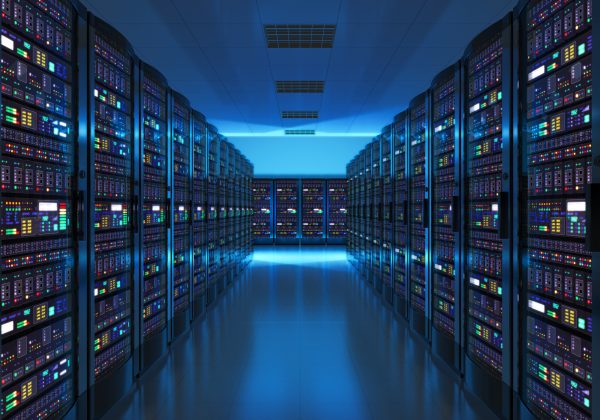
Every AI application ultimately runs inside an AI data center and requires industrial land, electrical substations, cooling systems, fiber-optic connectivity, backup power, and, depending on the cooling technology employed, significant quantities of water. Without this infrastructure and the energy to power it, even the most advanced AI software, algorithms, and talent cannot be deployed at scale.
For Indonesia, this raises an important strategic question: Does it have the land, infrastructure, and energy needed to become a leading destination for AI investment? The answer will help determine whether Indonesia becomes a regional AI hub or watches investment flow elsewhere.
The Energy Bottleneck in Digital Infrastructure
AI is rapidly becoming as dependent on energy as it is on technology. Training advanced AI models requires vast numbers of specialized processors operating continuously for weeks or months. Even after models have been trained, serving millions of AI queries each day creates a permanent and growing demand for electricity. The newest AI data centers already consume hundreds of megawatts of power, while some planned facilities are expected to consume as much electricity as medium-sized cities.
In this regard, Indonesia possesses several important advantages. It has Southeast Asia’s largest economy, a population approaching 300 million people, a rapidly expanding digital economy, growing cloud adoption, and government policies that recognize AI as a national priority. Unlike Singapore, where land and energy have become increasingly scarce, Indonesia has abundant industrial land, substantial natural gas resources, and one of the world’s largest geothermal resource bases.
The country currently has approximately 580 megawatts of operational AI data center capacity, with more than 1.3 gigawatts of additional capacity announced or under development. Much of this expansion is being driven by growing demand for AI, cloud computing, and digital services, with investment concentrated around Greater Jakarta, West Java, and Batam.
The largest hyperscale data center developers in Indonesia are now negotiating electricity supply years before construction begins. They are seeking dedicated substations, transmission infrastructure, reserved generating capacity, and long-term power purchase agreements. BDx, one of Indonesia’s largest data center developers, recently secured commitments totaling approximately 1.2 gigawatts of electricity for future AI campuses in West Java. This illustrates the scale of electricity that future AI infrastructure will require.
Energy analysts have warned that reserve margins on the Java-Madura-Bali grid could fall below recommended levels by 2027 if sufficient new generating capacity is not brought online. As more data centers are developed, they will require significant amounts of electricity that households and industry could otherwise need. This could create political resistance if data centers are seen as contributing to higher electricity costs or reduced reliability, while making alternative power solutions more attractive.
Harnessing Natural Gas and Geothermal
Here Indonesia possesses another strategic advantage: large natural gas developments and one of the world’s largest undeveloped geothermal resource bases. Instead of viewing these resources solely as sources of electricity for the national grid or LNG exports, they could become the foundation for a new generation of AI infrastructure. While Indonesia is unlikely to manufacture the advanced AI processors used in these facilities, it has the potential to provide the physical infrastructure and energy needed to support them.
Several major gas developments are either under construction or entering expansion phases. These include the Masela LNG project operated by INPEX, the Tangkulo gas development operated by Mubadala Energy, BP’s expansion of the Tangguh LNG project, and ENI’s North and South Hub developments in the Kutei Basin. Together, these projects will substantially increase Indonesia’s future natural gas production and its ability to generate electricity.
Traditionally, natural gas produced in remote locations has been processed primarily into LNG for export. Some gas has also been used to support fertilizer and petrochemical industries, as well as on-site power generation. Instead of allocating a portion of that gas to fertilizer and petrochemical production, it could be used to generate electricity for hyperscale AI data centers located adjacent to LNG facilities.
Natural gas also provides reliable dispatchable power that can operate around the clock while offering lower greenhouse gas emissions, making it well suited to support energy-intensive AI infrastructure. Additionally, using a portion of Indonesia’s natural gas resources to power high-value AI infrastructure could create a new domestic industry while minimizing the need for major new infrastructure.
Locating AI data centers close to LNG developments provides several key advantages. Much of the required industrial land, utilities, ports, and supporting infrastructure already exist or are planned. The data center and its dedicated independent power producer could be developed as part of the same complex or jointly with the LNG operator, providing reliable captive electricity without requiring a new grid connection or placing additional demand on an existing grid. This integrated model also minimizes community disruption, streamlines permitting, and provides developers with a site that reduces both development costs and construction timelines compared with building entirely new AI campuses.
In addition to LNG capacity, Indonesia possesses some of the world’s largest geothermal reserves. Many remain undeveloped because they are located far from major centers of electricity demand, and developing them often requires substantial upfront transmission investment, making otherwise attractive projects uneconomic.
Instead of transmitting electricity over long distances, AI data centers could be built adjacent to geothermal power plants, consuming power at the source as dedicated off-takers. Geothermal energy provides continuous baseload electricity with capacity factors commonly exceeding 85 percent while offering domestic energy security, minimal greenhouse gas emissions, and the long-term price stability sought by hyperscalers pursuing low-carbon operations. Unlike natural gas, which must balance competing demands from LNG exports, domestic industry, fertilizer production, and power generation, geothermal has relatively few competing commercial uses beyond electricity generation, making it particularly well suited to supporting large-scale AI infrastructure.
A Dual-Hub Strategy
The principal limitation of locating AI infrastructure at remote gas fields or geothermal developments is latency. Many AI applications require near-instantaneous responses and therefore need to be located close to major population centers. AI model training has very different operating requirements. Training large language models requires months of continuous computation across thousands of GPUs and is largely insensitive to modest network delays. Likewise, high-performance computing, scientific simulations, genomic research, and other compute-intensive workloads can operate effectively from remote locations where electricity is abundant and inexpensive.
Urban data centers serving AI inference and cloud services could continue to cluster around Greater Jakarta and other major cities. At the same time, remote AI training facilities could be developed alongside LNG projects and geothermal fields, where they would support AI training, high-performance computing, scientific research, and other energy-intensive computing workloads. Together, these two models could form the foundation of Indonesia’s future AI infrastructure.
Navigating Regional Competition and Implementation
Indonesia is not alone in competing for AI investment. Malaysia is also positioning itself as a regional data center hub, while Singapore continues to attract premium digital infrastructure despite constraints on land and energy. Indonesia’s advantage lies in its combination of abundant industrial land, large domestic energy resources, a growing digital economy, and the potential to develop dedicated captive power systems at a scale few countries in Southeast Asia can match.
For Indonesia, this presents a strategic opportunity. The country could use a portion of its natural gas and geothermal resources to power high-value AI infrastructure while continuing to support traditional industries such as LNG, fertilizer, petrochemicals, and domestic electricity generation. Geothermal and natural gas developments could become the basis for a new generation of AI campuses powered by dedicated captive electricity systems developed alongside the energy projects themselves.
This opportunity will require coordinated investment well beyond electricity generation. Supporting infrastructure such as high-capacity transmission networks, including high-voltage direct current where economically justified, expanded domestic and international fiber-optic connectivity, reliable water resources (supported where necessary by recycling or desalination), and modern digital infrastructure will all be important.
Indonesia will also need to balance competing demands for natural gas, continue modernizing its electricity system, and maintain a stable regulatory environment that encourages long-term private investment.
The global competition for AI is increasingly a competition for land, infrastructure, and energy. Countries that can deliver on these fundamentals will attract the next generation of hyperscale AI investment. Indonesia possesses many of the advantages needed to compete, but its success will depend on whether it can convert those advantages into commercial developments.








Leave a Reply