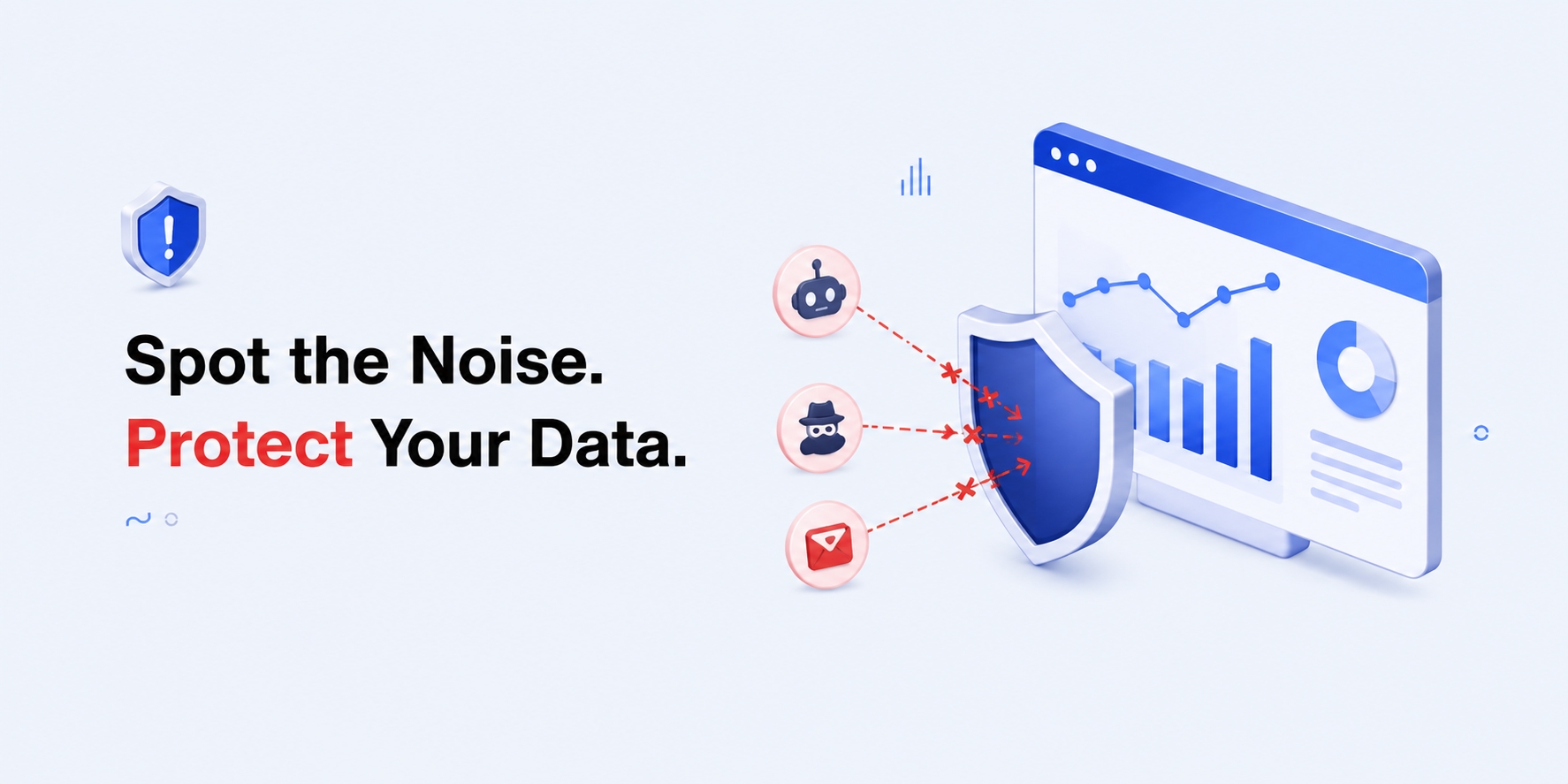
Most business leaders assume their marketing reports reflect the reality of their website traffic, yet a hidden issue persists across small and large sites alike. A significant portion of web visits originates from bots and non-human actors rather than genuine customers. This silent epidemic distorts marketing metrics and hides the real effectiveness of campaigns. With so much at stake, understanding fake website traffic, bot traffic in Google Analytics and how to spot bot traffic is vital to any effective marketing strategy. Drawing clarity from accurate analytics data should remain a priority, or marketing strategies risk running in the wrong direction.
What Is Bot Traffic and Why Does It Matter?
Bot traffic consists of non-human visits generated by automated programmes or scripts. While not all bots are malicious—some are search engine crawlers or uptime monitors—a growing share mimics real users in ways that can confuse analytics systems. These bots click, browse and even complete forms, contaminating measurements of bounce rate, session duration and channel performance. Fake website traffic challenges the reliability of most marketing automation platforms and reports.
Organisations that rely on AI marketing operations platforms, marketing automation suites or AI marketing consultants must remain vigilant. When reports show sudden spikes in traffic, unexplainable referral origins or unnatural behaviour patterns, these issues often stem from bots. Every miscounted visit can distort marketing investment decisions, content strategy and budget allocation.
Bot Traffic in Google Analytics: How Bad Is the Problem?
Google Analytics, including GA4, remains the de facto standard for analysing digital performance. However, bot traffic in Google Analytics remains a substantial blind spot. Studies suggest up to 40 percent (or more) of recorded website traffic is non-human, a figure even higher for sites in competitive or automation-heavy industries. Even the most sophisticated GA4 data quality settings cannot recognise all types of fake website traffic without manual intervention.
This reality means most companies—especially those using automated reporting tools—are marketing without a real strategy based on reliable data. Non-human traffic marketing reports cloud executive judgement, waste advertising budget and stall growth. Understanding and addressing bot traffic is essential for creating a meaningful AI marketing strategy that reflects true performance.
How Do Spam Referrals Enter Your Analytics?
Spam referrals originate when bots send fake web requests that appear as traffic from dubious sources. These bots target popular analytics endpoints, injecting sessions into reports even when users do not genuinely visit the website. Spam referrals distort the understanding of where legitimate users come from, corrupt channel mix data and confuse performance attribution models.
In GA4, the issue persists despite aggressive filtering attempts. Legitimate marketing automation suites or integrations sometimes accidentally collect these sessions. Many spam referrals reference random domains or use UTMs identical to competitors’ campaigns, making them difficult to philtre without precision. The best practise is to philtre spam referrals in GA4 using regularly updated exclusion lists, yet even this approach demands ongoing attention.
Spotting Fake Website Traffic: What Are the Warning Signs?
Identifying fake website traffic starts with careful inspection. Here are several key ways to spot bot traffic and non-human activity:
- Sudden spikes in traffic from new or unrelated geographic locations
- Unexplained high bounce rates for specific traffic sources
- Referral domains that relate to known spam or do not match your target audience
- Session durations that are exactly zero or an unnaturally round number
- Unusual behaviour patterns such as very rapid page navigation or identical journeys across users
Recognising these signs early supports a cleaner GA4 data quality baseline. Regular audits prevent marketing strategies from relying on contaminated insights. Once identified, bot traffic Google Analytics philtres should be created to exclude these sources from all future reports.
Why GA4 Bot Filtering Is Not Enough
GA4 includes basic bot filtering rules, but the modern threat landscape moves faster than automated defences. Sophisticated bots now mimic human browser activity, trigger JavaScript and behave like legitimate visitors. This means most built-in bot philtres in GA4 miss significant levels of fake website traffic.
Furthermore, many bots rotate their user agents or spoof device signatures to dodge detection. In some cases, aggressive bot filtering might even exclude real sessions, distorting the dataset further. Filtering spam referrals in GA4 demands active management, not a one-time setup.
Methods to philtre Spam Referrals in GA4
To protect analytics from distortion, it is essential to philtre spam referrals in GA4 using custom segmentations and regularly updated exclusion lists. The following steps offer a robust blueprint:
- Identify suspicious referral sources by regularly checking your Source/Medium reports
- Exclude these domains using the built-in GA4 referral exclusion settings
- Update your exclusion list monthly to address new spam threats
- Check that filtering rules do not inadvertently exclude genuine partner sites or campaign sources
For teams using an AI marketing consultant or marketing automation suite, ensure that platform integrations do not reintroduce spam sources when synchronising traffic data across platforms.
How Bots Distort Core Marketing Metrics
Bots rarely behave like human users, yet they still count as sessions and page views. This contamination distorts every aspect of marketing metrics:
- Bounce rate: Bots often trigger instant exits, raising reported bounce rates and masking real content performance
- Conversion rate: Fake visits dilute actual conversions, making your marketing strategy appear less effective than it is
- Channel mix: Bot referrals and direct hits distort which sources truly drive business outcomes
Non-human traffic marketing reports trick decision-makers into believing certain campaigns or channels work better (or worse) than the truth. This effect wastes AD spend, requires more frequent campaign redesigns and erodes the return on investment promised by marketing automation and AI marketing operations platforms.
Filtering Bots Without Losing Real Data
Accurate reporting demands care to avoid excluding genuine users alongside bots. When setting up to philtre spam referrals in GA4 or exclude internal traffic GA4 uses, marketers should focus on exclusion rules that specifically target suspicious characteristics. For example, block IP addresses linked to bots, philtre unnatural user agents and identify referral spam domains. Yet, always verify that no active customer segment matches these patterns.
Automated solutions within a marketing automation suite or guidance from an AI marketing consultant can simplify this process. These tools monitor traffic trends and update philtres over time, ensuring clean analytics data persists even as threat patterns change.
How Often Should Analytics Data Be Audited?
Marketers should audit analytics at regular intervals. For most businesses, a monthly review suffices, but after any major campaign or technology change, audit again. During audits, look for signposts of new bot activity, verify the integrity of acquisition channels and cross-check report consistency across integrated marketing tools.
Relying on an AI marketing operations platform or automation suite with built-in analytics audit features saves time and reduces the human error that comes with manual cheques. Consistent auditing ensures your marketing strategy adapts to reality rather than outdated, bot-infested data.
How to Spot Bot Traffic in Practice
Spotting fake website traffic in the day-to-day involves using GA4’s built-in tools and extending with advanced techniques. Here is how marketers can routinely identify bot traffic Google Analytics might miss:
- Review the top IP addresses driving volume—bots often come in waves from a narrow IP range
- Monitor unusual device or browser versions that do not match your user demographics
- Set up alerts for traffic surges on rarely visited pages or at odd hours
- Use regex philtres to spot repeating navigation patterns or duplicate session identifications
By integrating analytics with your marketing automation suite, continual traffic hygiene becomes part of regular operations, not a separate, manual task.
Explaining Traffic Drops After Cleaning Analytics Data
One hard reality confronts nearly everyone invested in a marketing data cleanse—a drop in reported traffic. Though this seems negative at first glance, it signals a better, more accurate foundation for your AI marketing strategy. Leaders and stakeholders may need reassurance that dips are not performance failures, but the result of removing fake website traffic and non-human sessions.
Transparent reporting is key. Document the steps you have taken to philtre spam referrals in GA4, exclude internal traffic in GA4 and establish clean analytics data. Link traffic changes to improved data integrity and decision quality, not as setbacks but as progress. In practise, higher conversion rates, lower bounce rates and more precise channel attribution often follow a well-executed cleanup.
Connecting Clean Analytics to AI-Driven Marketing Strategy
Quality marketing strategies depend on trustworthy analytics data. By defeating fake website traffic and spotting bot traffic in Google Analytics, organisations create space for genuine learning and growth. A marketing automation suite and integrations amplify this benefit—ensuring every trigger, workflow and report uses the best possible data.
Using an AI marketing consultant to interpret these patterns can drive commercial outcomes and provide reporting clarity straight to business leaders. Connecting clean analytics data with an AI marketing operations platform streamlines the strategy-to-execution loop. It allows marketers to see what works, stop wasting budget on disconnected tactics and build marketing strategies on real opportunity rather than noisy, inflated numbers.
What Leadership Should Measure and Monitor Monthly
Leadership teams need clear, actionable visibility into marketing performance. Monthly reviews should focus on key trends:
- Total sessions adjusted for bot filtering
- Accurate channel mix based on clean analytics data
- Referral source integrity to avoid falling for new spam tactics
- Conversion rates mapped to detected human users only
- Performance of key touchpoints after excluding non-human traffic
Reporting should also contextualise any changes resulting from new philtres. Document every update, adjustment and exclusion to preserve institutional knowledge and support transparent marketing strategy reviews.
Why a Strategy-First AI Marketing Operations Platform Matters
Prioritising strategy above fragmented execution tools is the foundation of high-performing marketing teams. A strategy-first approach aligns technology, data and human activity behind shared business goals. Using a unified platform ensures analytics, project management, content and reporting feed into the same source of truth.
When clean analytics data powers automated campaign planning, content scheduling and performance analysis, every marketing strategy improves in quality and return. For companies operating without large teams or budgets, a single AI marketing operations platform closes the gap between rich analytics and effective execution. This way, campaigns take shape based on real signals, not the misleading noise from bots and spam.
Integrations and Automation: Building for Future-Proof Marketing
As the complexity of technology stacks grows, seamless integrations and automation become essential in maintaining analytics hygiene and marketing alignment. Modern marketing automation suites must connect to site analytics, CRM, advertising platforms and reporting dashboards in real time. This unified architecture allows for instant exclusion of internal traffic, consistent spam filtering and cross-platform strategy implementation.
A connected approach ensures that cleaning your analytics is not a one-time activity, but an ongoing process embedded in every step of the marketing lifecycle. With the support of an AI marketing consultant, best practises in bot detection, reporting and campaign optimisation become accessible even to lean teams. This structure empowers leaders to make sharper investment choices, scale efficiently and stay ahead in a fragmented, automated digital world.
!function(f,b,e,v,n,t,s)
{if(f.fbq)return;n=f.fbq=function(){n.callMethod?
n.callMethod.apply(n,arguments):n.queue.push(arguments)};
if(!f._fbq)f._fbq=n;n.push=n;n.loaded=!0;n.version=’2.0′;
n.queue=[];t=b.createElement(e);t.async=!0;
t.src=v;s=b.getElementsByTagName(e)[0];
s.parentNode.insertBefore(t,s)}(window, document,’script’,
‘https://connect.facebook.net/en_US/fbevents.js’);
fbq(‘init’, ‘1122401991165798’);
fbq(‘track’, ‘PageView’);