
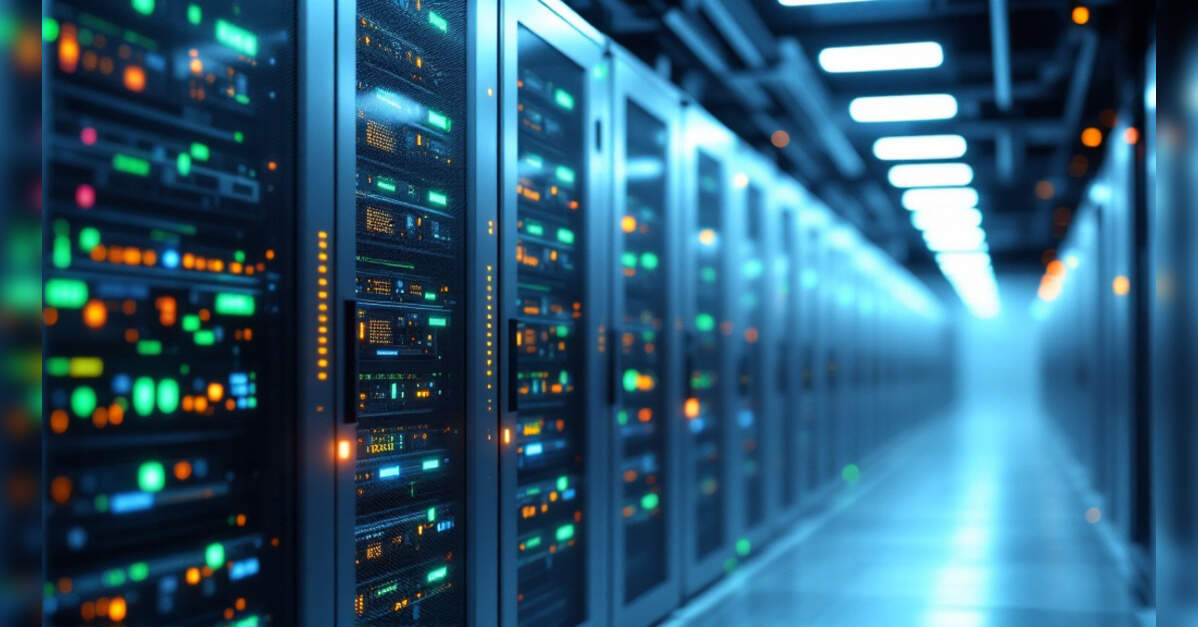

India is undertaking an integrated strategy to build domestic capabilities across semiconductor manufacturing and artificial intelligence (AI), backed by substantial government outlays. This initiative aims to foster self-reliance, enhance supply-chain resilience, and drive innovation within a comprehensive technology ecosystem.The convergence of semiconductors, which form the foundation of modern technology, and AI, which accelerates demand for advanced chips and high-performance computing, is central to this effort. India is developing capabilities from chip design and fabrication to computing infrastructure and indigenous AI models, positioning itself for global technology leadership.
Semiconductor Ecosystem Expansion
The government’s semiconductor strategy began with Semicon 1.0, which allocated ₹76,000 crore to establish India’s semiconductor ecosystem, covering the entire value chain from design to talent development. This foundation is being scaled with Semicon 2.0, approved in July 2026 with an outlay of ₹1,27,500 crore. This phase focuses on six strategic pillars: chip design, semiconductor equipment and materials, fabrication facilities, advanced packaging, research and development, and talent development.To date, 12 semiconductor projects have been approved across six states, representing investment commitments exceeding ₹1.64 lakh crore. These projects include silicon and compound semiconductor fabs, display fabrication, and advanced packaging facilities. Three of these facilities have already commenced commercial production, marking India’s transition from policy to manufacturing in the semiconductor sector.
Developing Indigenous Design Capabilities
The government has prioritised semiconductor skilling through initiatives like Chips to Startup (C2S), which has deployed Electronic Design Automation (EDA) tools in 320 academic institutions and trained over 68,000 students. Additionally, 24 semiconductor design projects have received financial support, and 105 startups and MSMEs have gained EDA tool support under the DLI Scheme. By April 2026, 211 chips were taped out by 75 institutions, with seven successfully fabricated at various nodes, including advanced 12nm nodes. Semicon 2.0 further aims to support semiconductor intellectual property (IP), chip, and system designs, strengthening India’s position as a global semiconductor design hub.
IndiaAI Mission for Sovereign AI Compute
The IndiaAI Mission, approved with an outlay of approximately ₹10,372 crore, focuses on building secure, inclusive AI capabilities rooted in Indian needs. As of June 2026, the Mission has expanded shared graphics processing unit (GPU) compute capacity to over 45,000 units. By August 2026, 237 projects had accessed subsidised AI computing, utilising 93.18 lakh GPU hours. This provides affordable high-performance computing for AI model development, training, testing, and research, reducing entry barriers for Indian researchers, startups, and innovators.The Mission has also selected 20 indigenous foundation model proposals, including 12 Large Multimodal Models and 8 Small Language Models, to strengthen India’s capabilities in developing AI models suited to local languages and contexts. The AI Kosh platform, as of July 2026, hosts over 14,000 datasets and 331 AI models, providing critical resources for building and scaling AI solutions.
Expanding Data Centre Infrastructure
To support the growing AI infrastructure, India’s installed data centre capacity has expanded significantly, from 375 MW in 2020 to approximately 1,575 MW currently. Major data centre hubs are located in Mumbai, Navi Mumbai, Chennai, Hyderabad, Bengaluru, and Delhi NCR. The industry is further expanding into new investment destinations such as Andhra Pradesh, Madhya Pradesh, Chhattisgarh, and West Bengal, indicating a broader geographic diversification of digital infrastructure.
Global Recognition and Partnerships
India was ranked third globally in AI competitiveness and ecosystem vibrancy by the Stanford Global AI Vibrancy Report 2025 and was the second-largest contributor to GitHub AI projects in 2025. India also joined the Pax Silica coalition at the India AI Impact Summit 2026, collaborating with the United States and other partners to strengthen resilient global silicon supply chains. International partnerships with countries including the United States, Japan, Singapore, and Germany are also bolstering technology collaboration and ecosystem development, as evidenced by 12 Memorandums of Understanding (MoUs) announced at Semicon India 2025.





Leave a Reply