
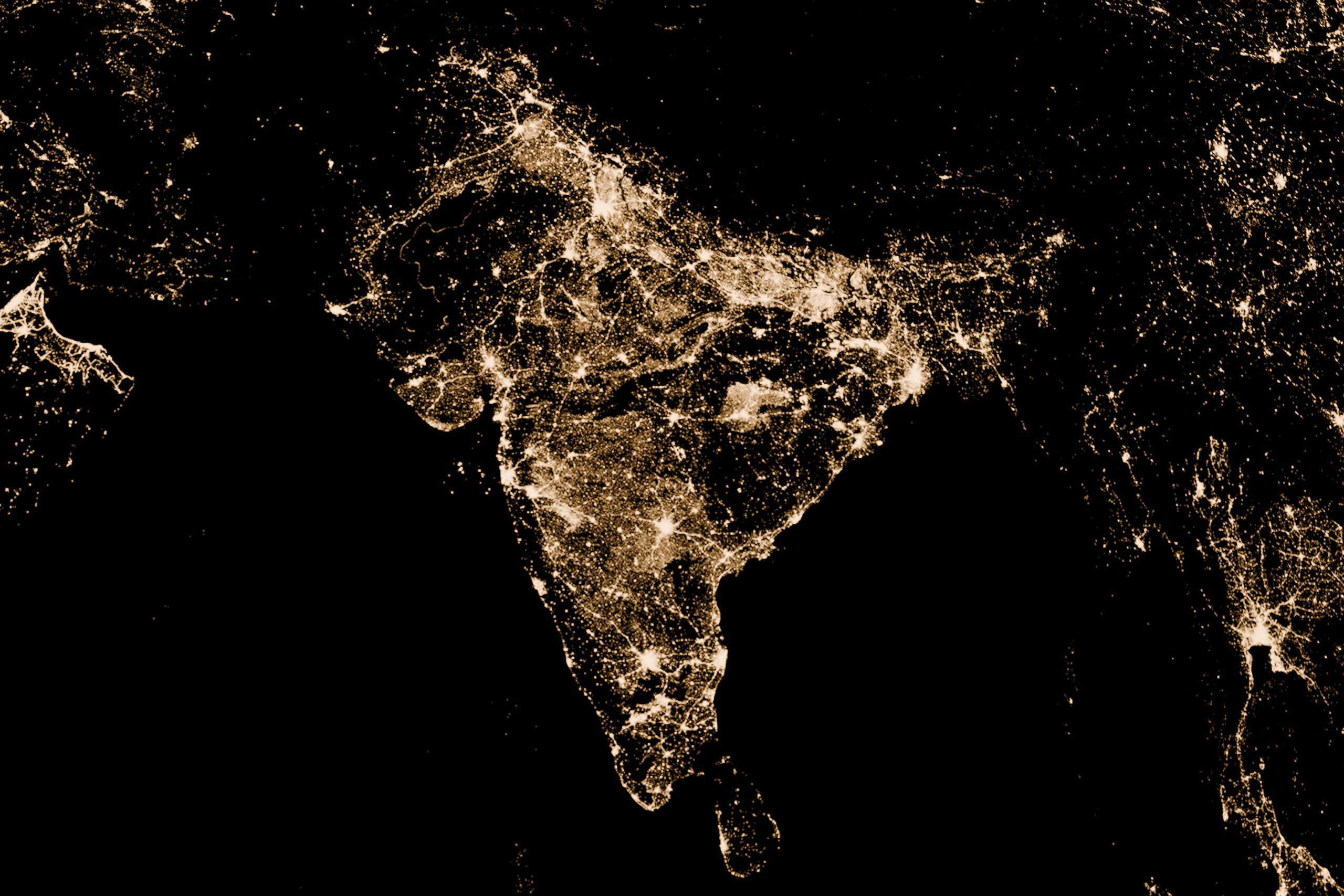
India’s first digital divide was mostly about access to computers, smartphones and the internet, but the next one could be about something less obvious: the skill of using artificial intelligence effectively, critically and responsibly—AI literacy.
Giving someone access to an AI tool does not automatically teach them how to use it. If a small business owner is familiar with the use of AI to help them secure customers, translate product descriptions, or handle mundane tasks, however, they could be ahead of a competitor who has the same AI tools but has no idea how to leverage them.
It’s a big opportunity. According to a World Economic Forum (WEF) report, micro, small and medium enterprises (MSMEs) account for almost 30% of India’s GDP, employing over 230 million people.
The report projects that AI could generate more than $500 billion USD in economic value to the sector, but constraints of resources and skills, and lack of awareness, continue to be a barrier to adoption.
Impact to the wider workforce could be just as significant. Per an October 2026 study by the Centre for Finance and Economics Research at the Great Lakes Institute of Management, AI can augment the jobs of nearly 46 million workers in India. Another 197 million hold highly routine jobs where automation could take over a significant share of the work.
These figures don’t forecast 197 million job losses; rather, they point to the size of the workforce that may need to adapt as the nature of the work changes. How well India prepares those workers will decide whether AI’s projected billions reach the very people and businesses it’s meant to serve.
What Does AI Literacy Actually Mean?
AI literacy isn’t all about coding. It means knowing how to ask good questions, how to identify bad answers, how to validate information, and how to safeguard sensitive information. Perhaps most importantly, it means knowing when to rely on human judgement instead of an automated response.
This applies to the people teaching AI as much as to those learning it. “Teachers now need both AI fluency and emotional sensitivity,” said Bob Chopra, the nine-year-old founder of AI education platform IvySchool.ai.
The Indian experience is a valuable cautionary tale. According to the 2024 Annual Status of Education Report (ASER), the largest citizen-led household survey in India which tracks children’s school engagement and basic learning throughout urban and rural areas, 82.2% of rural children aged 14 to 16 could use a smartphone, yet just 31.4% owned one.
The survey didn’t measure AI skills, but it did point to a significant difference—skills gained with a device do not necessarily equate to independent access or opportunities to engage in more advanced digital skills.
Turning AI Awareness Into Practical Skills
The Government of India is pushing for more AI education with the IndiaAI Mission, a ~$1.25 billion programme approved in 2024 to expand the country’s computing capacity, datasets, homegrown AI models and skills.
Through the programme, it has also introduced the YUVA AI for All initiative to create awareness of AI at a basic level, and 543 Data and AI Labs have been approved across ITIs and polytechnics in smaller Tier-2 and Tier-3 cities.
Separately, the Ministry of Skill Development and Entrepreneurship’s Skill India Digital Hub, the government’s main online skilling platform, now offers 50 government-accredited AI courses.
However, training is relevant only if individuals can apply the training, from something as simple as preparing a product catalogue in a local language to composing customer letters and fact-checking information and a student using AI to learn a complex topic.
IvySchool.ai, for one, was built on the idea that children should learn to create with AI instead of simply consuming it. Its first major programme, a ten-day AI and coding bootcamp with a Delhi school, had students build their own chatbots, automation tools and basic software applications.
“Students today need to move from passive learning to building real solutions,” Chopra said.
There is a risk that AI will deliver more benefits to those who have better devices, better training and more time to experiment. Closing that gap will require affordable, practical learning, support in Indian languages, and clear guidance on accuracy, privacy and responsible use.
It is not just a question of who can access the Internet that will define the next digital divide in India. It could be a question of who can use AI to help them make better decisions, develop new skills and create new economic opportunities—and who has the same technology but far fewer chances to benefit from it.
Featured image: Insaanu Studio via Unsplash+

Disclosure: This article mentions a client of an Espacio portfolio company.










Leave a Reply