
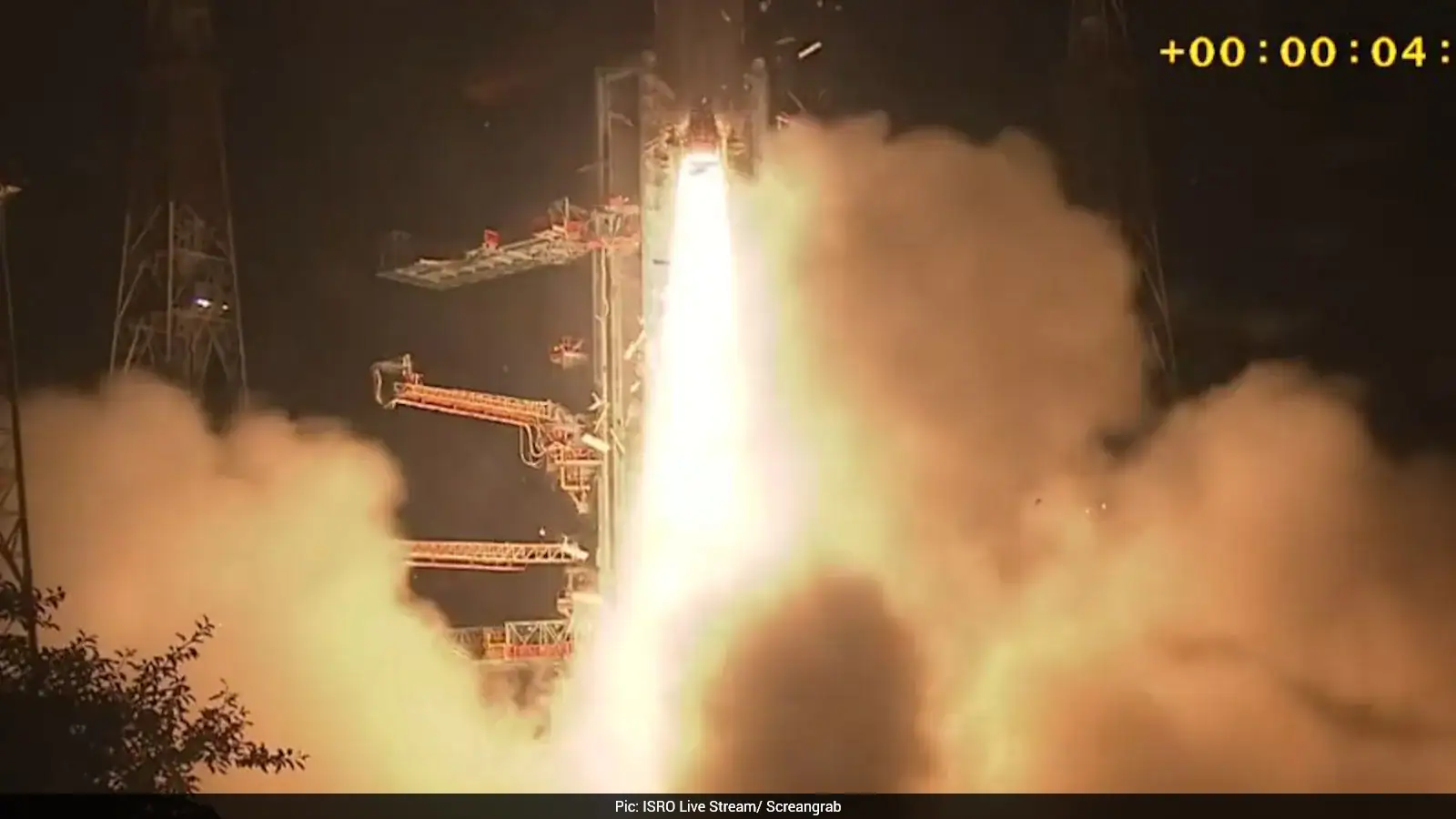
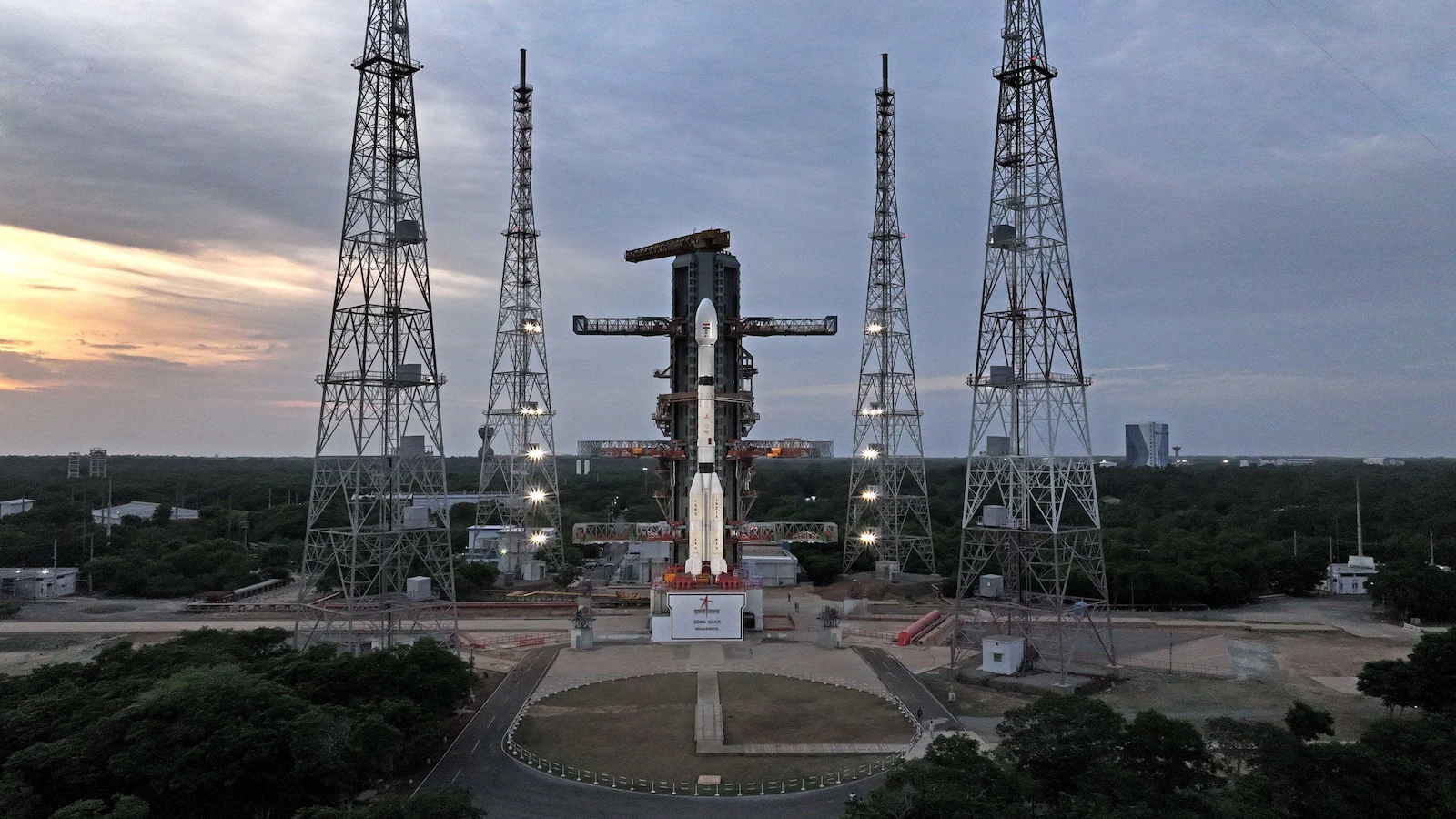
A GSLV rocket, carrying ISRO’s earth observation satellite EOS-05, succssfully lauched from the spaceport in a pre-dawn mission on Friday from Andhra Pradesh’s Sriharikota. The rocket was liftoff from Satish Dhawan Space Centre at 2:55 am IST.
Soon after the rocket’s launch, the EOS-05 satellite was successfully placed in its intended sub-geosynchronous transfer orbit.
“I am very happy to announce that the GSLV-F17 vehicle has successfully and precisely injected the advanced Earth observation satellite EOS-05, the Geo-Imaging Satellite, into the intended and required orbit,” ISRO Chief Dr. V Narayanan said in his statement.
Thomas Kurian, Mission Director for the GSLV-F15 rocket mission, said that it is the heaviest satellite ever launched by GSLV into a GTO or sub-GTO orbit.
“It is a moment of great pride and happiness for all of us. The success of GSLV has completed its 19th mission, and the mission carried the EOS-05, a uniquely configured Earth observation satellite capable of near-real-time imaging. It is the heaviest satellite ever launched by GSLV into a GTO or sub-GTO orbit. A launch lasts only a few minutes, but behind those few minutes are months and years of rigorous effort,” he said.
The mission carries EOS 5, a satellite designed to provide India with a continuous bird’s eye view of the nation from a height of nearly 36,000 kilometers above earth.
The GSLV-F17 launch vehicle stands 51.7 metres tall and has a liftoff mass of 420.5 tonnes, placing it among India’s largest operational launch vehicles.
Science and Technology Minister Jitendra Singh hailed the successful launch of ISRO’s GSLV-F17 rocket mission, saying that India’s space capabilities continue to scale new heights, strengthening the country’s position as a global space power.
“EOS-05 is a state-of-the-art Earth Observation satellite and India’s first imaging satellite from geosynchronous orbit, enabling advanced imaging across visible, infrared, multispectral and hyperspectral bands,” Jitendra Singh wrote on X.
Another giant leap for India in Space!
Kudos to Team @isro on the successful launch of GSLV-F17/EOS-05.
EOS-05 is a state-of-the-art Earth Observation satellite and India’s first imaging satellite from Geosynchronous Orbit, enabling advanced imaging across visible, infrared,… pic.twitter.com/1HHJrWM7ze
— Dr Jitendra Singh (@DrJitendraSingh) September 3, 2026











Leave a Reply